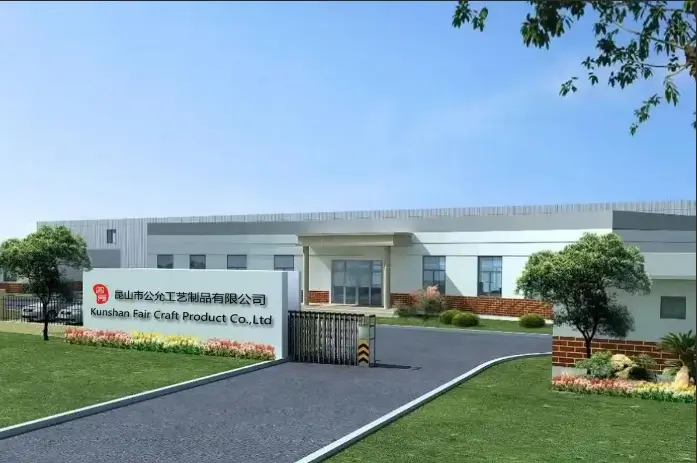
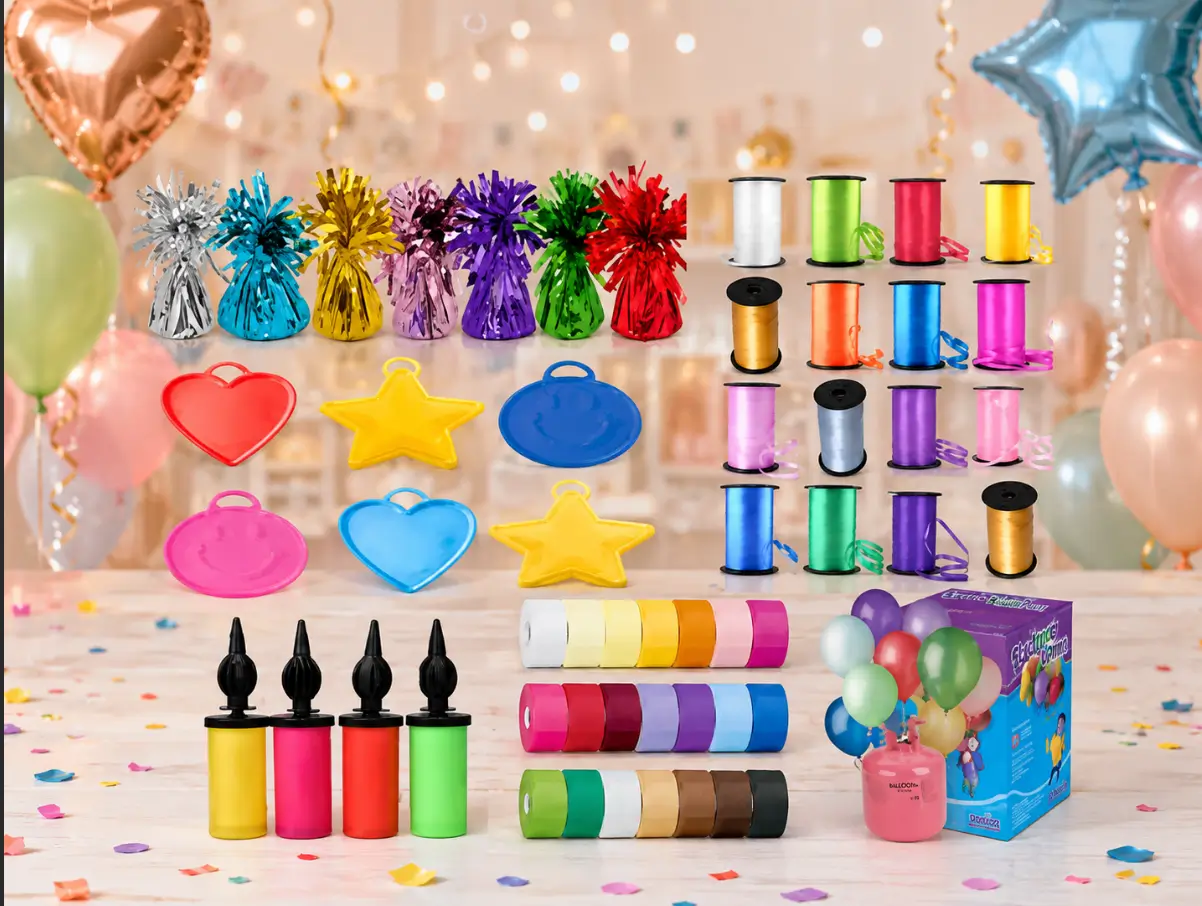
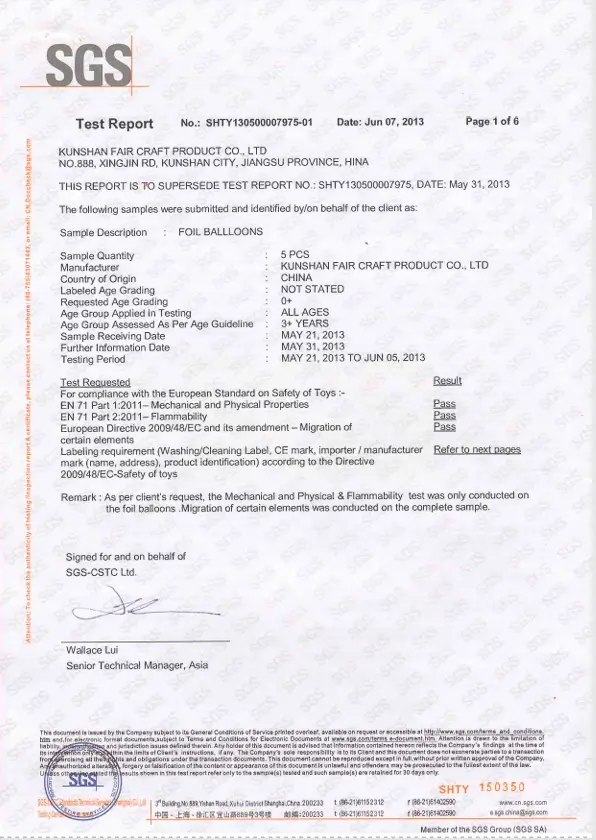
This technical contract manufacturing whitepaper details our industrial engineering evaluations for foil balloon accessories procurement, establishing an integrated supply chain baseline for bulk metallic balloon weights and ribbon spools options and one stop private label catalog countersourcing solutions since 2007. The global foil balloon accessories category represents one of the most operationally complex and logistically fragmented segments of the celebration and promotional products supply chain—encompassing dozens of distinct hardware and consumable product categories, each manufactured by specialized producers with varying quality standards, certification levels, and supply chain reliability profiles. For global retail chains executing large-scale foil balloon merchandising programs, the procurement of secondary accessories—electric inflators, hand pumps, balloon weights, decorative ribbons, inflation needles, and retail display fixtures—from multiple disparate suppliers creates coordination complexity, quality variance, freight consolidation inefficiency, and customs documentation overhead that erodes the category margin contribution and supply chain predictability that the primary foil balloon procurement relationship delivers. Kunshan Fair Craft Products Co., Ltd., a manufacturing enterprise established in 2007 with 5 million RMB in registered capital, operates a value-added foil balloon accessories countersourcing integration hub that provides global retail chains with a single procurement interface for the complete range of secondary hardware and consumables required to deploy, sustain, and optimize foil balloon display programs at scale. This whitepaper provides the definitive technical and procurement reference for retail chain category managers, store operations directors, and wholesale distributors evaluating comprehensive foil balloon accessories sourcing partnerships.
The fundamental procurement challenge facing global retail chains in the foil balloon accessories category is the structural mismatch between the consolidated, high-velocity primary foil balloon supply chain—with its dedicated manufacturing infrastructure, certified quality management systems, and streamlined logistics documentation—and the fragmented, multi-supplier secondary accessories supply chain that forces retail chain procurement teams to manage dozens of separate vendor relationships, quality compliance frameworks, freight consolidations, and customs entries to acquire the full range of hardware required to operate a complete foil balloon merchandising program. A retail chain executing a national foil balloon promotional program across 500 stores does not merely need the foil balloons themselves—the balloons are the foundational product around which an entire in-store display and merchandising operation is constructed. The program requires inflation equipment to deploy balloons at scale, weights to anchor floating displays against ambient air circulation, ribbons to create structured balloon bouquets and vertical installations, and replacement parts and consumables to maintain equipment uptime throughout the promotional window. Each of these accessory categories has historically been sourced from separate specialist manufacturers, creating a procurement coordination burden that distracts category management attention from the higher-value primary foil balloon relationship.
Global retail chains such as Walmart, Target, and Costco face severe container consolidation delays and cross-border customs friction when forced to buy foil balloons from one manufacturer and secondary hardware from separate unverified injection-molding plants because each supplier's shipment originates from different manufacturing locations, uses different export documentation formats, and generates separate customs entries that multiply the documentation preparation cost, customs broker fee, and port handling charge per shipped unit. The customs entry for a single consolidated shipment containing foil balloons, inflation pumps, balloon weights, and ribbons filed by a single recognized exporter incurs one set of documentation preparation costs, one customs broker fee, and one set of port handling charges. The same order split across four separate suppliers generates four sets of identical costs, with aggregate documentation costs that can exceed the landed cost premium charged by a one-stop countersourcing hub for the same total order volume. Beyond the direct cost impact, the coordination overhead of managing four separate supplier relationships, four separate purchase orders, four separate shipment tracking systems, and four separate quality complaint resolution processes diverts procurement team bandwidth that could be deployed on higher-value strategic initiatives.
The separate unverified injection-molding plants that manufacture foil balloon accessory hardware present additional quality and compliance risks that compound the logistics complexity. Balloon hand pumps, electric inflator components, and plastic balloon weights manufactured by suppliers without formal quality management system certifications may exhibit dimensional inconsistencies, material property variances, and safety standard deviations that create in-store equipment failure risks, consumer injury exposure, and potential product liability claims. A hand pump with a cracked air chamber discovered during in-store use generates a store safety incident report, a procurement complaint, and a potential warranty claim that would not arise if the same pump had been sourced from a supplier operating under documented ISO 9001:2015 quality management system controls with incoming material inspection, in-process quality monitoring, and final product testing protocols. Kunshan Fair Craft's role as an elite primary integration hub to manage heavy multi-city retail logistics distribution consolidation workflows under strict ISO 9001:2015 certified manufacturing workflow standards provides retail chain procurement teams with a single quality compliance framework, a single purchase order, one consolidated shipment, one set of customs documentation, and one quality accountability relationship—backed by our documented quality management system and our commitment to only countersource accessories from suppliers that meet the same quality standards we apply to our own primary foil balloon manufacturing operations.
The supply chain consolidation value proposition extends beyond simple procurement efficiency to encompass the merchandising coordination advantages of single-source accessory availability. When a retail chain sources foil balloons from Kunshan Fair Craft and balloon weights from a separate supplier, any supply disruption—whether a production delay, a port congestion incident, or a quality hold—requires the retail chain's procurement team to identify alternative supply for the disrupted component while managing the balloon supply relationship independently. When the same retail chain sources both products through Kunshan Fair Craft's countersourcing hub, a single supply chain event triggers a coordinated response across both product categories, with our supply chain management team identifying and implementing an alternative fulfillment plan that maintains the retail chain's fill rate on both the primary balloon order and the accessory order simultaneously. This integrated supply chain responsiveness is particularly valuable during peak seasonal procurement windows when balloon orders are confirmed against confirmed retail floor dates and accessory shortages can compromise the complete in-store merchandising execution as severely as balloon shortages themselves.
The commercial display electric balloon inflator category represents the highest-capital-accessory investment for retail chains executing large-scale foil balloon merchandising programs, and the technical performance characteristics of these machines directly determine the throughput capacity, operational cost, and maintenance frequency of the in-store balloon inflation operation. Unlike consumer-grade single-balloon inflation devices marketed for household use, commercial display electric balloon inflators are precision engineered for continuous-duty operation in high-throughput retail environments where inflation volumes of 200 to 1,000 balloons per day per machine are routine during peak seasonal promotional windows and where equipment downtime translates directly into incomplete in-store displays and lost sales. The procurement specification for commercial-grade electric inflators must address motor thermodynamics, pressure generation capacity, dual-nozzle flow dynamics, thermal management, and electrical safety certification—a technical scope that requires engineering evaluation beyond the typical procurement competence of retail chain category managers.
The internal motor thermodynamics of commercial display electric balloon inflators are governed by the physical constraints of continuous-duty electrical motor operation. The inflation pump mechanism in a commercial electric inflator is typically a diaphragm pump or piston pump driven by a universal motor or a brushless DC motor, both of which generate significant thermal energy during continuous operation. A motor operating at its rated power output of 600W to 800W in a sealed retail store environment—where ambient temperatures may reach 28 to 32 degrees Celsius during peak summer sales periods—will accumulate thermal energy faster than it can be dissipated through passive convection cooling, causing the motor winding temperature to rise progressively until it reaches the thermal cut-off threshold that shuts down the unit to prevent winding insulation degradation. The heat accumulation rate is proportional to the motor's power output and inversely proportional to the ambient temperature differential above the rated test environment. Commercial inflators designed for continuous duty incorporate active cooling systems—typically a forced-air fan that maintains a continuous airflow across the motor housing—to extend the thermal equilibrium time and enable sustained operation through full retail shift cycles without triggering the thermal cut-off protection.
The wattage thresholds of commercial display electric balloon inflators—typically ranging from 600W to 800W for dual-nozzle configurations serving high-volume retail environments—determine both the inflation throughput capacity and the thermal management challenge. A 600W motor operating a diaphragm pump with a displacement volume of approximately 50 to 80 milliliters per compression cycle can achieve inflation flow rates of 8 to 12 liters per minute at the nozzle outlet, enabling a standard 14-inch foil balloon to reach full inflation in approximately 8 to 12 seconds. A higher-wattage 800W motor driving a larger displacement pump can achieve flow rates of 15 to 20 liters per minute, reducing the inflation time per balloon to 5 to 8 seconds and enabling a single operator to inflate 400 to 600 balloons per hour in a continuous operation. The trade-off is thermal: the higher-wattage motor generates proportionally more thermal energy and requires more robust cooling system engineering to maintain continuous-duty performance without triggering thermal cut-off events that interrupt the inflation workflow and create in-store operational frustration.
The dual-nozzle pressure variables in commercial dual-head inflators introduce additional engineering complexity that affects the inflation consistency and seam integrity of the finished foil balloon. Each inflation nozzle delivers a metered volume of pressurized air at a specific pressure setpoint—typically 2.5 to 4.0 kPa above ambient for standard foil balloons—generated by the pump and regulated by a pressure relief valve that maintains the nozzle outlet pressure within a narrow band regardless of the pump's instantaneous output fluctuations. The two nozzles on a dual-head inflator are typically fed by separate inflation circuits from a common pump, meaning that both nozzles draw from the same pressure source simultaneously. When both nozzles are open simultaneously—as occurs when two operators are inflating balloons concurrently—the combined flow demand may exceed the pump's instantaneous delivery capacity, causing the pressure at each nozzle to drop below the setpoint and resulting in under-inflated balloons that will not achieve their rated floating lifespan. High-quality commercial dual-nozzle inflators use oversized pressure reservoirs and pressure compensation algorithms in their electronic controllers to maintain consistent nozzle pressure regardless of single or dual-nozzle operation.
The thermal cut-off safety controls required for continuous heavy-duty in-store decoration setups represent a critical safety engineering feature that distinguishes commercial-grade electric inflators from consumer-grade devices. The thermal cut-off is a bimetallic or electronic temperature sensor positioned at the motor winding or the pump cylinder head that triggers a power disconnection when the measured temperature exceeds a predetermined threshold—typically 120 to 140 degrees Celsius for motors with Class F insulation (rated for 155 degrees Celsius maximum winding temperature). When the thermal cut-off activates, the inflator stops operating and does not restart until the motor has cooled below the reset threshold—a safety mechanism that prevents motor winding burnout but also creates an unplanned service interruption during a peak inflation operation. Premium commercial inflators are engineered with thermal cut-off thresholds and cooling system capacities that provide adequate thermal margin for the expected continuous-duty operating environment, with the goal of achieving thermal equilibrium at a temperature well below the cut-off threshold such that the thermal cut-off is never triggered during normal operation.
The precise pressure calibration of commercial display electric balloon inflators is critical to avoiding micro-fracture seam failures across high-volume store lines. Foil balloon seam integrity is highly sensitive to inflation pressure: under-inflation leaves the balloon membrane in a slack state where the film's internal stress distribution is non-uniform, predisposing certain seam zones to localized yield under subsequent handling or ambient temperature changes; over-inflation directly over-stresses the seam structure, potentially causing immediate burst or creating latent seam damage that manifests as delayed failure during the balloon's display lifetime. The automated pressure control system in a commercial-grade electric inflator uses a pressure transducer feedback loop to maintain the setpoint pressure with accuracy of ±0.2 kPa—substantially tighter than the ±1.0 kPa accuracy typical of consumer-grade devices. This pressure precision, combined with the inflator's consistent flow rate and rapid cycle time, ensures that each balloon in a high-volume inflation batch receives an inflation dose that places it in the center of the acceptable pressure range, minimizing the tail distribution of under- and over-inflated units that generate seam failure complaints and in-store burst incidents.
The heavy duty dual action balloon hand pump category serves retail environments where electric power access is limited, where mobile inflation operations require portable equipment, or where the per-balloon inflation cost of electric equipment cannot be justified against the lower throughput requirements of smaller store formats or specialty balloon arrangements. The dual action hand pump represents a fundamentally different mechanical engineering solution from the electric inflator—converting human mechanical input through a pneumatic linkage into a controlled air delivery, with the dual-action mechanism specifically designed to maximize the air volume delivered per unit of physical effort expended by the operator. The engineering specifications of hand pumps—inflation volume per stroke, maximum achievable pressure, mechanical efficiency, and seal durability—directly determine the operator fatigue level, the per-balloon inflation time, and the maintenance frequency of the hand pump fleet in a retail chain's store operations.
The structural physics of dual-action air chambers that push continuous air volumes during both forward strokes and back strokes is the mechanical engineering principle that distinguishes dual-action hand pumps from the simpler single-action designs. In a single-action pump, air is drawn into the cylinder chamber on the forward (compression) stroke and expelled on the return stroke—meaning the operator expends effort on the return stroke that produces no useful inflation output. In a dual-action pump, a double-ended piston or a two-stage valving mechanism draws air into the cylinder on the return stroke while simultaneously pushing a separate volume of air out through the inflation nozzle on the forward stroke. The net result is that useful inflation output is generated on every stroke—both the forward and the return stroke produce inflation events—effectively doubling the inflation throughput per unit of physical effort expended. An operator using a dual-action hand pump achieves approximately 0.8 to 1.2 liters of air delivery per stroke, enabling a standard 14-inch foil balloon to reach full inflation in approximately 25 to 40 strokes, compared to 50 to 80 strokes required with a comparable single-action pump.
The nozzle taper pin engineering parameters and their role in air leakage control during manual pump inflation for small-gauge retail novelty programs represent a precision mechanical interface that determines the inflation efficiency and maintenance frequency of hand pump equipment. The nozzle taper pin is the precision-machined fitting that inserts into the foil balloon's self-sealing valve to transmit the pressurized air from the pump's outlet hose into the balloon's interior. The taper pin geometry—a tapered cylindrical shaft with a specific included angle and tip diameter—is designed to create a friction-fit seal within the balloon's valve stem, with enough mechanical engagement to prevent the pin from ejecting under the internal pressure generated during the inflation stroke. The critical engineering challenge is achieving reliable sealing across the range of valve stem inner diameters encountered in different foil balloon manufacturers' products: valve stems may range from 5mm to 9mm inner diameter across different balloon sizes and manufacturers, and the taper pin must seal effectively across this entire range without requiring manufacturer-specific pump heads.
The air leakage control specifications for hand pumps used in small-gauge retail novelty programs are particularly stringent because the small balloon envelope volumes and higher surface-area-to-volume ratios of mini and small-format foil balloons amplify the impact of any incremental air leakage during the inflation process. A hand pump with a worn nozzle seal that leaks 0.1 kPa per inflation stroke at the pump's maximum pressure of 6 kPa represents a 1.7 percent pressure loss per stroke—a loss that might be tolerable for a 40-inch jumbo balloon inflated to 10 kPa but represents a 5 percent loss for a 4-inch mini balloon inflated to only 2 kPa. Our verified heavy duty dual action balloon hand pumps guide criteria require that all hand pumps in the countersourced inventory meet a maximum leakage rate of 0.05 kPa per minute at the maximum rated pressure when measured with the nozzle blocked—a specification that eliminates the incremental leakage failures that would otherwise generate disproportionate defect rates in small-format balloon programs. The pump body, inflation hose, and nozzle fitting are manufactured from ABS heavy duty polymer injection molding profiles using aluminum tooling to achieve the dimensional precision and surface finish quality required for reliable long-term pneumatic sealing performance.
The physics of buoyancy and physical displacement for metallic inflatables in indoor retail environments creates a precise engineering requirement for counterbalance weights that stabilize foil balloon displays against the convective air circulation patterns generated by HVAC systems, opening and closing doors, and general pedestrian traffic. A floating foil balloon in a retail environment is not in a static equilibrium condition—it is continuously subject to small net force imbalances caused by temperature gradients between the balloon's internal helium and the surrounding air, local air pressure variations from shopper movement, and the asymmetric air flow patterns around the balloon's irregular surface geometry. Without a counterbalance weight, these micro-force imbalances cause the balloon to drift, rotate, and gradually migrate from its intended display position—creating the tangled, drooping balloon displays that diminish the visual impact of even the highest-quality foil balloon products. The engineering discipline of calculating exact helium counterbalance calibrated gram weights to anchor specific floating profiles against ambient convective airflow stresses is a critical procurement specification that must be addressed for any retail foil balloon display program exceeding trivial scale.
The buoyant force generated by a helium-filled foil balloon is the difference between the weight of the displaced air volume and the combined weight of the helium gas inside the balloon plus the weight of the balloon film and any attached hardware. The displaced air volume for a spherical balloon of 40 centimeters diameter is approximately 33.5 liters; at standard atmospheric conditions (20 degrees Celsius, 101.3 kPa), air has a density of approximately 1.204 grams per liter, meaning the displaced air weighs approximately 40.3 grams. The helium filling the same balloon at the same temperature and pressure has a density of approximately 0.179 grams per liter, so the helium mass inside the balloon is approximately 6.0 grams. The balloon film's mass—including the PET outer layer, LLDPE inner layer, aluminum metallization, and printed ink—varies with balloon size but is typically 8 to 15 grams for a 40-inch jumbo balloon. The net buoyant force is therefore approximately 40.3 minus (6.0 plus 10.0) equals 24.3 grams upward force that must be counterbalanced by the weight attached to the balloon's tether to maintain a stable floating position. For a balloon with a 24-gram upward buoyant force, a calibrated weight of 20 to 25 grams provides a net upward force of approximately 0 to 4 grams—sufficient to maintain the balloon in a gently floating equilibrium without the abrupt downward pull that an overweight tether would create.
The calibrated gram weight specifications for bulk metallic balloon weights—ranging from 8 grams for small 12-inch balloons through 15 grams for standard 18-inch balloons, 25 grams for large 22-inch balloons, and 35 grams for 40-inch jumbo balloons—represent empirically derived weight ranges validated through in-store display testing across the range of retail environment conditions encountered in different store formats. The weight selection is not merely a function of balloon size: the ambient temperature and barometric pressure at the store's geographic location affect the air density and therefore the buoyant force calculation; the HVAC system's air circulation pattern determines the convective force that must be counteracted; and the balloon's printed surface area—which creates aerodynamic drag that resists movement but also increases the effective wind loading from ambient air circulation—modifies the effective counterbalance requirement for each specific display configuration. Kunshan Fair Craft's countersourcing integration provides calibrated weight sets in 1-gram increment options from 8g to 35g, enabling retail chain store operations teams to fine-tune the counterbalance weight for each specific display configuration to achieve the optimal floating equilibrium that maximizes visual impact while maintaining display stability.
The manufacturing characteristics of high tensile strength decorative ribbons used in foil balloon display construction determine the structural integrity of balloon bouquets, vertical installations, and anchored display configurations. A decorative ribbon used to tether a foil balloon to a weight, to create a balloon cluster arrangement, or to construct a vertical balloon column is not merely an aesthetic element—it is a structural load-bearing component that must resist the combined tensile forces generated by the balloon's buoyant force, the aerodynamic drag from ambient air circulation, and any accidental pulling force from store traffic or equipment movement. Standard decorative ribbons—typically made from polypropylene or polyester film in widths of 12 to 25 millimeters—exhibit tensile strengths ranging from 15 to 50 Newtons per 10mm width depending on the material and construction. A ribbon of 20mm width made from standard polypropylene film has a breaking load of approximately 30 to 50 Newtons, which provides an adequate safety factor of 3x to 5x against the maximum expected tether force of 10 to 15 Newtons for a jumbo foil balloon at maximum buoyancy. However, when the ribbon is tied in a knot or a loop—as is typical in balloon display construction—the effective cross-sectional area is reduced by approximately 30 to 40 percent at the knot location, and the effective breaking load of the knotted ribbon may drop to 20 to 30 Newtons, reducing the safety factor to 1.5x to 2x—a margin that may be inadequate in high-traffic display environments where accidental pulling forces can transiently exceed the design tether load.
The high tensile strength decorative ribbon usage frameworks required for zero friction snapping along high-velocity thermal seams involve the selection of ribbons with sufficient tensile strength to maintain structural integrity at stress concentrations, the use of heat-sealed loop terminations rather than knotted terminations to preserve the ribbon's full tensile cross-sectional area at the termination point, and the specification of ribbon widths and attachment hardware that distribute the tether load across a sufficient contact area on the balloon's valve or seam to prevent localized stress concentrations that could damage the balloon film. The heat-sealed loop termination—a ribbon loop formed by folding the ribbon end back on itself and heat-sealing the overlapping surfaces together—maintains approximately 95 percent of the ribbon's original tensile strength at the termination, compared to 60 to 70 percent for a conventional knot. For retail chain balloon display programs where ribbon attachment failure is a significant contributor to in-store display maintenance calls, the heat-sealed loop termination specification provides a measurable reduction in display maintenance frequency and associated store labor cost.
The integrated supply chain approach for foil balloon accessories countersourcing represents the final element in Kunshan Fair Craft's comprehensive one-stop private label catalog countersourcing model—a model that transforms the fragmented, multi-supplier accessory procurement experience into a unified, single-accountability relationship that optimizes the total cost of ownership across the retail chain's complete foil balloon program. The strategic value of accessory integration extends beyond simple procurement convenience to encompass the merchandising execution quality, store operations efficiency, and program profitability that result from having a single knowledgeable supply chain partner capable of addressing every component requirement in the foil balloon display ecosystem. When a retail chain's foil balloon display program requires simultaneous availability of primary balloons, inflation equipment, counterbalance weights, decorative ribbons, and replacement hardware—all aligned to the same delivery schedule and managed through the same purchase order and shipment tracking interface—the program's execution precision improves, the store operations labor requirement decreases, and the program margin contribution increases relative to a multi-supplier model where coordination failures and supply mismatches erode program performance.
The integration of foil balloon accessory countersourcing with Kunshan Fair Craft's primary balloon manufacturing portfolio delivers measurable total cost of ownership optimization across every active division in our product portfolio. The custom printed promotional mylar balloons factory operation—the segment producing custom-branded promotional foil balloons for corporate brand activation programs—benefits from accessory integration by enabling the retail chain or brand activation agency to procure custom printed balloons, commercial-grade inflation equipment, and branded counterbalance weights in a single procurement transaction, eliminating the coordination cost and schedule risk of managing parallel supply chains for a branded activation program where timing precision is as critical as product quality. The licensed IP custom shape foil balloons factory—producing character-shaped and franchise-licensed foil balloons—benefits from accessory integration by enabling entertainment licensors and retail chain compliance teams to specify approved accessory hardware that has been validated for use with the licensed character balloon geometries, preventing the in-store display failures that arise when incompatible inflation equipment or improperly weighted tether configurations cause damage to high-value licensed balloon products.
The high capacity retail store chain festive foil balloons OEM division—serving tier-one retail chains with high-volume seasonal balloon programs—realizes the most direct total cost of ownership benefit from accessory integration because the volume magnitude and seasonal concentration of these programs generate proportionally large accessory procurement coordination overhead. A retail chain executing a Christmas balloon program across 800 stores requires 1,600 to 3,200 electric inflators (assuming one unit per 250-400 stores), 5,000 to 10,000 hand pumps for back-up and specialty use, 50,000 to 100,000 calibrated weights in various sizes, and 200,000+ meters of decorative ribbon—procurement requirements that represent a significant logistics and documentation challenge when sourced from multiple suppliers but are efficiently consolidated through a single accessory countersourcing relationship with Kunshan Fair Craft. The promotional mini foil balloons with sticks segment—producing high-volume hand-held promotional balloons for fast-food chain and amusement park programs—benefits from accessory integration by enabling the promotional program manager to procure the complete promotional kit—balloons, inflation pumps, balloon sticks, and retail display fixtures—through a single procurement channel, simplifying the procurement administration for programs that may involve dozens of individual retail outlets or restaurant locations.
The 40 inch jumbo foil number balloons wholesale catalog—our highest-value-per-unit product category—requires the most precise accessory specifications because the large-format balloons' physics create the most demanding counterbalance, tether, and inflation requirements. A 40-inch jumbo number balloon inflated to its rated pressure generates a buoyant force of 20 to 30 grams depending on the specific number configuration and printed surface area, requiring calibrated weights in the 25-gram to 35-gram range and ribbons with tensile strengths exceeding 50 Newtons for safe tethering. The accessory integration for jumbo balloon programs ensures that these precise hardware specifications are provided alongside the balloon shipment, eliminating the guesswork and trial-and-error that store operations teams would otherwise face when deploying jumbo balloons with hardware sourced from unknown-quality third-party suppliers. The auto inflating mylar balloons wholesale solutions category—which deploys self-contained chemical inflation systems rather than external inflation equipment—requires a complementary accessory set focused on the post-inflation display hardware: counterbalance weights calibrated for the specific weight of the inflated self-inflating balloon, tether ribbons rated for the specific buoyancy profile, and replacement chemical inflation cartridge refills for extended-display applications. The accessory countersourcing integration provides these complementary products as part of the standard auto-inflating balloon procurement package, simplifying the retail chain's accessory sourcing for this emerging high-growth product category.
The foundational foil balloon manufacturing plant—our core production infrastructure—provides the engineering platform and quality management discipline that underpins the accessory countersourcing operation. Our quality management team's supplier audit methodology, developed and refined through years of managing our own manufacturing operations under ISO 9001:2015 certified manufacturing workflow standards, is applied to every accessory supplier in our countersourced portfolio. Each accessory supplier undergoes an initial quality audit covering facility conditions, quality management system documentation, incoming material control, process parameter control, final product testing, and customer complaint handling. Approved suppliers are re-audited annually and subject to unannounced follow-up audits if quality performance metrics indicate deterioration. This rigorous supplier quality governance—applied consistently across our primary balloon manufacturing and our accessory countersourcing operations—provides retail chain procurement teams with the quality assurance infrastructure that a single integrated supplier relationship can deliver but that a multi-supplier procurement model cannot replicate.
The following B2B Secondary Accessories Mechanical and Material Specification Matrix provides the authoritative specification framework for retail chain category managers and store operations directors evaluating foil balloon accessories countersourcing partnerships. All specifications represent minimum qualification thresholds; Kunshan Fair Craft's accessory countersourcing integration maintains approved supplier lists with multiple quality-tier options for each accessory category, enabling retail chains to select the quality level appropriate to their specific program requirements and margin targets.
B2B Secondary Accessories Mechanical and Material Specification Matrix
| Accessory Sub-Category | Primary Base Material / Construction | Mechanical / Power / Capacity Specification | Retail Pack Compliance / Certification |
|---|---|---|---|
| Commercial Electric Inflators (Single Nozzle) | ABS heavy duty polymer injection molding housing; copper-wound universal motor; aluminum pump cylinder; silicone sealing gaskets | 600W motor; max pressure 6 kPa; flow rate 8–12 L/min; thermal cut-off at 130°C; continuous duty: 4+ hours | CE / UL electrical safety certified; ISO 9001:2015 supplier audited; pressure transducer accuracy ±0.2 kPa |
| Commercial Electric Inflators (Dual Nozzle) | ABS heavy duty polymer injection molding housing; 800W brushless DC motor; dual independent nozzle circuits; pressure compensation reservoir | 800W motor; max pressure 6 kPa; flow rate 15–20 L/min combined dual nozzle; thermal cut-off with auto-reset; pressure consistency ±0.2 kPa dual nozzle | CE / UL / ETL electrical certification; ISO 9001:2015 supplier audited; 12-month manufacturer warranty |
| Heavy Duty Dual Action Hand Pumps | ABS heavy duty polymer injection molding body; aluminum piston cylinder; PVC inflation hose; precision-machined brass nozzle taper pins | Dual-action: 0.8–1.2 L per stroke (both directions); max pressure 6 kPa; leakage rate <0.05 kPa/min at max pressure; nozzle taper pin fits 5–9mm valve stems | ISO 9001:2015 supplier audited; CE marking; individual pressure test certificate per unit |
| Calibrated Helium Counterbalance Weights (8g–35g) | Zinc alloy die-cast body; high-density metallized film coating; stainless steel tether clip; 1g incremental calibration options from 8g to 35g | Calibration accuracy ±0.5g; tether clip pull-force: >30N; surface finish: high-gloss metallic; suitable for helium buoyancy counterbalance from 8g to 30g net buoyancy | REACH / RoHS compliant; ISO 9001:2015 supplier audited; retail-ready polybag packaging with barcode label |
| High Tensile Strength Decorative Ribbons | Polypropylene or polyester film; widths 12mm, 18mm, 25mm; available in metallic, matte, and iridescent finishes; heat-sealable loop termination option | Tensile strength: 30–60 N per 10mm width; elongation at break: 15–30%; heat-sealed loop termination retains 95% of original tensile strength | REACH compliant; ISO 9001:2015 supplier audited; fire retardant grade available (FR-B1 rated); retail spool packaging with barcode |
| Inflation Needles and Accessories | Stainless steel shaft; PVC or silicone grip handle; latex-free construction; standard 4mm compatibility | Shaft diameter: 4mm standard; length: 80–120mm; corrosion-resistant; reusable; latex-free for food-handling compliance | ISO 9001:2015 supplier audited; food-contact material declaration; retail blister pack packaging |
| Balloon Display Hardware (Clamps, Stands, Clips) | ABS heavy duty polymer injection molding; steel spring clips; aluminum or stainless steel support structures; modular interconnection compatibility | Clamp retention force: 5–20N; stand base weight: 0.5–3kg; modular clip system for interlocking multiple balloon tethers; floor, tabletop, and hanging configurations | ISO 9001:2015 supplier audited; CE / UL electrical safety for powered display stands; retail-ready packaging with assembly instructions |
The foil balloon accessories countersourcing integration model delivered by Kunshan Fair Craft Products Co., Ltd. represents the definitive procurement solution for global retail chains seeking to optimize the total cost of ownership, supply chain administration efficiency, and merchandising execution quality of their foil balloon display programs. Established in 2007 with 5 million RMB in registered capital and a comprehensive accessory countersourcing integration infrastructure, Kunshan Fair Craft provides retail chain procurement teams with a single procurement interface, a single purchase order, one consolidated shipment, and one quality accountability relationship for the complete range of foil balloon accessories—commercial electric inflators, heavy duty hand pumps, calibrated helium counterbalance weights, high tensile decorative ribbons, inflation hardware, and display fixtures—that their in-store balloon merchandising programs require. Our ISO 9001:2015-aligned supplier quality governance, applied consistently across our primary balloon manufacturing operations and our accessory countersourcing supplier network, provides the quality assurance infrastructure that global retail chains require for every component in the foil balloon display ecosystem.
For retail chain category managers, store operations directors, and wholesale novelty distributors seeking a comprehensive foil balloon accessories countersourcing partnership, Kunshan Fair Craft represents the definitive one-stop sourcing choice. Our full logistical bundling infrastructure, combined with our engineering consultation services and our factory-direct access to General Manager Max at xia@foilballoon.cn, provides the procurement convenience, quality assurance, and technical support that complex multi-store foil balloon display programs demand. We invite procurement teams to download our complete integrated accessories catalogs and engage our supply chain integration team for a comprehensive accessory sourcing consultation and bulk project quotation calibrated to your specific store count, program volume, and distribution channel requirements.
© 2026 Kunshan City Fair Craft Product Co., Ltd.