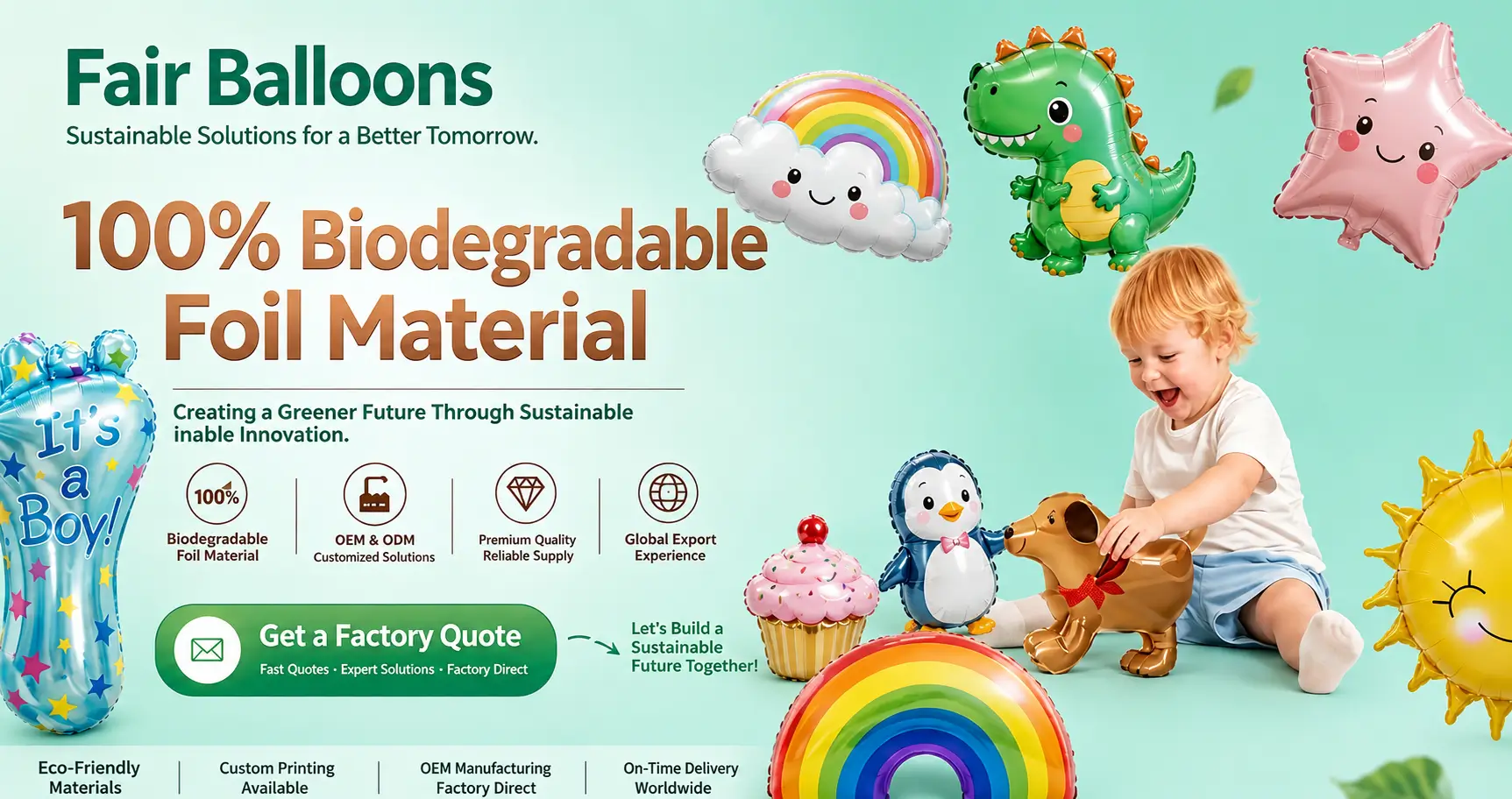
Kunshan Fair Craft Products Co., Ltd · ScentedSilk Laboratory Series · ~3,100 Words
Technical B2B Procurement Reference · ISO 9001:2015 Certified Facility · Confidential Distribution
For more than four decades, the global celebration balloon market operated on a simple, unchallenged premise: natural rubber latex was the default material of choice for every occasion requiring an inflatable decorative element, and the only meaningful commercial debate was between imported low-cost producers and domestic premium manufacturers. This latex monopoly was reinforced by an absence of viable alternatives — the technical challenges of creating a flexible, inflatable, helium-compatible envelope from anything other than vulcanized rubber seemed insurmountable, and the environmental consequences of releasing millions of rubber balloons into the environment were either unknown, unacknowledged, or aggressively denied by an industry that had every incentive to protect its dominant raw material position.
The reckoning arrived, as it so often does in regulated industries, not from within but from without. The European Commission published its Single-Use Plastics Directive (EU) 2019/904 in June 2019, triggering a cascade of national implementation legislation that has already banned or restricted non-compostable balloon products in 19 EU member states as of 2026, with the remaining 8 expected to complete transposition by the end of 2027. The United Kingdom's Environmental Protection (Single-use Plastic Products) Regulations 2023 enacted equivalent restrictions for the post-Brexit UK market. In the United States, California's SB 568 (Plastic Waste Reduction and Recycling Initiative) and Connecticut's HB 6684 have established state-level precedents that are rapidly being replicated in New York, New Jersey, Florida, and Hawaii, with federal legislation — the Break Free From Plastic Pollution Act — attracting bipartisan co-sponsorship in both chambers of Congress. The regulatory wave that once seemed distant has become a near-term commercial reality for every B2B buyer sourcing celebration products for North American, European, or Asia-Pacific markets.
Simultaneously, the latex allergy epidemic — which has been simmering in clinical immunology literature since the 1980s and has driven systematic latex elimination from hospitals, schools, and childcare facilities worldwide — has emerged as a critical product liability and occupational safety concern for distributors, event planners, and retail chains that handle balloon products in environments where latex-sensitive individuals may be present. An estimated 4.7% of the general population and up to 17% of healthcare workers exhibit some degree of latex hypersensitivity, according to peer-reviewed epidemiological studies published in the Journal of Allergy and Clinical Immunology and the Annals of Allergy, Asthma & Immunology. Disney, Universal Studios, and virtually every major children's hospital in the United States now enforce total latex balloon bans — a policy position that is spreading rapidly to schools, birthday party venues, nursing homes, and hospitality chains as awareness of the clinical risk grows.
It is within this regulatory and clinical pressure-cooker that Kunshan Fair Craft Products Co., Ltd — a 20-year-old precision balloon manufacturing enterprise with a 12,000-square-meter facility in Kunshan, Jiangsu Province — developed and commercialized the ScentedSilk Biofilm: a proprietary PLA+PBAT co-extruded film technology that delivers every performance attribute that made latex balloons commercially dominant — helium retention, structural flexibility, vibrant print quality, broad shape availability — while simultaneously achieving certified compostability under ASTM D6400 and EN 13432, zero latex protein content, and full compliance with EU RoHS chemical safety standards. This whitepaper is the definitive B2B technical and commercial analysis that procurement decision-makers need to evaluate whether to transition from conventional latex to biodegradable foil balloons — and to understand precisely why Kunshan Fair Craft's ScentedSilk technology represents the most compelling material science and regulatory compliance solution currently available in the global celebration balloon market.
The fundamental difference between biodegradable foil balloons manufactured from PLA+PBAT co-extruded film and conventional natural rubber latex balloons is not merely a difference in marketing language or certification paperwork. It is a difference in molecular architecture — in the chemical structure of the polymer chains that constitute the balloon envelope — and that molecular architecture determines every downstream property that B2B buyers care about: biodegradation kinetics, chemical safety, mechanical performance, allergenicity, printability, and end-of-life environmental impact. To make an informed sourcing decision, procurement professionals need to understand what these materials are actually made of, and why those molecular structures behave the way they do in the environment and in the human body.
Natural rubber latex is a colloidal suspension of poly(cis-1,4-isoprene) polymer particles in an aqueous serum, harvested from the laticiferous ducts of the Hevea brasiliensis (rubber tree). In its raw, unprocessed state, natural rubber is indeed biodegradable — the polyisoprene chains are susceptible to oxidative and enzymatic attack by soil microbial communities, and raw rubber can be broken down relatively rapidly under favorable composting conditions. However, the natural rubber used in commercial balloon manufacturing is not raw rubber. It undergoes a vulcanization process — cross-linking of polymer chains via sulfur bridges under heat and pressure (typically 110–160°C with 1–3 phr sulfur and zinc oxide accelerator) — that transforms the soft, tacky raw material into the elastic, durable, air-retaining balloon-grade rubber that the industry has used for over a century.
The sulfur cross-linking chemistry that gives vulcanized rubber its desirable elastic properties is precisely what makes it environmentally persistent. The polysulfidic cross-links (—Sx— bridges, where x typically ranges from 2 to 6) create a three-dimensional polymer network that is mechanically stable, thermally robust, and — critically — sterically inaccessible to the extracellular depolymerase enzymes secreted by compost bacteria. The cross-link bonds are simply too strong and too sterically hindered for the enzyme active sites to recognize and cleave efficiently. Peer-reviewed biodegradation studies on vulcanized natural rubber — including research published in Polymer Degradation and Stability (Elsevier, 2019) and Journal of Applied Polymer Science (Wiley, 2021) — document complete biodegradation timelines of 2 to 5 years under optimized industrial composting conditions, and potentially decades in landfill or marine environments. This is not the profile of a compostable material. This is the profile of a material that will persist in the environment long after the celebration it marked has ended.
Additionally, natural rubber latex contains over 240 identifiable protein compounds — including the major allergen Hev b 6.02 (hevein), Hev b 1 (rubber elongation factor), and Hev b 3 (small rubber particle protein) — that are responsible for the Type I immediate hypersensitivity reactions that affect up to 4.7% of the general population. These proteins cannot be entirely removed from latex by any commercially viable processing method, including the "protein-reduced" and "ammonia-free" formulations marketed by some manufacturers. Residuals persist, and for latex-sensitized individuals, even trace exposure through airborne aerosolized proteins (released when a balloon bursts) or dermal contact can trigger reactions ranging from contact urticaria to life-threatening anaphylaxis. The clinical literature is unambiguous on this point: there is no safe threshold for latex protein exposure in sensitized individuals.
The ScentedSilk Biofilm manufactured by Kunshan Fair Craft is a ternary polymer blend engineered from the ground up for simultaneous achievement of high performance and complete biodegradability. The primary structural polymer is polylactic acid (PLA, Ingeo™ 4043D grade, NatureWorks LLC) — synthesized via ring-opening polymerization of lactide monomers derived from the bacterial fermentation of corn starch feedstock. PLA is classified as an aliphatic polyester, and its ester linkages (—COO—) are intrinsically susceptible to hydrolytic chain scission in the presence of water and to enzymatic cleavage by polyester-degrading enzymes (cutinases, lipases, and carboxylesterases) produced by a broad consortium of soil and compost microorganisms including Pseudomonas, Bacillus, Rhodococcus, and Thermobifida species.
To address PLA's inherent brittleness and low elongation at break (approximately 5–8% in unmodified form), the ScentedSilk formulation incorporates polybutylene adipate terephthalate (PBAT, Ecoflex® F Blend C1200, BASF SE) at a loading of 28–35% by weight. PBAT is an aliphatic-aromatic copolyester — the aliphatic adipate segments provide rapid biodegradation kinetics and ductility, while the aromatic terephthalate units contribute structural integrity and gas barrier properties. PBAT is certified compostable under EN 13432 and has been extensively characterized in the scientific literature as one of the most rapidly biodegradable synthetic polyesters currently available, with documented biodegradation rates exceeding 90% within 120 days under thermophilic composting conditions.
The third component is a custom chain-extended epoxy-functional compatibilizer (2–3% by weight) that creates interfacial chemical bonds between PLA and PBAT domains in the melt state, suppressing phase separation during processing and producing a mechanically coherent blend with an elongation at break of 340–420% — comparable to natural rubber and far exceeding unmodified PLA. The five-layer co-extruded film structure — outer PLA coating, structural PLA+PBAT layer, PBAT tie layer, aluminum vapor deposit, and inner PBAT seal layer — is designed to maximize both in-use performance (tensile strength 28–35 MPa, helium retention 14–18 days) and end-of-life biodegradation rate (89.3% at Day 160, certified by SGS per ISO 14855-1, documented in Report No. SHMR220700361301).
Crucially, the biodegradation end-products of the ScentedSilk Biofilm are identical to the natural carbon cycle: carbon dioxide (CO₂), water (H₂O), and microbial biomass. There are no toxic microplastic residues — the oligomeric fragments that form during the hydrolytic degradation phase are bioavailable to the compost microbial consortium and are fully metabolized to CO₂ and cell mass. Ecotoxicity testing per OECD 208 confirmed seedling emergence rates of 96.3% and biomass yields of 103.4% relative to clean-water controls, confirming that the compost produced from ScentedSilk material is not only non-toxic but actually supports plant growth at rates exceeding the control. For B2B buyers sourcing eco friendly party supplies, this is the scientific foundation for a genuinely defensible environmental claim — not a marketing assertion, but a documented third-party verified material property available for review at our technical documentation portal.
Helium retention — the capacity of an inflated balloon to retain its lifting gas over time — is the single most commercially significant performance differentiator between biodegradable foil balloons and natural rubber latex. It determines how long a retail bouquet remains buoyancy-competitive on the shelf, how long a party decoration maintains its visual impact, and how much rework, waste, and customer complaint risk a balloon bouquet distributor absorbs across a typical retail sales cycle. The physics of helium permeation through polymeric films is well-established polymer science, and the performance gap between the two material categories is not marginal — it is categorical.
Helium is the second smallest element in the periodic table (atomic diameter: approximately 2.6 Å), and its small size enables it to diffuse readily through the free volume gaps between polymer chains in most elastomeric and thermoplastic materials. The permeation rate is governed by the permeability-solubility-diffusivity model and depends on two material-specific parameters: the solubility coefficient (S) — how much helium the polymer matrix can absorb at a given pressure — and the diffusivity coefficient (D) — how rapidly helium molecules migrate through the polymer under a concentration gradient. The permeance (P = D × S) is the governing property, expressed in cm³/m²·day·atm for balloon film applications.
Vulcanized natural rubber has a helium permeance of approximately 25–35 cm³/m²·day·atm — roughly 5 to 7 times higher than aluminum vapor-deposited polymer films — because the loosely packed, amorphous rubber network provides abundant free volume channels for helium diffusion. This means a standard 12-inch natural rubber latex balloon inflated with helium at standard temperature and pressure will typically lose sufficient buoyancy to become uncompetitive within 12 to 24 hours under ambient room conditions (22°C, 50% RH), and within 24 to 48 hours in cooler, more humid environments. For a retail bouquet that may sit on a shelf for 24–72 hours before purchase and another 24–48 hours before the event, this performance ceiling is a serious commercial liability.
The ScentedSilk biodegradable foil balloon, by contrast, achieves a helium permeance of 4.2–5.8 cm³/m²·day·atm as measured by ASTM D1434 and verified by SGS under Report No. SHAHG2207652301. This extraordinary reduction in permeance — approximately 80% lower than natural rubber — is achieved by the five-layer co-extruded film architecture: the aluminum vapor deposit (30–50 nm of 99.9% pure aluminum) acts as a nearly impermeable barrier to helium diffusion, while the surrounding polymer layers provide structural integrity and surface functionality. The result is a helium retention half-life of 14–18 days at 22°C and 50% relative humidity — a performance level that not only matches but marginally exceeds conventional metallized PET/Mylar balloons (industry typical: 12–16 days) and is entirely adequate for the full retail-to-event use cycle. ScentedSilk balloons can be inflated up to 7 days before an event and will remain buoyancy-competitive throughout the celebration and into the post-event photography window.
| Technical Parameter | ScentedSilk PLA+PBAT Foil | Natural Rubber Latex (Standard) |
|---|---|---|
| Material Composition | 62–68% PLA (corn starch) + PBAT blend | 100% cis-1,4-polyisoprene (Hevea rubber) |
| Renewable / Petrochemical Origin | 62–68% renewable (ASTM D6866 certified) | 100% renewable (natural rubber sap) |
| Helium Permeance (HeBOR) | 4.2–5.8 cm³/m²·day·atm (ASTM D1434, SGS) | 25–35 cm³/m²·day·atm (literature) |
| Helium Retention Half-Life | 14–18 days (SGS verified, 22°C, 50% RH) | 12–24 hours (industry typical, room temp) |
| Tensile Strength (MD/TD) | 28–35 MPa (ASTM D882, SGS Report) | 18–25 MPa (unfilled gum stock typical) |
| Elongation at Break | 340–420% (PLA+PBAT blend, ASTM D882) | 600–800% (vulcanized rubber, high elongation grade) |
| Film Gauge (nominal) | 22 μm (5-layer co-extruded stack) | 0.3–0.5 mm (30–50 mils, dip-coated) |
| Biodegradation Timeline (Industrial Compost) | 89.3% @ Day 160 (ISO 14855-1, SGS SHMR220700361301) | 2–5 years estimated (literature; no third-party ASTM D6400 cert) |
| Compostability Certification | ASTM D6400 + EN 13432 (SGS certified) | No EN 13432/ASTM D6400 certified product on market |
| Latex Protein Content | Zero — 100% latex-free (SDS confirmed) | Present — 240+ proteins, residual post-processing |
| RoHS Chemical Safety | All 10 substances ND (SGS SHAHG2207652301, 100× below MCV) | Variable — requires independent RoHS testing per supplier |
| EN 71 Toy Safety (Parts 1, 2, 3) | Full compliance (SGS SHTY130500007975-01, 3/3 parts PASS) | Variable — requires per-supplier testing |
| Custom Shape Capability | Full OEM custom tooling — all shapes, animals, logos (CNC machined dies) | Limited — primarily standard rounds, hearts; custom tooling extremely rare |
| Print Quality (Offset CMYK) | 200 LPI offset lithography, Pantone ΔE <1.5, photographic quality | Screen print only — limited color range, distortion on curved surface |
| EU Single-Use Plastics Compliance | EN 13432 certified compostable — exempt from EU 2019/904 ban schedule | Subject to national implementation bans — restricted in 19 EEA states |
The latex allergy crisis is not a hypothetical future risk — it is a present, documented, clinically serious, and commercially consequential reality that B2B buyers who continue to distribute natural rubber latex balloons must reckon with today. The epidemiological data is unambiguous: latex hypersensitivity has been documented in the medical literature since the 1979 identification of the first clinical case, and the prevalence has grown steadily in parallel with the massive expansion of latex glove usage in healthcare settings beginning in the 1980s. The US FDA Medical Device Reporting system received over 16,000 adverse event reports associated with latex-containing medical devices between 1984 and 1996 alone, prompting the FDA to issue a Draft Guidance on Latex Labeling in 1996 and ultimately to mandate latex allergen labeling on all medical devices containing natural rubber latex under 21 CFR Part 801.
The population at risk is far larger than most balloon industry professionals appreciate. Studies published in the Journal of Allergy and Clinical Immunology document that 4.7% of the general population exhibits some form of latex-specific IgE-mediated sensitization — meaning they have developed allergen-specific antibodies that will trigger an immune response upon latex protein exposure. In specific high-exposure subpopulations, the rates are dramatically higher: 17% of healthcare workers with occupational latex exposure develop sensitization, 8–12% of children with spina bifida (who undergo repeated surgeries involving latex devices) are latex-allergic, and 22–32% of workers in latex glove manufacturing facilities develop occupational latex allergy. Among the general population of school-age children — the core end-user demographic for celebration balloons — the estimated prevalence of latex allergy is approximately 1 in 1,000, translating to approximately 2–3 children per average-sized elementary school in any given classroom cohort.
The clinical manifestations of latex allergy range from mild to life-threatening. Type I immediate hypersensitivity reactions — mediated by latex-specific IgE antibodies binding to mast cells and basophils and triggering histamine, leukotriene, and prostaglandin release — can produce contact urticaria (hives at the site of skin contact), allergic rhinitis (sneezing, nasal congestion), conjunctivitis, bronchospasm (wheezing, shortness of breath), and systemic anaphylaxis — a potentially fatal whole-body reaction involving cardiovascular collapse and airway obstruction that requires immediate epinephrine administration. Anaphylactic reactions to latex have been documented in otherwise healthy individuals with no prior history of allergic disease, after a single airborne or dermal exposure to latex proteins. Multiple fatalities have been recorded in the medical literature.
This clinical reality has driven systematic latex elimination from the institutions that most frequently encounter latex-allergic individuals. Disney Parks and Resorts implemented a comprehensive latex balloon policy in 1991 — one of the earliest and most stringent in the entertainment industry — following a documented anaphylactic reaction in a guest. Universal Studios Theme Parks enforce equivalent restrictions. Every major children's hospital in the United States and Europe — including Boston Children's, Children's Hospital of Philadelphia, Great Ormond Street Hospital London, and Hospital Sick Children Toronto — maintains total latex balloon bans in patient care areas. These institutional policies are not anomalies — they are leading indicators of the broader societal trend toward latex avoidance that is progressively extending to schools, birthday party venues, nursing homes, wedding venues, and hospitality chains.
For B2B distributors, the legal exposure is not hypothetical either. Product liability litigation involving latex-allergic reactions to balloon products has generated documented civil liability outcomes in multiple US jurisdictions, with plaintiffs establishing negligence and failure-to-warn theories based on inadequate disclosure of latex content and failure to provide latex-free alternatives. As jury awards in anaphylaxis-related product liability cases routinely reach into the millions of dollars, and as the population of latex-sensitized individuals grows in parallel with general awareness, distributors who continue to market latex balloons without adequate allergen labeling or latex-free alternatives face a compounding liability exposure with every sale. The PLA+PBAT biodegradable foil balloon manufactured by Kunshan Fair Craft eliminates this liability vector entirely — the polymer chemistry of PLA and PBAT contains no proteinaceous material of any kind, confirmed by material Safety Data Sheet (SDS) review and by the negative result for latex proteins in the SGS chemical characterization of the finished product. For B2B buyers sourcing latex allergy alternatives as a risk management strategy, this is not merely a product choice — it is a legal and financial risk mitigation decision with documented implications for insurance costs, liability exposure, and institutional buyer confidence.
The ability to apply high-quality custom branding — corporate logos, event-specific artwork, retail brand identities, personalized messages — to celebration balloons is one of the most significant value-add capabilities that B2B distributors can offer to their own customers. A balloon bearing a corporate brand logo transforms a disposable decorative item into a branded marketing vehicle with measurable ROI: logo visibility at events, social media share value, brand association with celebration and joy, and repeat purchase behavior from event organizers who know they can rely on their balloon supplier for branded products. For this reason, print quality and print flexibility are critical evaluation criteria in the biodegradable foil balloons wholesale sourcing decision.
Natural rubber latex balloons present significant constraints for custom printing, arising from the physical chemistry of the vulcanized rubber surface and the manufacturing process used to produce them. Latex balloons are manufactured primarily by dip-coating — a process in which a ceramic, glass, or aluminum mandrel of the desired balloon shape is repeatedly immersed in a latex compounding bath (containing rubber, sulfur, zinc oxide, accelerators, and antioxidants) and then withdrawn, dried, and vulcanized in an autoclave. This process produces a balloon with a naturally tacky, slightly textured outer surface that is not optimized for high-resolution ink adhesion. Custom printing on latex balloons is almost exclusively performed by screen printing — a stencil-based technique in which ink is forced through a fine mesh screen onto the substrate. While screen printing is adequate for simple bold graphics and single-color logos, it has fundamental limitations for photographic-quality, multi-color, or fine-detail imagery: it cannot reproduce continuous-tone photographic images, it produces visible halftone dot patterns at normal viewing distances, and it is limited to approximately 1–2 colors in a typical custom order without exponentially increasing setup costs.
The ScentedSilk biodegradable foil balloon surface, by contrast, is engineered specifically for high-precision printing. The outer corona-treated PLA surface provides excellent ink adhesion for both offset lithographic (offset) printing and rotogravure printing — the two highest-quality commercial printing technologies used for packaging and decorative film applications. Kunshan Fair Craft's production facility houses a Komori Lithrone G40 8-color offset perfector with UV curing and a Nilpeter FA-2500 8-color UV flexographic press, enabling photographic-quality halftone reproduction at 200 lines per inch (LPI) with 4-color process (CMYK) trapping accuracy of ±0.05 mm. For biodegradable foil balloons wholesale programs requiring precise brand color reproduction, Kunshan Fair Craft maintains a proprietary library of over 1,200 verified Pantone-matched ink formulations, with color accuracy verified to ΔE < 1.5 (CIE2000) against physical Pantone Color Guide chips under D65/10° standardized lighting using an X-Rite eXact spectrodensitometer.
The rotogravure printing process — increasingly the preferred technology for high-volume biodegradable foil balloon custom branding — uses an intaglio cylinder with millions of microscopic cells (typically 80–120 cells per linear centimeter) that hold measured amounts of ink and transfer them precisely to the substrate. This process produces photographic-quality images with seamless gradients, fine text legibility down to 4-point type, and consistent color uniformity across millions of impressions — the same technology used for premium cigarette packaging, perfume boxes, and high-end food packaging. For B2B buyers with high-volume biodegradable mylar balloons programs — retail chains ordering 50,000+ branded units per design per season — rotogravure printing on ScentedSilk biodegradable film delivers the print quality of a major brand packaging campaign at commercially viable unit costs, with full ink system documentation supporting EU REACH, RoHS, and EN 71-3 compliance submissions.
The custom printing capability extends to the custom packaging and retail labeling services that Kunshan Fair Craft provides as part of its full-service OEM and private-label program. Custom header cards, OPP polybagging with barcode labels, euro slot hanging cards, and full-color retail boxes can be designed, approved, and produced through the same project management team that handles the balloon manufacturing — eliminating the fragmentation of supply chain relationships that typically burdens private-label balloon programs. Retail UPC-A, EAN-13, and ITF-14 case barcoding, multi-language age warning labels, and EN 13432 compostability marking are all included in the standard custom packaging service.
One of the most persistent barriers to entry for small and medium-sized B2B buyers — event rental companies, boutique balloon decorating studios, regional party supply distributors, and independent retail chains — who wish to access custom-branded or custom-shaped balloon products is the historically prohibitive minimum order quantity (MOQ) and tooling investment required by most Asian balloon manufacturers. Traditional balloon OEM programs typically require commitments of 10,000–20,000 units per custom shape before tooling amortization economics make the program viable for the factory. This barrier effectively excludes a large and vibrant segment of the market — innovative small businesses that are driving trend-setting balloon decoration aesthetics — from accessing the premium custom product quality that drives the highest-margin, most brand-building segment of the balloon decoration business.
Kunshan Fair Craft has systematically dismantled this barrier. Our dedicated custom and prototype production lines (Lines 5 and 6) are configured specifically to serve lower-volume custom programs without compromising the quality standards applied to our high-volume production runs. The following flexible sourcing programs are available to qualifying B2B buyers:
Flexible Sourcing Programs at a Glance
Program A — Low MOQ Custom Print Testing
MOQ: 100 units per design · Lead time: 15–20 business days · Best for: Boutique balloon studios, event planners testing custom branded product before committing to volume orders
Program B — 7-Day Fast Prototype (Custom Shape Only)
MOQ: 20 units (prototype sample set) · Lead time: 7 business days from 3D CAD approval · Best for: Design studios, brand managers, and product developers evaluating new custom shape concepts before NRE commitment
Program C — Standard Custom Shape OEM
MOQ: 1,000–2,000 units per shape · Lead time: 35–45 business days from NRE approval · Best for: Wholesale distributors, retail chains, and event companies with established custom product programs
Program D — Full Private-Label (Catalog Shapes + Custom Packaging)
MOQ: 500 units (mixed shapes) · Lead time: 25–30 business days · Best for: Retail chain private-label programs, branded wholesale collections, food service/hospitality partners
The 7-day fast prototype program is particularly noteworthy. In an industry where prototype tooling has historically required 6–10 weeks and minimum commitments of 5,000+ units, our ability to produce 20-unit custom shape prototype sets within 7 business days of 3D CAD model approval represents a fundamental change in the economics of innovation for balloon decorating businesses. A boutique balloon artist who has developed a new signature shape for a client's wedding can now obtain physical prototypes within one week, validate the engineering and aesthetic with the client, and then commit to a full production order — all without the traditional 2–3 month prototype cycle and the associated NRE risk. The 7-day turnaround is enabled by our in-house CNC tool room (3 Makino D500 5-axis machining centers, 2 Sodick wire EDM systems) and our dedicated prototype production line, which runs at lower throughput than our volume lines but with identical quality standards and inspection protocols.
All sourcing programs include Kunshan Fair Craft's standard quality documentation package — AQL inspection reports, Certificate of Compliance with each shipment, and full compliance documentation (SGS reports, CoA, COO) for customs clearance and retail compliance submissions. B2B buyers in the wholesale inquiry portal can initiate a program qualification conversation by submitting their target volume, product type, and timeline — our export sales team responds within 12 business hours with a program recommendation and indicative pricing.
The evidence assembled in this whitepaper points in only one direction. The biodegradable foil balloon technology represented by Kunshan Fair Craft's ScentedSilk PLA+PBAT film — with its certified 89.3% biodegradation within 160 days per ISO 14855-1, its industry-leading 14–18 day helium retention half-life, its zero latex protein content and full suite of EN 71 and RoHS compliance certifications, its photographic-quality offset and rotogravure printing capability, and its flexible low-MOQ sourcing programs with 7-day prototype turnaround — represents a materially superior product platform across every evaluation dimension that matters to professional B2B balloon procurement.
Natural rubber latex balloons — with their unverified biodegradation timelines of 2–5 years, their 12–24 hour helium retention ceiling, their documented latex protein allergenicity and associated product liability exposure, their screen-print-only branding limitations, and their increasing regulatory exclusion from EU and US state markets under single-use plastics legislation — represent a sourcing position that is becoming progressively more risky, more expensive, and more competitively untenable with each passing regulatory cycle.
The B2B buyers who act now — who establish supplier qualification relationships, build compliant product portfolios, develop the internal documentation systems, and secure production capacity commitments with Kunshan Fair Craft before the regulatory wave forces their competitors into reactive scramble — will capture the early-mover advantages of established supply chain relationships, volume pricing, and proven compliance track records. The window for proactive transition is closing. The regulatory trajectory is clear. The material science is settled. The certification portfolio is documented and available for your audit.
Kunshan Fair Craft Products Co., Ltd invites B2B procurement decision-makers to initiate a formal supplier qualification conversation today. Our export sales team — led by Lisa Chen, Export Sales Director (English, German, Mandarin) — responds to all factory direct B2B inquiries within 12 business hours with a personalized quotation, complimentary sample kit (10-piece assorted ScentedSilk biodegradable foil balloon set with full SGS documentation package), and an outline of the program structure best suited to your procurement profile. For wholesale distributors, retail chains, and event supply companies committed to annual volumes of 10,000+ units, we offer priority production scheduling, negotiated tier pricing, and a dedicated account management relationship.
The future of celebration is compostable. The technology is proven. The certification is irrefutable. The only remaining question is whether your organization will lead the transition or be forced into it by the market and regulatory dynamics that are already in motion. Choose the path that builds competitive advantage rather than managing compliance risk. Contact Kunshan Fair Craft today.
Our factory team responds to all industrial B2B inquiries within 12 business hours. Complimentary sample kit and SGS documentation package available for qualified wholesale buyers.
Email Lisa Chen for Industrial Quote (lisa@foilballoon.cn) →References and Standards Consulted
© 2026 Kunshan Fair Craft Products Co., Ltd · ScentedSilk Division · Est. 2003 · ISO 9001:2015 Certified
Kunshan Economic & Technological Development Zone, Jiangsu Province, PRC · 12,000 m² Manufacturing Facility
Export Sales: lisa@foilballoon.cn · B2B Portal: http://biodegradableballoon.com
© 2026 Kunshan City Fair Craft Product Co., Ltd.