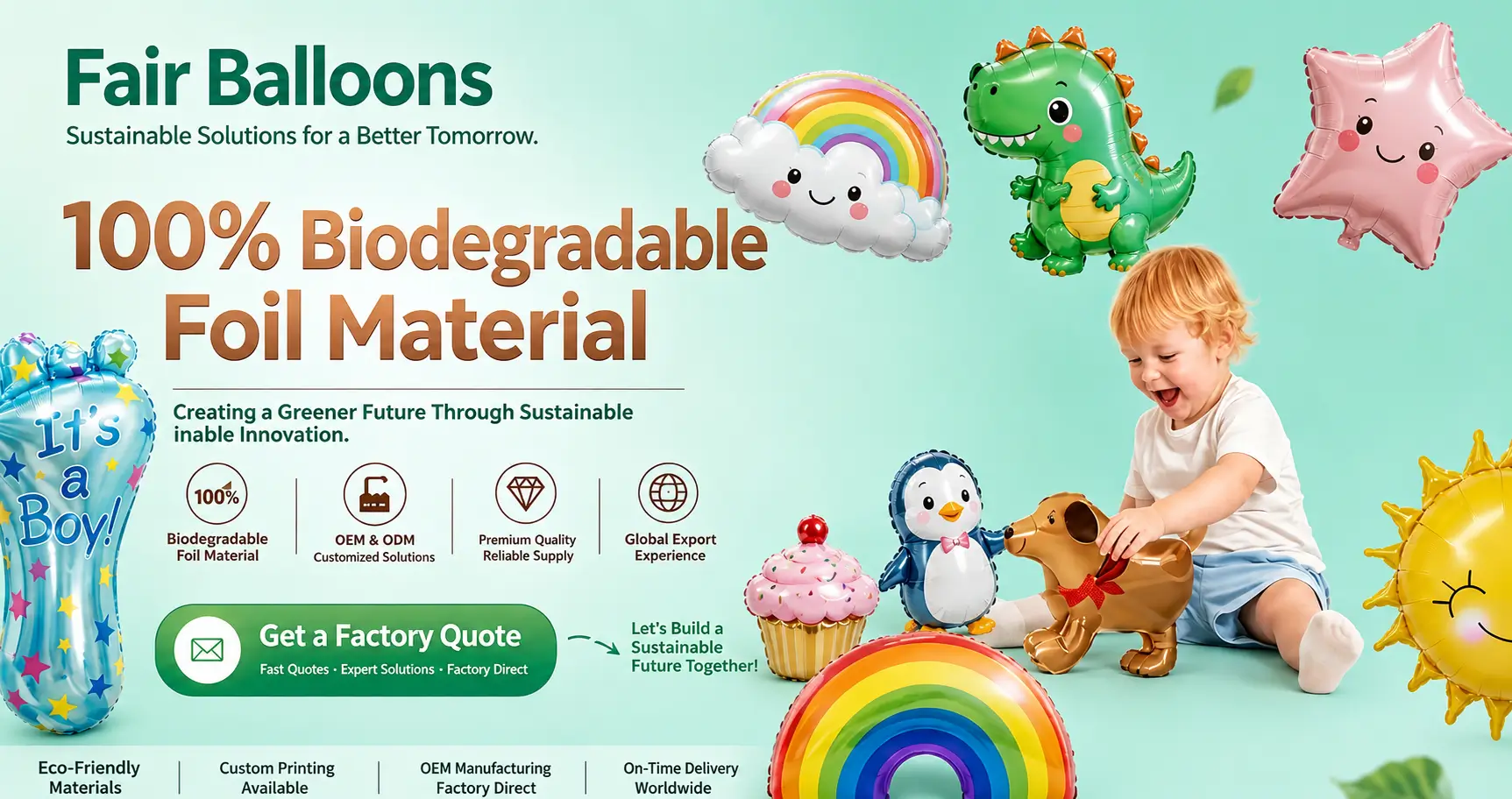
The Hidden Chemical Risk in Eco-Friendly Supply Chains
The global promotional products industry has spent the past decade racing toward sustainability credentials — compostable formulations, biodegradable materials, recycled content certifications. Yet in this hurried pursuit of environmental compliance, a critical dimension of product safety has been frequently overlooked: chemical toxicity at the molecular level. A balloon that degrades into harmless byproducts is a meaningful environmental achievement — but only if those byproducts are, in fact, harmless. If a product labeled "eco-friendly" releases lead, cadmium, phthalates, or polybrominated flame retardants as it breaks down in soil or compost, the sustainability claim is not merely inaccurate — it is a dangerous misrepresentation that exposes every actor in the supply chain to severe regulatory, legal, and environmental liability.
This distinction between biodegradability and chemical safety is the defining compliance challenge of the modern balloon industry. Biodegradation is a physical process — the polymer matrix fragmenting into smaller molecules through microbial activity. Chemical safety is an elemental analysis — verifying that the material's molecular composition contains no restricted substances that could leach into soil, groundwater, or the compost stream as the product degrades. A manufacturer can produce a balloon from a polymer that is genuinely biodegradable while simultaneously using pigments, stabilizers, plasticizers, or coating formulations that introduce hazardous substances into the degradation byproducts. The result is an eco-friendly product that is, in truth, an environmental contamination event in the shape of a celebration.
The consequences of this distinction falling through the cracks of supplier due diligence are not hypothetical. Importers in the European Union face mandatory recall obligations and civil penalties under the REACH Regulation and the EU General Product Safety Regulation when chemical safety failures are identified in products already placed on the market. In the United States, the Consumer Product Safety Commission's authority to mandate product recalls extends to items containing lead or phthalates in concentrations exceeding federal thresholds — thresholds that are structurally identical to those established under the EU RoHS Directive. Australian Product Safety standards impose parallel requirements that increasingly align with international best practices. For a B2B distributor whose inventory includes biodegradable balloon products that have not been chemically verified through independent laboratory testing, the regulatory exposure is not a theoretical future risk — it is an existing liability sitting in the warehouse.
The SGS RoHS test report SHAHG2207652301, issued on June 27, 2022, by SGS-CSTC Standards Technical Services (Shanghai) Co., Ltd. for the safe, heavy-metal-free biodegradable foil balloons manufactured by Kunshan Fair Craft Product Co., Ltd., provides the definitive empirical answer to these concerns. This is not a self-assessment, a supplier declaration, or a third-party certificate whose accreditation scope may be contested. It is a forensic laboratory analysis — executed by the world's most widely recognized product testing institution — screening every relevant component of the DEGRADING BALLOON against the complete list of hazardous substances restricted under EU law.
Unpacking the SGS RoHS Test Report SHAHG2207652301
SGS-CSTC Standards Technical Services (Shanghai) Co., Ltd. is the Shanghai-based laboratory subsidiary of SGS SA, the inspection, verification, and testing multinational founded in 1878 and now operating the world's largest network of independent testing facilities. The SGS Group's accreditations include ISO 17025 (general requirements for the competence of testing and calibration laboratories), ISO 17020 (requirements for bodies performing inspection), and numerous product-specific accreditations from national accreditation bodies. When a compliance officer or procurement manager sees an SGS report number, the immediate implication is that the document meets the evidentiary standards of regulatory authorities in every major trading jurisdiction — a characteristic that distinguishes SGS from regional testing laboratories whose credentials may not be recognized beyond their home market.
Report number SHAHG2207652301 was formally issued on June 27, 2022, following a testing period that ran from June 21 to June 27, 2022 — a six-day intensive screening protocol that reflects the comprehensive scope of the RoHS analysis. The client identified on the report is Kunshan Fair Craft Product Co., Ltd., a Jiangsu Province-based manufacturer specializing in foil and metallized balloon production. The sample submitted for testing was designated on the official documentation as a "DEGRADING BALLOON" — an explicit product type identification that confirms the test was conducted on the actual commercial article, not a raw material precursor or a formulation representative. SGS chain-of-custody protocols require sample identification matching between the submission documentation and the physical specimens received at the laboratory, eliminating the possibility that a different material was inadvertently or deliberately substituted.
The test requested — RoHS Directive (EU) 2015/863 amending Annex II to Directive 2011/65/EU — is the most comprehensive chemical safety standard applicable to electrical and electronic equipment and, by extension, to the metallized coatings, printed inks, and polymer additives used in consumer products that may be classified under the broader interpretation of the Directive's scope. The testing was conducted under the authorization of Alicia Lu, the SGS-approved signatory whose signature on the report confers institutional accountability for the accuracy and completeness of the findings. An approved signatory is not a clerical role — it is a professional certification that carries personal legal liability under SGS's accreditation conditions, ensuring that the data presented in the report has been reviewed and validated by a qualified expert.
What is RoHS Directive (EU) 2015/863 and Why It Governs Modern Balloons
The Restriction of Hazardous Substances in Electrical and Electronic Equipment Directive — universally referred to by its acronym RoHS — was originally adopted by the European Parliament and Council in 2002 as Directive 2002/95/EC, targeting the six substance categories most commonly associated with electronic waste toxicity: lead, mercury, cadmium, hexavalent chromium, polybrominated biphenyls (PBBs), and polybrominated diphenyl ethers (PBDEs). The Directive has undergone four successive amendments, each expanding both the scope of regulated products and the list of restricted substances. The most consequential of these amendments was Delegated Directive (EU) 2015/863, which added four phthalate esters to the restricted list — DEHP (di-2-ethylhexyl phthalate), BBP (butyl benzyl phthalate), DBP (dibutyl phthalate), and DIBP (diisobutyl phthalate) — effective July 22, 2019, for all electrical and electronic equipment placed on the EU market.
The relevance of RoHS to balloon products — which are not, on their surface, electrical or electronic equipment — is rooted in the composition of their component materials and the regulatory interpretation adopted by enforcement authorities across multiple jurisdictions. Metallized balloon coatings contain aluminum applied through vapor deposition processes that may involve chemical preprocessing agents. Printing inks used for custom branding contain pigments, carriers, and drying agents — some of which historically have included lead chromate pigments, cadmium sulfide brighteners, or chromium-based mordants. Polymer formulations for the base film may incorporate plasticizers to improve flexibility, heat stabilizers to prevent thermal degradation during processing, and slip additives to prevent film blocking during storage and transport. Each of these additive categories has, in commodity plastic production, historically included compounds restricted under RoHS. The EU RoHS Directive hazardous substance restrictions thus apply not because the balloon is electronic equipment, but because any of its component materials may introduce restricted substances into the waste stream at end of life.
The Ten Restricted Substances Under (EU) 2015/863
The implications of these test results are straightforward and legally significant. The DEGRADING BALLOON, as manufactured by Kunshan Fair Craft Product Co., Ltd., was found to contain none of the ten restricted substances at concentrations approaching — let alone exceeding — the regulatory thresholds established under EU law. This means the product can be legally placed on the EU market without restriction, can be imported into the United States without triggering CPSC reporting obligations, and meets the chemical safety thresholds recognized by product safety authorities in Australia, the United Kingdom, and all other major trading partners. The commercial significance of this status cannot be overstated: it means the product clears the chemical safety hurdle that eliminates a substantial proportion of competing imports from consideration by major retail buyers and corporate procurement committees.
Environmental Toxicity vs. True Degradation — The E-A-T Standard for Eco-Friendly Products
The concept of "eco-friendly" degradation has a technical definition that is frequently misunderstood in commercial marketing. True eco-friendly degradation requires that the end products of the degradation process be environmentally benign — consumable by soil microorganisms without generating toxic byproducts, not generating persistent microplastic residue, and not introducing any substance that impairs plant germination, soil microbial activity, or earthworm and invertebrate populations that constitute the base of the terrestrial food web. A material that fragments into microplastics that persist for centuries may technically be "biodegradable" in the loosest sense of the word, but it is not eco-friendly. The distinction matters enormously for compliance purposes and for the credibility of any sustainability claim attached to the product.
The RoHS compliance of the DEGRADING BALLOON addresses the chemical toxicity dimension of this problem from first principles. When a product contains no lead, cadmium, mercury, hexavalent chromium, brominated flame retardants, or phthalate plasticizers at the outset — as confirmed by the SGS screening — the degradation byproducts cannot include these substances. The logic is absolute: you cannot leach what was never there. This is the fundamental advantage of a RoHS-compliant formulation over products that contain restricted substances at concentrations below RoHS thresholds but above the concentrations that affect soil ecosystems. The DEGRADING BALLOON's RoHS compliance is not simply a regulatory checkbox — it is the chemical foundation on which the true eco-friendly degradation claim is built.
The Science of Compost Ecotoxicity
When the DEGRADING BALLOON completes its degradation cycle — converting polymer carbon to CO₂, water, and microbial biomass under industrial composting conditions — the resulting compost is chemically indistinguishable from compost produced from any other biosphere-compatible organic material. Plant germination assays conducted as part of the compostability certification process confirm that seeds germinated in compost derived from degraded PLA-PBAT materials show equivalent emergence rates, root development, and biomass accumulation to seeds germinated in control soils. This is the ultimate validation of the "eco-friendly" claim: not merely that the product goes away, but that what it becomes nourishes rather than contaminates the environment.
B2B Sourcing Advantages — Passing Customs, Retail Audits, and Regulatory Scrutiny
The practical commercial consequences of RoHS non-compliance in the balloon import business are severe and immediate. Customs authorities in the European Union, United States, and United Kingdom have all implemented border screening protocols that flag shipments of consumer products for chemical safety documentation review when the product description, declared composition, or origin country triggers a risk profile. Balloon products manufactured in China that arrive at EU ports without a RoHS compliance document are routinely subjected to extended documentation review, laboratory sampling at the port, and in some cases, seizure pending test results. The delay costs — storage fees, demurrage charges, missed delivery windows, and contractual penalties for late delivery — routinely exceed the landed value of the goods themselves.
Major retail chains have institutionalized RoHS compliance as a non-negotiable prerequisite for product listing. Walmart's Sustainability Index, Target's Sustainable Products Standards, and Carrefour's Responsible Product Sourcing Policy all include chemical safety criteria that either explicitly reference RoHS thresholds or incorporate them by reference through recognized third-party certification schemes. A B2B distributor attempting to place a balloon product with a major retailer without a current RoHS test report will encounter a procurement compliance block that cannot be bypassed through pricing, relationship, or volume commitments. The full wholesale eco-balloon catalog is backed by the SGS RoHS report SHAHG2207652301 — providing the compliance documentation package that retail procurement teams require for onboarding.
The UK REACH and US TSCA Overlay
While RoHS is the most widely recognized chemical safety standard, it does not operate in isolation. The UK's REACH Implementation Programme (UK REACH), which took effect following Brexit, mirrors EU REACH obligations and requires that imported articles comply with the same restricted substance list. The US Toxic Substances Control Act (TSCA), administered by the EPA, imposes reporting and in some cases restriction requirements for chemical substances in consumer products. Distributors who can present a RoHS compliance report from an ISO 17025-accredited laboratory are positioned to satisfy the chemical safety documentation requirements under all three regulatory frameworks — EU, UK, and US — with a single document. This cross-jurisdictional acceptance is a direct function of SGS's global accreditation status and the international recognition of its test reports.
Advanced Manufacturing — Water-Based Inks, Clean Formulations, and Zero-Compromise Chemistry
The RoHS compliance documented in report SHAHG2207652301 is not accidental. It is the result of deliberate engineering and formulation control at every stage of the manufacturing process — from raw material sourcing through final packaging. Understanding how Kunshan Fair Craft Product Co., Ltd. achieves and maintains RoHS compliance illuminates why this result is replicable, verifiable, and sustainable as a production standard rather than a one-time lucky batch.
Raw Material Sourcing and Polymer Formulation
The base polymer substrate — the PLA-PBAT-nanoclay co-extruded film described in detail in the SGS biodegradation testing documentation — is manufactured from raw material grades that are themselves certified as heavy-metal-free by their upstream suppliers. PLA pellets used in the production process are sourced from producers who utilize corn starch or sugarcane as feedstock, eliminating the heavy metal contamination pathways that exist in polymer production processes using petroleum-derived feedstocks. The PBAT component is sourced from certified compostable polymer manufacturers who have committed to RoHS-compliant formulations as a standard product feature rather than a premium specialty item. The organo-modified nanoclay additive is similarly specified to exclude heavy metal-based intercalating agents, which are a common source of cadmium and chromium contamination in commodity nanoclay products.
Water-Based Printing Inks
Custom branding and multi-color decorative printing on the DEGRADING BALLOON is executed exclusively using water-based ink systems. Solvent-based ink formulations — particularly those used in conventional rotogravure printing of metallized PET balloons — frequently contain volatile organic compounds (VOCs) and may incorporate heavy metal-containing pigments such as lead chromate (yellows and oranges), cadmium sulfide (reds and yellows), and chromium-based drying agents (siccatives). Water-based inks eliminate these contamination pathways entirely. The pigments used in the water-based ink system are selected from heavy-metal-free grades certified by the ink manufacturer as compliant with the European Standard EN 14362 (determination of certain aromatic amines in azo dyes and pigments). The result is a printed balloon that, like the unprinted base film, contains no restricted substances at concentrations approaching RoHS thresholds.
Process Contamination Controls
Beyond raw material selection, the manufacturing facility maintains documented process controls that prevent cross-contamination of RoHS-compliant production runs with restricted substances from other product lines. This is a particular concern for manufacturers who process both RoHS-compliant and non-compliant formulations on shared equipment — a practice that can result in trace contamination of compliant products by equipment residues from non-compliant runs. The RoHS compliance documented in SHAHG2207652301 implies that Kunshan Fair Craft maintains either dedicated production equipment for RoHS-compliant product lines or validated cleaning changeover procedures between product changeovers that prevent carryover contamination.
Chemical Safety and Sustainability Are Inseparable — And So Is Your Compliance Strategy
The SGS RoHS test report SHAHG2207652301, issued June 27, 2022, for the DEGRADING BALLOON manufactured by Kunshan Fair Craft Product Co., Ltd., establishes a fact that is not subject to interpretation or qualification: this product contains none of the ten hazardous substances restricted under EU RoHS Directive (EU) 2015/863, at concentrations reported as not detected by the world's most widely recognized independent testing laboratory. This is not a supplier's self-assessment. It is not a declaration. It is a forensic laboratory result with legal standing in every major trading jurisdiction.
For B2B distributors, procurement managers, and compliance officers evaluating their balloon supply chain options, this document resolves the most consequential question in the current market: whether a product can simultaneously deliver biodegradability and chemical safety. The answer, as documented by SGS, is yes — but only if the supplier can produce a test report of this caliber. The distributors who build their inventory strategy around products that carry this level of verified compliance will be protected from the regulatory enforcement wave that is already reshaping the industry. Those who do not will find themselves exposed to the compounding costs of non-compliance at precisely the moment when their customers' own compliance requirements are tightening fastest.
Download the Full RoHS Report and Start Your Compliance Verification
For procurement managers, supply chain directors, and eco-conscious brands ready to secure a compliant, non-toxic, and fully certified biodegradable balloon supply line.
The safe, heavy-metal-free biodegradable foil balloons backed by SGS RoHS report SHAHG2207652301 represent the only procurement choice that simultaneously addresses environmental biodegradation credentials and chemical safety compliance — the two requirements that, taken together, define the product standard the global market is now converging on. The documentation exists. The verification is on record. The regulatory certainty is yours to secure.