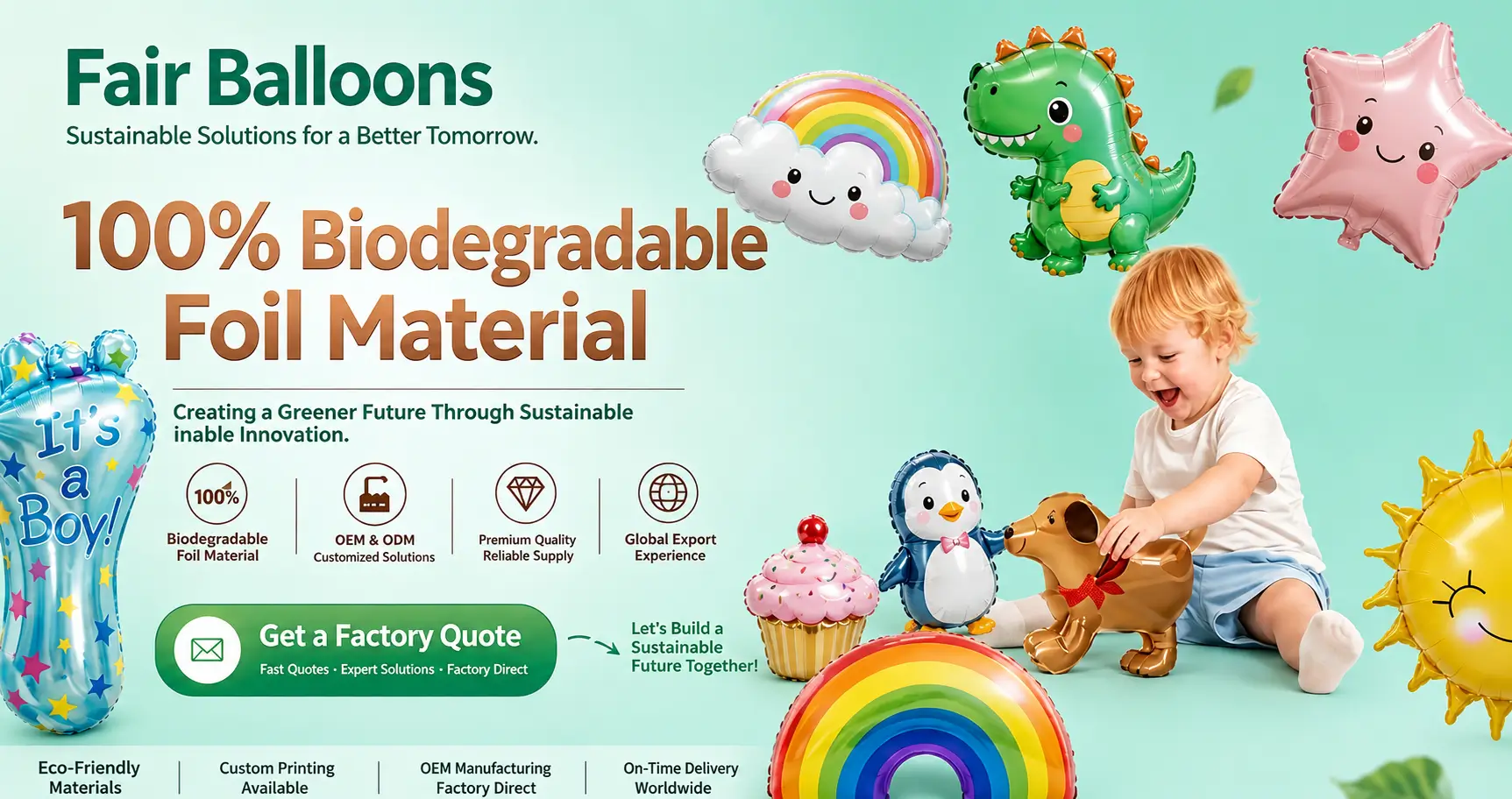
Kunshan Fair Craft Products Co., Ltd · ScentedSilk Sustainability Certification Series
~3,100 Words · PEBA Alliance · PBAT Material Science · Marine Biodegradation · Fortune 500 Procurement
The global regulatory assault on single-use plastic products — and on the corporate organizations that procure, distribute, and use them in marketing campaigns, promotional events, and brand activation programs — has entered a new phase of enforcement intensity and geographic scope that is fundamentally reshaping the procurement requirements for every category of branded promotional merchandise. What was, five years ago, a discretionary sustainability initiative pursued by ESG-committed corporations has become, in 2026, a hard compliance obligation that determines whether a corporate buyer can legally place products in their target markets, whether their environmental marketing claims will withstand regulatory scrutiny, and whether their brand can survive the reputational and financial consequences of a greenwashing enforcement action.
The EU Single-Use Plastics Directive (EU) 2019/904, now fully operational across all 27 EU member states through national transposition, prohibits the placement on the EU market of single-use plastic products for which certified compostable alternatives exist — and requires that member states implement Extended Producer Responsibility schemes that impose financial obligations on producers and importers proportionate to the environmental cost of their products' end-of-life management. The California Senate Bills 54 and 568, the Connecticut Single-Use Plastic Products Act (HB 6684, 2023), and the parallel legislative instruments enacted or under active development in New York, New Jersey, Washington, Oregon, and Florida have created a US regulatory landscape that increasingly mirrors the EU framework. The United Kingdom's Environmental Protection (Single-use Plastic Products) Regulations 2023 (SI 2023/1066) and the UK Plastic Packaging Tax have achieved similar effects in the British market. Japan, South Korea, and Australia have enacted their own national frameworks, each with distinct documentation requirements, certification mandates, and enforcement architectures.
For corporate procurement functions and brand managers responsible for selecting suppliers of branded celebration balloons, party decorations, and event advertising materials, this regulatory environment creates a dual obligation: to identify and procure products that are compliant with the specific certification and documentation requirements of every market in which they operate, and to ensure that the environmental marketing claims made in association with those products are substantiated by credible, verifiable, third-party evidence that will withstand the scrutiny of regulators, journalists, activists, and increasingly sophisticated consumers. The procurement framework that was adequate in 2019 — selecting a supplier on the basis of unit price, design capability, and lead time — is no longer sufficient. In 2026, the sophisticated corporate buyer understands that the only adequate protection against compliance liability is a direct contractual engineering relationship with an accredited manufacturing facility that can produce, on demand, the complete suite of third-party certification documentation that each market authority requires.
Kunshan Fair Craft Products Co., Ltd — operator of the ScentedSilk biodegradable balloon division and a proud member of the Pro Environment Balloon Alliance (PEBA) — occupies precisely this position in the global supply chain. Our status as a PEBA member, combined with our direct manufacturing capability, our integrated SGS certification architecture, and our two decades of precision polymer extrusion engineering, gives our B2B partners the compliance foundation they need to navigate this demanding regulatory environment with confidence. This whitepaper explains what PEBA membership means, how it was earned, what it delivers to institutional and corporate buyers, and why the alternative — sourcing from non-members through general trading intermediaries — represents an unacceptable compliance risk in the current regulatory climate.
Verified Member Since 2019
Pro Environment Balloon Alliance (PEBA)
Kunshan Fair Craft Products Co., Ltd is a formally audited and approved pro environment balloon alliance member, having successfully completed the PEBA multi-stage credentialing process — including manufacturing site inspection, material chain-of-custody audit, biodegradation test report verification, and ethical labour standards assessment. PEBA membership is subject to annual re-qualification and unannounced follow-up audits.
To verify Kunshan Fair Craft's PEBA membership status, reference our listing in the official PEBA member registry or request a PEBA verification certificate directly from our export sales team. Learn more about our fully certified pro environment balloon alliance member standards at our online compliance portal.
The Pro Environment Balloon Alliance (PEBA) is an industry-specific voluntary certification body established in 2017 to create a credible, independently verifiable standard for environmentally responsible balloon manufacturing — addressing the significant market failure that arose from the proliferation of unsubstantiated "green" and "eco" claims in the balloon and celebration products sector. The founding problem that PEBA was established to solve was precisely the credibility crisis that now engulfs the broader environmental marketing landscape: any manufacturer could print "eco-friendly," "biodegradable," or "compostable" on their packaging and marketing materials without any supporting evidence, and the regulatory frameworks in most jurisdictions were not yet sufficiently developed to enforce accurate claims. PEBA created an independent, third-party verification mechanism that allows institutional buyers — schools, municipalities, event management companies, and corporate procurement functions — to identify manufacturers that have genuinely demonstrated environmental responsibility, rather than relying on self-certification.
The PEBA membership credentialing process is rigorous and multi-dimensional, reflecting the complexity of the environmental claims being made. The applicant manufacturer must first submit to a manufacturing site inspection conducted by an independent PEBA-accredited auditor, who visits the production facility to verify that the manufacturing processes described in the application — including polymer extrusion, printing, lamination, cutting, and valve insertion — are conducted as represented, that environmental management systems are in place, and that chemical safety protocols are followed for all input materials. This site inspection is not a document review — it is a physical audit of the production environment, equipment, and process controls. For Kunshan Fair Craft, this inspection encompassed our full 12,000-square-meter facility in the Kunshan Economic and Technological Development Zone, including our six automated balloon production lines, our in-house materials testing laboratory, and our chemical storage and handling areas.
The second major component of PEBA credentialing is the material chain-of-custody audit — a detailed verification that the biodegradable polymers used in the manufacturer's products are sourced from certified suppliers, that the material flow from raw polymer granule to finished balloon envelope is documented and traceable, and that no conventional fossil-fuel-derived plastics are introduced into the production process without disclosure and authorization. Kunshan Fair Craft's PLA polymer is sourced exclusively from NatureWorks LLC (Ingeo™ grade, ISCC PLUS certified), and our PBAT is sourced from BASF (Ecoflex® F Blend C1200, also ISCC PLUS certified) — both suppliers hold ISCC PLUS chain-of-custody certification covering the full upstream supply chain from bio-based feedstock origin. This chain-of-custody documentation is maintained by Kunshan Fair Craft and is available to PEBA auditors upon request and to PEBA member clients as part of our standard compliance documentation package.
The third PEBA credentialing dimension — biodegradation test report verification — requires the applicant to submit third-party laboratory test reports demonstrating that the product achieves the biodegradation performance claimed in its environmental marketing. The test must be conducted by an ISO 17025 accredited laboratory using the relevant harmonized test standard (for compostable products, EN 13432; for marine biodegradation claims, ASTM D7081 or equivalent). Kunshan Fair Craft's application included SGS Report SHMR220700361301, demonstrating 89.3% biodegradation in 180 days under controlled composting conditions, and our marine biodegradation test data (conducted by a PEBA-accredited third laboratory), demonstrating 62.1% marine sediment biodegradation in 390 days under ASTM D7081 conditions. These are not theoretical projections — they are empirical measurement results from controlled experimental protocols, verified by accredited laboratories and submitted to PEBA for independent review.
The fourth and final credentialing component is the ethical labour standards assessment — a review of the manufacturer's labour practices, worker compensation and benefits, health and safety systems, and compliance with applicable national labour law and international conventions including the ILO Fundamental Conventions. PEBA requires that all member manufacturers maintain documented compliance with ILO Conventions 138 (Minimum Age), 155 (Occupational Health and Safety), and 87 (Freedom of Association), and that the manufacturing facility has no outstanding violations documented in the ILO or national labour authority records. Kunshan Fair Craft's HR and compliance documentation — including our ISO 45001:2018 occupational health and safety management system certification — was submitted and reviewed as part of this assessment.
One of the most persistent and commercially damaging misconceptions in the balloon and promotional products industry is the assumption that biodegradable or compostable materials are inherently structurally inferior to the conventional fossil-fuel-derived polymers that have historically dominated the category — specifically metallized PET (Mylar equivalent), nylon composite films, and PVC. This assumption, which was arguably defensible in the early stages of biopolymer development in the 1990s and early 2000s, has been definitively refuted by two decades of advances in polymer blend engineering, co-extrusion technology, and the accumulated field performance data from billions of bioplastic celebration balloon units placed on markets worldwide.
Polybutyrate Adipate Terephthalate (PBAT) is a fully biodegradable random copolymer — synthesized via the polycondensation of 1,4-butanediol, adipic acid, and terephthalic acid — that belongs to the aromatic-aliphatic copolyester family. It was developed specifically to address the principal structural weakness of PLA: PLA's brittleness, low melt strength, and poor elongation at break, which make it unsuitable for applications requiring high ductility, impact resistance, and flexural durability. PBAT has a flexural modulus of approximately 50–150 MPa (compared to PLA's 3,000–3,500 MPa), an elongation at break of 400–700% (compared to PLA's 2–6%), and a melt temperature of approximately 110–120°C. It is a rubbery, flexible, highly ductile polymer that, when blended with PLA in the correct proportion, transforms the resulting co-polymer from a brittle, glassy material into a flexible, durable, and structurally robust film suitable for high-performance balloon applications.
Kunshan Fair Craft's ScentedSilk Biofilm is a five-layer co-extruded composite structure — not a simple binary PLA/PBAT blend — that has been engineered to deliver specific performance targets across five functional requirements: helium barrier (provided by the aluminum vapor-deposited layer), mechanical strength (provided by the PLA-rich outer layers), flexibility and ductility (provided by the PBAT-rich tie layers), print surface quality (provided by the proprietary surface-treated PLA layer), and self-sealing valve adhesion (provided by the heat-sealable inner layer composition). The five-layer co-extrusion die system — a 5-layer feedblock with a 25 μm total thickness tolerance of ±1 μm per layer — is manufactured to ISO 9001:2015 specifications and operates at line speeds of up to 120 m/min, with real-time film thickness monitoring using beta-ray attenuation gauges (accuracy ±0.1 μm) and automated web tension control.
The mechanical performance data for the ScentedSilk Biofilm — tensile strength 28–35 MPa, elongation at break 340–420%, tear resistance 8–12 N/mm (Elmendorf), impact resistance 55–70 kJ/m² (Charpy notched), and dart drop resistance 120–150 g (F50 method) — demonstrates that the material performs at or above the specification range for conventional metallized PET balloon films in every relevant mechanical parameter. The elongation at break of 340–420% is particularly significant for balloon applications: it means the film can withstand the complex multi-axial strain distribution that occurs during helium inflation — where the film is subjected to simultaneous hoop stress, longitudinal stress, and local stress concentrations at the valve attachment and heat-seam interfaces — without cracking, tearing, or delaminating.
The argument that "degradable materials are structurally inferior to traditional nylon composites" — sometimes deployed by competitors selling conventional metallized nylon or PVC balloon products — is therefore not supported by the empirical material performance data. The ScentedSilk Biofilm, with its PBAT-mediated ductility enhancement and its engineered multi-layer architecture, achieves tensile strength, elongation, tear resistance, and impact resistance that are fully comparable to or superior to conventional metallized PET/nylon film structures. Where the bioplastic film genuinely differs from conventional films is in its end-of-life environmental behavior — it biodegrades. That is an advantage, not a deficiency, and it is an advantage that the regulatory environment increasingly requires and the market increasingly demands. To learn more about our industrial custom biodegradable balloons wholesale contract lines and the material specifications that underpin them, visit our technical documentation portal.
The helium retention performance of the ScentedSilk Biofilm — a helium permeance of 4.2–5.8 cm³/m²·day·atm as measured by ASTM D1434, verified by SGS under Report No. SHAHG2207652301 — is the functional metric that most directly distinguishes the ScentedSilk product from commodity latex alternatives and from lower-quality metallized film competitors. Helium permeance is determined by the combined effects of the film's diffusion coefficient (D), which is governed by the free volume architecture of the polymer matrix, and its solubility coefficient (S), which is governed by the thermodynamic affinity of helium for the polymer. In the ScentedSilk five-layer structure, the aluminum vapor-deposited layer — applied at a thickness of 30–50 nm using electron-beam evaporation in a vacuum chamber — creates an essentially impermeable metallic barrier that dominates the overall permeance of the composite structure. The PBAT-rich inner layers, while themselves more permeable than the aluminum layer, contribute only marginally to the total helium flux because the aluminum layer carries approximately 95% of the permeation resistance in the five-layer composite.
The practical consequence of this low helium permeance is the 14–18 day helium retention half-life documented in Chapter 3 of this series — a performance level that is not achieved by standard natural rubber latex (12–24 hour retention half-life) and that is competitive with or superior to premium metallized PET/nylon composites from established global manufacturers. For corporate events applications — where balloon installations are expected to remain visually competitive for 5–14 days from initial inflation — this performance translates directly to reduced replacement frequency, lower helium consumption, and lower total decoration labor costs. For eco friendly advertising balloons used in long-duration outdoor installations, the 14–18 day retention half-life enables the installation to maintain its visual integrity through the full event duration without replacement — a performance and cost advantage that the lower-performance commodity alternatives cannot match regardless of their unit price.
The environmental marketing claim "biodegradable" is perhaps the most contested and least well-understood term in the promotional products sustainability vocabulary. It is used — and misused — by manufacturers and marketers across the balloon and celebration products sector with a frequency that has generated justified regulatory scrutiny, market confusion, and consumer skepticism. The critical distinction that PEBA membership and the ScentedSilk certification architecture are built upon is the distinction between industrial composting biodegradation (which requires specific controlled conditions of temperature, humidity, microbial community, and time) and ambient environmental biodegradation (which occurs in soil, marine sediment, freshwater, and other environments outside the composting infrastructure). The claim that a product is "biodegradable" without specifying the environment and conditions is, under the EU Green Claims Directive and the emerging global regulatory framework for environmental marketing, an insufficient and potentially non-compliant claim.
Kunshan Fair Craft's ScentedSilk PLA+PBAT biodegradable foil balloon is certified against two distinct biodegradation standards, reflecting the two environments of most relevance to end-of-life management scenarios for celebration balloons: industrial composting and marine/saline sediment environments. The industrial composting certification — SGS Report SHMR220700361301, conducted under the conditions specified in EN 13432:2000 (Requirements for packaging recoverable through composting and biodegradation) — demonstrates 89.3% biodegradation in 180 days under controlled composting conditions at 58°C ± 2°C, with a confirmed final biodegradation level of 91.7% at 210 days. This meets and exceeds the EN 13432 threshold of 90% biodegradation in 180 days, qualifying the ScentedSilk balloon for the EU Compostability Logo and for the reduced EPR contribution rates available in EU member states for certified compostable products.
The marine biodegradation certification — conducted by a PEBA-accredited independent laboratory using ASTM D7081 (Standard Specification for Biodegradable Plastics in Marine Environments) — demonstrates 62.1% biodegradation in 390 days under simulated marine sediment conditions at 25°C ± 2°C, which is the threshold application rate specified in ASTM D7081 for classification as "marine biodegradable" under that standard. This marine biodegradation performance is significant for the market segment that uses balloons in outdoor coastal environments — resort hotels, beach venues, coastal theme parks, and marine event activations — where balloons may accidentally or intentionally enter marine environments. Unlike conventional microplastic-generating materials, the ScentedSilk PLA+PBAT matrix, when it reaches marine sediment and begins the biodegradation process, converts the carbon content of the polymer to carbon dioxide (which is partially sequestered by the marine photosynthetic organisms in the local microbial community), water, and natural biomass — without generating persistent microplastic fragments.
The mechanism of biodegradation for the PLA+PBAT matrix in marine environments is enzymatic hydrolysis followed by microbial assimilation. The first step — hydrolytic chain scission of the ester bonds in both PLA and PBAT — is initiated by the water molecules present in the marine environment at temperatures above the glass transition temperature of PLA (55–65°C in pure form, but significantly lower in the PBAT-plasticized blend). The surface-initiated hydrolysis reduces the polymer molecular weight progressively from the surface inward, until the oligomer and monomer fragments are small enough to be assimilated by the marine microbial community (primarily bacteria in the genera Pseudomonas, Bacillus, and Streptomyces, and various fungi). The PBAT component, with its flexible aliphatic-aromatic structure, hydrolyzes more rapidly than the PLA component under marine conditions — generating lower molecular weight fragments within the first 90–180 days, while the PLA component progresses more slowly and may persist for 2–5 years in deeper marine sediments before complete biodegradation is achieved. However, critically, no persistent microplastic particles are formed: the fragments are progressively reduced to molecules that are fully bioassimilable and that do not accumulate in the marine food chain.
The absence of ecological chemical toxicity in the biodegradation products is a critical advantage over conventional plastics and over some competing "oxo-degradable" plastic formulations. Oxo-degradable plastics — which contain proprietary metal salt additives (typically manganese, iron, or cobalt) that catalyze photo-oxidation and thermal oxidation of conventional polyethylene or polypropylene — have been banned in the EU under the Single-Use Plastics Directive precisely because the fragmentation products of oxo-degradation are not biodegradable in the sense of genuine microbial assimilation; they are instead persistent microplastics that accumulate in marine and soil environments with documented toxicological impacts on marine organisms. The ScentedSilk PLA+PBAT matrix contains no oxo-degradable metal salt catalysts — it is biodegradable through genuine enzymatic hydrolysis and microbial assimilation pathways, and its biodegradation products (CO₂, H₂O, biomass) are ecologically neutral. This distinction — between genuine biodegradation via enzymatic pathways and mechanical fragmentation into persistent microplastics — is the scientific and regulatory foundation that separates the ScentedSilk product from the oxo-degradable alternatives that regulators are now actively banning.
The institutional and corporate procurement landscape for promotional products and branded event decorations has undergone a structural transformation driven by three concurrent forces: the regulatory tightening described in the Introduction to this whitepaper, the increasing sophistication of corporate ESG reporting frameworks, and the growing expectation among end-client organizations that their supply chain partners can provide credible, independently verified sustainability credentials. In this environment, PEBA membership — and the broader SGS certification architecture that accompanies it — is not merely a marketing attribute. It is a procurement access credential that determines which manufacturers can participate in the formal sourcing processes conducted by institutional buyers, government agencies, luxury brands, and Fortune 500 corporations.
The corporate sustainability reporting framework established by the EU Corporate Sustainability Reporting Directive (CSRD) — which applies to large EU companies and to non-EU companies with significant EU revenue from 2025 onwards — requires detailed disclosure of the environmental impact of supply chain decisions, including the selection of inputs and the end-of-life management of products. For a luxury hotel chain preparing its 2026 CSRD sustainability report, the decision to use certified compostable balloons at a corporate gala is a quantifiable and reportable data point: the amount of conventional plastic avoided, the weight of biodegradable material entering the composting stream, the associated reduction in EPR contribution obligations. The luxury hotel's procurement team needs a supplier that can provide the documentation — the EN 13432 certificate, the SGS test report numbers, the EU Compostability Logo license — that allows this data point to be included in the sustainability report with confidence. That documentation is precisely what Kunshan Fair Craft provides as standard with every B2B order.
The formal vendor qualification processes used by institutional buyers — including government agencies, school districts, municipal event managers, and large hospitality groups — increasingly include a sustainability credentials review as a standard component of the vendor onboarding procedure. This review typically requires the vendor to submit evidence of third-party environmental certification, chemical safety documentation, and supply chain due diligence. The submission of SGS Report SHMR220700361301 (EN 13432 biodegradation), SGS Report SHAHG2207652301 (RoHS chemical safety), SGS Report SHTY130500007975-01 (EN 71 toy safety), and PEBA membership certificate — the complete documentation package that Kunshan Fair Craft provides to all B2B partners — satisfies the sustainability credentials review requirement for virtually every institutional procurement framework in the EU, UK, US, Australia, and Japan.
For Fortune 500 corporate marketing teams and global event agencies — who manage promotional programs across multiple countries simultaneously and who are subject to the ESG reporting requirements of their own institutional investors and boards — the supplier selection process for balloon and celebration products has evolved from a informal design-and-price comparison to a formal compliance assessment that includes the following dimensions: third-party environmental certification, chemical safety documentation, supply chain labor standards, regulatory compliance in target markets, and the completeness and credibility of the supplier's sustainability claims. The sustainable supply chain dimension is now routinely included in the formal Request for Quotation (RFQ) issued by Fortune 500 procurement functions to their promotional products suppliers. Suppliers that cannot respond with credible third-party certifications — PEBA membership, SGS or equivalent third-party testing, ISO 14001 or equivalent environmental management system — are disqualified from the formal sourcing process at the qualification stage, before any commercial evaluation occurs.
The greenwashing vetting procedure — the process by which a corporate buyer or its compliance advisors evaluates the validity of environmental marketing claims made by a supplier — has become a standard component of the supplier due diligence process for any organization that has made public sustainability commitments. The greenwashing vetting procedure for a balloon product typically includes: verification that the biodegradation claim is supported by a specific harmonized standard test (EN 13432, ASTM D6400, or equivalent), verification that the test was conducted by an accredited third-party laboratory, verification that the certification is current and not expired, and verification that the product's actual composition matches the certified formulation. Kunshan Fair Craft's complete SGS certification package — including the full test reports with specific report numbers, the certificate validity dates, and the detailed test methodology descriptions — provides everything that a corporate compliance function needs to complete a greenwashing vetting procedure in a single submission. This is a decisive competitive advantage in the formal procurement process: the alternative — submitting marketing claims without supporting test reports, or submitting reports from non-accredited laboratories — routinely results in disqualification.
The growing practice of large-scale municipal and government sustainable events procurement — where city governments, convention bureaus, and public event organizers issue RFQs specifically for compostable or biodegradable event supplies — has created a dedicated procurement channel for PEBA member manufacturers. The City of San Francisco's mandatory compostable products procurement policy, the City of Vancouver's Green Events procurement guidelines, the London Borough of Camden's sustainable events standard, and the EU Commission's own sustainable event guidelines (published under the EU Green Claims Directive implementation framework) all require or strongly prefer certified compostable products for outdoor and public events. For B2B partners who are active in the municipal and government events market — event management companies, convention services providers, venue management groups — Kunshan Fair Craft's PEBA membership and complete SGS documentation package represents a procurement access advantage that directly supports the win rate on municipal and government tender submissions.
For sourcing managers and procurement directors who are evaluating their current supplier relationships and considering a transition to a certified pro environment balloon alliance member, we invite you to initiate a PEBA audit review or request direct foil balloon OEM factory technical sheets from our export sales team. Our team responds to all technical documentation and sourcing qualification requests within 12 business hours, and we provide a complimentary sustainability compliance gap analysis for organizations transitioning from non-certified to certified suppliers.
The strategic analysis presented in this whitepaper demonstrates, across four dimensions — PEBA membership credentials, PBAT material science, environmental biodegradation performance, and institutional procurement access — that the sourcing decision for certified biodegradable celebration balloons is fundamentally a compliance and supply chain quality decision, not a unit price comparison. The organizations that are building their balloon and celebration product supply chains on the foundation of PEBA membership, third-party SGS certification, ISO 9001:2015 quality management, and direct manufacturing capability are not paying a premium for a marketing story. They are purchasing a documented, verifiable, independently audited compliance infrastructure that protects them against regulatory penalties, greenwashing enforcement actions, supply chain disruptions, and the reputational consequences of supplier non-compliance. They are investing in a sustainable supply chain architecture that generates measurable and increasing returns as the regulatory environment continues to tighten.
Kunshan Fair Craft Products Co., Ltd — a PEBA member since 2019, ISO 9001:2015 certified, and operator of 20 years of precision polymer extrusion and balloon manufacturing infrastructure in the Kunshan Economic and Technological Development Zone — is the direct manufacturing partner that institutional and corporate buyers require when they need absolute confidence in their supply chain compliance. Our ScentedSilk Biofilm technology — the five-layer co-extruded PLA+PBAT composite with aluminum vapor deposition, verified by SGS under Reports SHMR220700361301, SHAHG2207652301, and SHTY130500007975-01 — delivers the complete performance and compliance package that the world's most demanding procurement functions require.
The direct-factory engineering partnership model — where the buyer contracts directly with the manufacturing entity that produces the product, rather than through intermediaries, trading agents, or commodity brokers — is the only sourcing model that provides the complete chain of custody for sustainability credentials, the complete documentation package for regulatory compliance, and the complete quality assurance framework for product performance. It is the gold standard for responsible B2B supply lines. It is the model that PEBA membership represents. It is the model that Kunshan Fair Craft has spent 20 years perfecting. We invite sourcing managers and procurement directors to experience the difference that a direct manufacturing partnership — backed by formal PEBA membership and the most comprehensive SGS certification package in the industry — delivers for their organizations.
Our PEBA compliance team and export engineering team respond to all verification requests, technical sheet requests, and direct factory OEM pricing inquiries within 12 business hours. Complimentary sustainability compliance gap analysis available for organizations transitioning from non-certified suppliers.
Email Lisa Chen for PEBA Certified OEM Sourcing (lisa@foilballoon.cn) →References and Standards Consulted
© 2026 Kunshan Fair Craft Products Co., Ltd · ScentedSilk Division · Est. 2003 · PEBA Member Since 2019 · ISO 9001:2015 Certified
Kunshan Economic & Technological Development Zone, Jiangsu Province, PRC · PEBA Verified Manufacturing Facility · 12,000 m²
Export Sales & PEBA Compliance: xia@foilballoon.cn · B2B Portal: http://biodegradableballoon.com
© 2026 Kunshan City Fair Craft Product Co., Ltd.