Biodegradable foil balloons factory price, premium wholesale mylar
Corporate Branding OEM High-Velocity Line

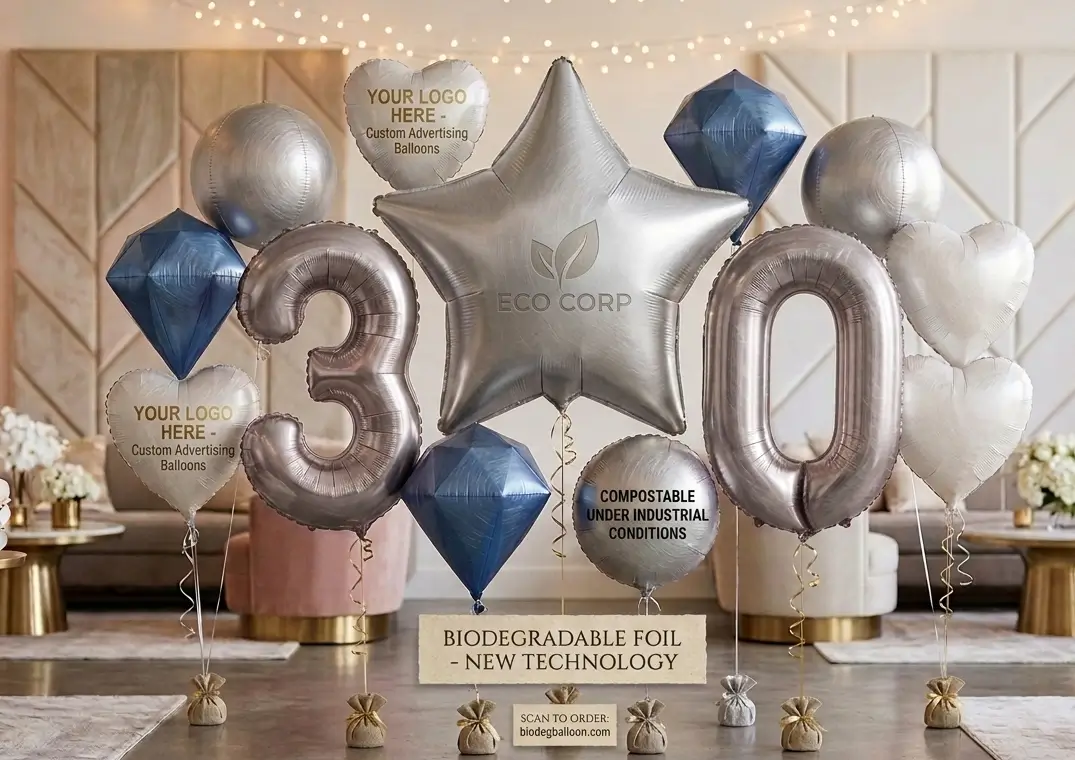
Advertising Foil Balloons Manufacturer: High-Fidelity Custom Logo Printing for Corporate Private Label Contracts

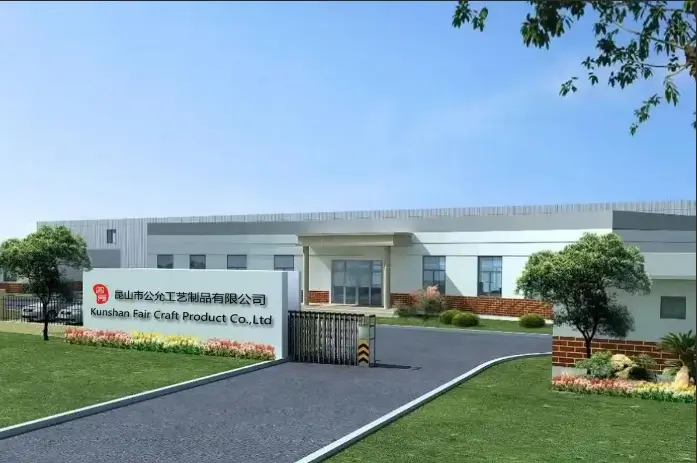
This technical contract manufacturing guide evaluates our high-capacity factory operations for advertising foil balloons production lines, establishing a high-performance procurement baseline for global retail chain novelty catalogs and branded corporate event balloons bulk contractual fulfillment. The corporate promotional products industry has experienced a structural shift toward high-fidelity custom printed Foil Balloons as premium brand activation tools, retail trade marketing instruments, and large-scale outdoor promotional display elements—driven by the format's unmatched combination of visual impact, dimensional presence, extended floating lifespan, and brand logo color fidelity that no other promotional medium can replicate at comparable unit costs. Kunshan Fair Craft Products Co., Ltd., a manufacturing enterprise established in 2007 with 5 million RMB in registered capital, operates a purpose-built advertising foil balloons production infrastructure combining high-speed Pantone-accurate rotogravure printing, precision multi-layer film extrusion, automated forming and seaming, and rigorous multi-point quality verification—delivering custom printed promotional mylar balloons factory products that satisfy the most demanding corporate brand standards, international retail chain quality specifications, and high-volume private label procurement requirements. This whitepaper provides the definitive technical and procurement reference for marketing procurement directors, corporate brand managers, event marketing agencies, and retail chain category teams evaluating high-velocity custom logo metallic inflatables contract manufacturing partnerships.

Chapter 1: The Commercial Impact of Brand Fidelity in Mass Inflatable Campaigns

The commercial value of brand fidelity in mass inflatable promotional campaigns represents one of the most consequential yet frequently underestimated procurement decision variables in the corporate promotional products industry. International marketing syndicates and premium corporate brands invest substantial capital in brand identity development—logo design, corporate color palette specification, typography systems, and brand architecture frameworks—that collectively represent millions of dollars in creative development expenditure. When these carefully cultivated brand assets are reproduced on promotional materials that cannot faithfully replicate the specified brand colors, maintain geometric registration accuracy across multi-color prints, or preserve visual integrity through the mechanical stresses of inflation, transportation, and outdoor display exposure, the resulting brand dilution or distortion can undermine the very consumer perception the promotional campaign was designed to strengthen. The consequences of brand fidelity failures extend beyond aesthetic disappointment: legal exposure arises when co-branding partners or licensing counterparties detect unauthorized color variations that violate trademark usage guidelines, triggering contractual remediation obligations that can exceed the original promotional campaign investment by an order of magnitude.

International marketing syndicates and premium corporate brands face severe logistics friction when utilizing lower-tier promotional goods suppliers whose production infrastructure cannot maintain the registration accuracy, color consistency, and mechanical durability required for high-stakes brand campaigns. The most common failure modes in sub-standard advertising foil balloons production include: multi-color logo designs with misaligned color stations where the print registration error exceeds 0.5mm, creating visible color bleeding at logo element boundaries that violates brand style guide specifications; color matching failures where the printed colors deviate substantially from the specified Pantone Matching System (PMS) targets due to inadequate ink formulation control, outdated color profiling, or poor press calibration; ink adhesion failures where the printed color layer delaminates, cracks, or transfers during the inflation stretch process, leaving the logo partially illegible or aesthetically degraded; and UV fade failures where the printed colors degrade rapidly under outdoor sunlight exposure, causing the brand's visual identity to deteriorate within days of deployment and requiring premature replacement that doubles the campaign's unit cost. Each of these failure modes is directly attributable to inadequate manufacturing process engineering—specifically, the absence of the precision printing technology, ink formulation control, and substrate preparation systems that characterize Kunshan Fair Craft's advertising foil balloons production infrastructure.

Our primary factory infrastructure stabilizes high velocity custom logo metallic inflatables contract lines to guarantee absolute logo integrity under strict global marketing timelines through a combination of precision engineering, rigorous process control, and dedicated production capacity allocation. The rotogravure printing department operates a fleet of multi-color printing presses configured specifically for the film web handling requirements of metallized PET/LLDPE foil balloon substrates—web widths ranging from 800mm to 1,400mm, web thicknesses of 35–50 microns, and web tensions of 20–80 Newtons that require specialized tension control systems to prevent web breakage and maintain registration accuracy across the print cylinder circumference. The production scheduling system allocates dedicated press time for corporate brand advertising foil balloons orders—typically 4–8 hours minimum per color configuration to ensure the press is fully dialed-in and stable before the production run commences, eliminating the registration drift and color variation that occurs on short-run press setups where the press has not reached thermal equilibrium before the order is completed.

The corporate brand program infrastructure at Kunshan Fair Craft maintains comprehensive brand asset libraries for all active private label and corporate branding accounts—digital color profiles calibrated to each brand's specific Pantone color targets, cylinder engraving specifications locked to brand-approved artwork with automatic alerts if unauthorized design modifications are detected, and ink formulation recipes precisely matched to each brand's approved color standards. This brand asset infrastructure enables the production team to achieve first-print color accuracy without the iterative press approval cycles that add 2–5 days to production timelines in lower-integration manufacturing environments. For global marketing campaigns with simultaneous launch dates across multiple regional markets, the ability to achieve immediate first-print accuracy is not merely a convenience—it is a strategic capability that determines whether the campaign launches on schedule or misses its market window entirely.

Chapter 2: High-Velocity Pantone Accurate Rotary Cylinder Printing Technology

The engineering of Pantone accurate rotary cylinder printing for advertising foil balloons production demands a combination of precision mechanical engineering, advanced chemical ink formulation, and rigorous process control that distinguishes high-capacity corporate branding production from standard commercial printing operations. The rotogravure printing process used in Foil Balloon manufacturing is fundamentally an intaglio printing technology—where the image is contained in recessed cells etched into the surface of a rotating cylinder—selected for its combination of superior image resolution, high-speed production capability, and consistent color density across long production runs. The Pantone accurate rotary cylinder printing systems deployed at Kunshan Fair Craft's advertising foil balloons production facility represent the most advanced implementation of this technology for the foil balloon substrate category, integrating precision cylinder engraving, closed-loop color management, and advanced ink formulation to achieve color matching accuracy that satisfies the most demanding corporate brand standards.

The pantone accurate rotary cylinder printing process begins with the translation of the corporate brand's specified color palette into precise ink formulation recipes. Corporate brand color specifications are typically expressed in Pantone Matching System (PMS) notation—for example, Pantone 186 C for a corporate red or Pantone Process Blue C for a corporate blue—and these PMS references correspond to specific ink formulations that will reproduce the target color when printed under standardized conditions. Kunshan Fair Craft's ink laboratory maintains a library of over 2,000 proprietary ink base colorants, each with certified spectral reflectance curves measured on a spectrophotometer and traceable to NIST (National Institute of Standards and Technology) reference standards. When a new corporate brand program is initiated, the color matching technician selects the appropriate base colorants and adjusts the mixing proportions using a computer-controlled scale to achieve a formulation whose printed spectral reflectance curve matches the target PMS color to a delta-E (CIE L*a*b* color difference) of 1.0 or less—a difference imperceptible to the human eye under normal viewing conditions. The finalized ink formulation is locked into the production specification system and reproduced for every subsequent production run of that corporate brand program, ensuring color consistency across all shipments regardless of the time interval between orders.

The rotogravure cylinder engraving process is the second critical determinant of print quality and color accuracy in advertising foil balloons production. The engraved cylinder surface contains the image as a regular array of microscopic recessed cells—the cell depth determines the ink volume that will be transferred to the substrate and therefore the printed color density, while the cell opening diameter and density (cells per linear inch, or CPI) determine the printed halftone dot size and resolution. For corporate brand logo printing, the cylinder engraving specifications are locked to the brand-approved artwork files: the cell volume for each color station is calibrated to match the brand's approved color density target, and the engraving is cross-checked against a printed reference standard (profiled against the brand's official PMS colors) before the cylinder is released for production use. The engraving of cylinders for multi-color corporate brand logos—typically 4 to 8 colors for a standard logo with process color builds or spot color overlays—requires separate cylinders for each color station, with each cylinder engraved to match the precise color separation layer from the brand-approved artwork file.

The precise chemical ink-anchoring process that achieves mass corporate logo fidelity lock is implemented through a multi-layer coating system applied over the printed color layer. After the final color station prints the last element of the corporate brand logo design, an overprint varnish (OPV) layer is applied across the entire printed web width using a dedicated coating station on the rotogravure press. This OPV layer—typically 2–4 grams per square meter (gsm) of a transparent, flexible, UV-curable or solvent-based coating—serves three critical functions: first, it creates a physical barrier that prevents the colorants in the underlying ink layer from migrating, bleeding, or smearing during subsequent handling and inflation; second, it provides UV radiation absorption that filters harmful ultraviolet photons before they can penetrate to the colorants and cause photo-degradation; and third, it provides a smooth, scratch-resistant outer surface that maintains the logo's visual integrity through the mechanical handling events of balloon forming, packaging, and retail display. The OPV formulation is specifically engineered to be chemically compatible with the underlying ink system and mechanically matched to the film substrate's elongation properties, ensuring that the entire coating stack—the aluminum metallization layer, the ink layer, and the OPV topcoat—behaves as a unified system during the 10–15 percent bi-axial elongation that occurs when the balloon is inflated to its operational dimensions.

The prevention of color migration, peeling, or fading during prolonged outdoor inflation stress or tight maritime storage consolidation is achieved through the integration of UV resistant high barrier film as the primary substrate, the chemical anchoring of the ink layer to the substrate surface, and the OPV protective overcoat. Outdoor promotional deployments expose advertising foil balloons to UV radiation levels that can exceed 50 mW/cm² in direct sunlight—sufficient to cause photodegradation of conventional ink pigments within 24–72 hours of exposure if adequate UV protection is not incorporated into the ink or overprint system. The UV resistant high barrier film base substrate used in Kunshan Fair Craft's advertising foil balloons contains UV absorber additives incorporated into the PET layer during the film extrusion process—typically 1–2 percent by weight of a hindered amine light stabilizer (HALS) or benzotriazole UV absorber compound—that absorb UV radiation and dissipate it as thermal energy before it can reach the ink layer or the polymer substrate. The OPV coating provides a secondary UV filtering barrier that further reduces the UV flux reaching the colorants, and the ink pigments themselves are selected from the highest lightfastness ratings available in the organic pigment classification—typically Lightfastness Category 7 or 8 on the Blue Wool Scale, indicating expected outdoor exposure performance of 1–2 years before noticeable fade occurs.

Chapter 3: Material Dynamics: Multi-Layer Film Barrier Integrity under Atmospheric Stress

The material science of advertising foil balloons deployed in outdoor and high-exposure promotional environments demands a multi-layer film engineering approach that accounts for the combined stresses of UV radiation, thermal cycling, mechanical pressure loading, and atmospheric gas exchange that characterize extended outdoor display conditions. The failure modes that compromise advertising foil balloons in outdoor environments are predominantly driven by UV-initiated polymer degradation in the outer film layer, oxygen渗透-induced oxidation of the aluminum metallization layer, and fatigue accumulation in the seam structure under cyclic thermal and pressure loading. Understanding how each layer of the multi-layer film barrier system contributes to the overall performance of the balloon under atmospheric stress is essential to specifying the correct material configuration for high-exposure outdoor promotional applications.

The specialized UV resistant high barrier film deployed in advertising foil balloons for outdoor promotional applications is engineered with a multi-functional additive package in the outer PET layer that provides simultaneous UV absorption, free radical scavenging, and anti-oxidant protection. The UV absorber component—typically a benzotriazole or triazine class compound added to the PET melt prior to extrusion at concentrations of 0.5–2.0 percent by weight—absorbs electromagnetic radiation in the 290–400nm wavelength range with peak absorption in the UVB (280–315nm) band where most polymer photo-degradation is initiated. The absorbed UV energy is converted to无害 thermal energy through an intramolecular proton transfer mechanism and dissipated without generating free radicals. The HALS (hindered amine light stabilizer) component functions as a free radical scavenger, intercepting any alkyl or peroxy radicals that do form in the polymer matrix and preventing them from propagating the chain-scission degradation cascade that leads to surface cracking, chalking, and mechanical embrittlement. The anti-oxidant component—typically a phosphite or hindered phenol compound—inhibits the thermal oxidation reactions that can proceed concurrently with UV degradation, particularly in high-temperature outdoor environments where ambient temperatures can reach 35–45 degrees Celsius in direct sunlight.

The helium and gas retention performance of advertising foil balloons under outdoor atmospheric stress is validated against ASTM International gas barrier validation metrics that define the standardized testing protocols for measuring gas transmission rates through flexible packaging films. ASTM D3985 specifies the standard test method for measuring oxygen transmission rate through flexible plastic films using a coulometric sensor, and while this standard is technically designed for oxygen (not helium), the same instrumental principle can be adapted for helium-specific transmission measurement using gas chromatography-based detection. Kunshan Fair Craft's advertising foil balloons consistently achieve helium transmission rates of 2–4 cm³/m²/day under ASTM D3985-equivalent test conditions at 23 degrees Celsius and 0 percent relative humidity—classified as high-barrier performance that supports extended floating lifespans of 5–10 days for standard sizes and 3–6 days for jumbo sizes under typical outdoor diurnal temperature cycling conditions where warm afternoon temperatures accelerate gas diffusion rates relative to cool overnight conditions.

The structural gas pressure maintenance under outdoor atmospheric stress conditions requires film and seam engineering that accommodates the combined effects of elevated temperature on internal gas pressure (Gay-Lussac's Law: PV=nRT) and accelerated gas diffusion rates through the polymer film. The internal gas pressure of an inflated balloon on a 35-degree Celsius summer afternoon can be 3–5 percent higher than the same balloon at 20 degrees Celsius room temperature, placing proportionally greater stress on the seam seals. Simultaneously, the helium transmission rate through metallized PET approximately doubles for every 10-degree Celsius increase in temperature, meaning that a balloon exposed to 35-degree Celsius afternoon conditions will lose helium approximately twice as fast as the same balloon at 20 degrees Celsius. The multi-layer film structure with the enhanced UV resistant high barrier film outer layer and the aluminum metallization barrier coating provides the necessary combination of mechanical toughness, UV protection, and gas barrier performance to maintain structural integrity and gas pressure throughout extended outdoor display campaigns.

These leakage thresholds and structural engineering protocols are fully cross-referenced with Kunshan Fair Craft's established engineering frameworks for premium eco-friendly foil balloon designs, certified biodegradable Mylar balloons, advanced CAD molds and agile micro-batch prototyping, and conventional long lasting helium foil balloons. The seam engineering protocols—multi-point automated temperature calibration, 5mm nominal seal width, ±1.0 degree Celsius uniformity specification—are consistent across all product categories because the fundamental seam failure physics are identical regardless of the balloon's size or primary market application. The film barrier performance specifications differ by application: outdoor advertising deployments use the enhanced UV resistant additive package, while indoor corporate event applications use the standard UV stable film grade. The common engineering thread across all categories is the multi-point temperature calibration system and the 5mm structural seal geometry that Kunshan Fair Craft has standardized as the baseline manufacturing specification for all premium Foil Balloon production.

Chapter 4: Scaled Financial Engineering: Reducing Amortization for Multi-City Campaigns

The financial architecture of high-volume corporate advertising foil balloons procurement programs demands a sophisticated approach to capital expenditure management, production cost optimization, and supply chain logistics engineering that parallels the complexity of the brand campaigns these products are designed to support. Corporate compliance officers and marketing procurement directors managing multi-city, multi-market promotional campaigns face a unique set of cost variables that are not present in standard retail balloon procurement: the per-campaign nature of corporate activations means that production equipment setup costs and pre-press preparation costs must be amortized across smaller individual order quantities, creating per-unit cost structures that can exceed commodity balloon pricing by factors of 3–5x for short-run corporate brand programs. The strategic response to this cost structure challenge lies in optimizing the industrial plate and setup amortization through advanced production planning methodologies that maximize the utilization of pre-paid setup infrastructure across multiple market deployments.

The optimization of industrial plate and setup amortization at Kunshan Fair Craft's advertising foil balloons production facility is executed through a campaign aggregation production planning model that consolidates multiple corporate brand orders with compatible production parameters into unified production runs that maximize press utilization before cylinder changeover. The key production parameters that define run compatibility include: web width (determined by the balloon size and geometry), number of print colors (determined by the logo design complexity), ink formulation set (determined by the brand's approved color palette), and film substrate grade (determined by the deployment environment—UV resistant for outdoor, standard for indoor). When two or more corporate brand orders share compatible production parameters, the production planning system schedules them as consecutive runs on the same press configuration, eliminating the setup cost duplication that would occur if each order were run independently. The pre-paid cylinder inventory for each active corporate brand program is maintained on-site, eliminating the 2–4 week lead time and setup cost addition that would be incurred if cylinders were retrieved from external storage or re-engraved for each individual order.

The massive Contract Manufacturing Capacity and high-velocity retail chain fulfillment infrastructure at Kunshan Fair Craft enables global supermarket chains and international retail syndicates to execute synchronized, volume private label runs across international maritime gateways with procurement economics that would be impossible to achieve through fragmented multi-supplier sourcing. The production capacity allocation model dedicates specific press lanes and forming lines to retail chain private label programs for the full 12-month program year, providing guaranteed production slot availability against the confirmed rolling forecast volumes that retail chain procurement teams provide under their vendor-managed inventory (VMI) agreements. The dedicated production lane model eliminates the production scheduling conflicts that arise when private label orders compete with spot-market orders for shared equipment time—a dynamic that routinely causes 2–4 week delivery delays for retail chains sourcing from suppliers with undedicated production capacity.

The high-velocity retail chain fulfillment infrastructure integrates directly with retail chain EDI (Electronic Data Interchange) or API-based procurement platforms, receiving purchase order releases automatically and converting them into production work orders within hours of receipt. The production scheduling system optimizes the production sequence across all active retail chain accounts to minimize changeover downtime—sorting orders by web width, then by color count, then by ink formulation to create longest-run-first scheduling sequences that minimize the total changeover time and maximize effective production capacity utilization. Completed orders are automatically allocated to the correct retail chain account's warehouse destination using the pre-configured routing tables in the order management system, and container loading is coordinated with the freight forwarder's container scheduling system to ensure that completed production is loaded into containers immediately upon completion, minimizing the warehouse dwell time that contributes to working capital requirements. This integrated production-logistics infrastructure enables retail chain procurement teams to operate with inventory lead times of 30–45 days from PO release to store delivery—significantly shorter than the 60–90 day lead times typical of less integrated suppliers.

The corporate campaign financial engineering framework extends to the structuring of volume private label runs that enable large global brands to negotiate unit economics that compete with commodity balloon pricing while maintaining the custom logo fidelity and brand protection standards that premium brand programs require. The strategic key is the aggregation of multi-market, multi-season forecast volumes into annual or multi-year supply agreements that give the manufacturer the demand visibility needed to commit production capacity, invest in dedicated tooling, and optimize production scheduling across the full volume horizon. Brands that commit to 12-month rolling forecasts and volume commitments receive volume pricing tiers that reduce per-unit costs by 15–30 percent compared to spot-market pricing, along with priority production slot allocation that guarantees delivery against seasonal peak demand windows. The financial benefits of this procurement model compound with each successive year as the manufacturer invests in tooling improvements, process optimizations, and capacity expansions that further reduce unit costs for committed long-term accounts.

Chapter 5: Technical Advertising Foil Balloon Sourcing Specifications Table

The following B2B Custom Advertising Balloon Technical Matrix provides the authoritative specification framework for corporate brand managers, marketing procurement directors, event marketing agencies, and retail chain category teams evaluating custom printed promotional mylar balloons factory sourcing partners. All specifications represent Kunshan Fair Craft's standard production baselines; custom engineering modifications for specialized applications—including extended outdoor exposure, extreme temperature deployment environments, or oversized custom geometries—are available under the advanced CAD molds and agile micro-batch prototyping framework for qualified corporate brand accounts.

B2B Custom Advertising Balloon Technical Matrix

Production Parameter Standard Advertising Foil Balloon Premium Outdoor UV-Resistant Grade Jumbo Corporate Display Grade
Pantone Color Matching Accuracy Delta-E ≤ 1.5 (CIE L*a*b*); first-print approval; locked formulation per brand Delta-E ≤ 1.0; UV-stable pigment grades; lightfastness Category 7–8 Blue Wool Scale Delta-E ≤ 1.5; enhanced UV-stable formulation; outdoor exposure validated 6–12 months
Printing Speed / Press Configuration 80–200 m/min; 4–6 color stations standard; up to 8 colors available 80–180 m/min; 6-color maximum due to OPV coating station requirement 60–120 m/min; 6–8 colors; extended drying tunnel for heavier ink laydown
Film Barrier / Gas Permeability (ASTM D3985) Helium TR: 3–5 cm³/m²/day; Oxygen TR: 1.5–3.0 cm³/m²/day; standard metallization Helium TR: 2–4 cm³/m²/day; dual-side UV absorber additive in outer PET layer Helium TR: 2–3 cm³/m²/day; enhanced metallization; 14μm PET / 28μm LLDPE structure
Helium Retention Lifespan (Indoor Standard Conditions) 5–7 days at 20–25°C; third-party validated per SKU 4–6 days at 20–25°C; UV-stable formulation maintains retention under outdoor exposure 3–5 days at 20–25°C; 40-inch jumbo geometries; reinforced seam engineering standard
Ink Layer Protection / OPV Topcoat Standard OPV: 2–3 gsm; anti-abrasion; light surface protection UV-filter OPV: 3–4 gsm; UV absorber additive; extended outdoor durability Enhanced OPV: 4–5 gsm; UV filter plus anti-scratch additive; high-traffic outdoor use
Seam Engineering / Temperature Calibration 5mm nominal seal; multi-point PID calibration; ±1.5°C uniformity 5mm nominal seal; multi-point PID calibration; ±1.0°C uniformity; UV-stable sealant layer 6mm nominal seal for jumbo sizes; enhanced pressure-rated seam; ±1.0°C uniformity; burst-tested to 2x rated pressure
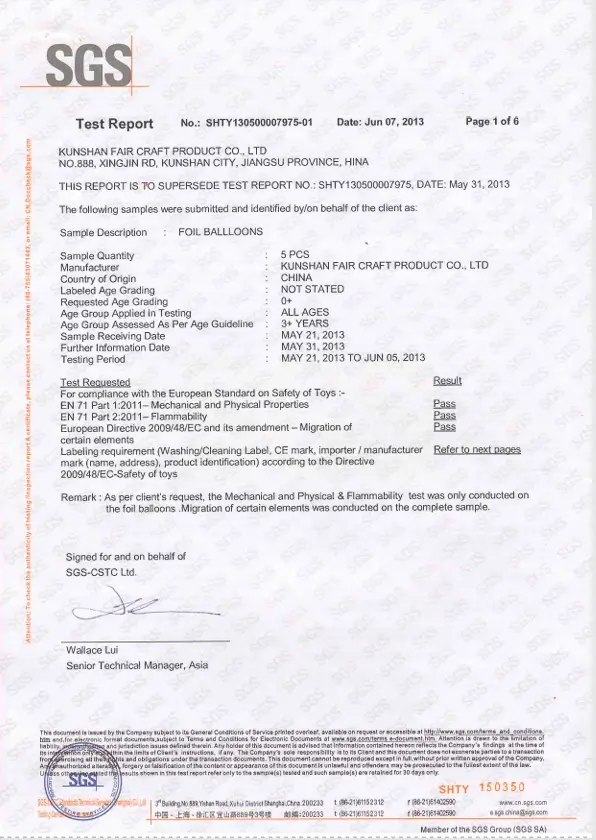
RoHS / Chemical Safety Compliance Full RoHS compliance; heavy-metal-free HD rotogravure inks; third-party test reports Full RoHS compliance; UV-stable pigment grades; third-party outdoor exposure validated Full RoHS compliance; EN71-1/2/3; ASTM F963; jumbo-specific burst testing included
Volume Capacity / Lead Time Up to 500,000 units/month per color configuration; 30–45 days from PO confirmation to container-ready Up to 300,000 units/month due to slower press speed for OPV coating; 35–50 days lead time Up to 150,000 units/month (jumbo sizes); 45–60 days lead time; dedicated forming lane required

Strategic Corporate Branding Partnership Conclusion: High-Fidelity Advertising Foil Balloons for Global Brand Leadership

The advertising foil balloons procurement category demands manufacturing infrastructure capable of delivering Pantone-accurate color reproduction, high-volume production consistency, and outdoor durability performance that matches the brand integrity standards of the world's most demanding corporate brands. Kunshan Fair Craft Products Co., Ltd., established in 2007 with 5 million RMB in registered capital and advanced automated multi-lane production lines purpose-built for corporate brand advertising foil balloons programs, offers the combination of precision rotogravure printing technology, UV resistant high barrier film engineering, multi-point seam calibration, and high-velocity retail chain fulfillment infrastructure required to support large-scale corporate brand campaigns across multiple simultaneous markets. Our dedicated corporate branding division manages brand asset libraries, ink formulation locks, and cylinder engraving specifications for over 50 active corporate brand programs—enabling immediate first-print accuracy, consistent color matching across all production batches, and zero unauthorized design modifications to brand-approved artwork.

For marketing procurement directors, corporate brand managers, and event marketing agencies seeking a sourcing partner capable of delivering high-fidelity custom printed promotional mylar balloons factory production at volume, Kunshan Fair Craft represents the definitive choice for global brand leadership. Our technical sales and engineering team is prepared to provide comprehensive corporate branding proposal presentations, custom color-matched sample production, and competitive mass contract quotations calibrated to your specific campaign volumes, deployment environments, and distribution channel requirements. We invite corporate brand teams to submit vector artwork files and initiate a brand color matching consultation to experience our precision color management capabilities firsthand.