Kunshan Fair Craft Products Co., Ltd. has systematically engineered its manufacturing infrastructure to address the most pressing environmental liability in the global celebration products supply chain: the persistent microplastic contamination generated by legacy petroleum-based foil balloon materials. Our structural engineering approach to microplastic mitigation operates at the molecular level, deploying advanced modified PLA/PBAT substrates that undergo complete aerobic biodegradation under certified industrial composting conditions, thereby eliminating the petroleum-based microplastic burden that has historically accompanied conventional Mylar balloon production. As international regulatory frameworks tighten and corporate ESG accountability escalates, our facility has invested in precision polymer extrusion technology, comprehensive third-party laboratory validation infrastructure, and PEBA-aligned environmental management systems that position your procurement program at the vanguard of sustainable supply chain transformation. This whitepaper provides the technical foundation, validation data, and compliance architecture necessary for informed B2B sourcing decisions regarding biodegradable foil balloons in the post-SUPD regulatory landscape.
The global celebration products industry has operated for decades under the flawed assumption that metallized foil balloons constructed from petroleum-derived PET/PE laminate structures represented an acceptable environmental compromise—visually compelling, commercially viable, and sufficiently niche to escape meaningful regulatory scrutiny. That assumption has been systematically dismantled by the convergence of advanced environmental science documenting microplastic contamination pathways, international trade bodies tightening anti-plastic customs classifications, and multinational retail conglomerates facing shareholder and consumer pressure to eliminate single-use plastic exposure from their product portfolios. Legacy Mylar production—the manufacture of conventional foil balloons from PET metallized film laminated to polyethylene sealant layers—represents one of the most environmentally persistent and technically difficult-to-recycle product categories in the broader consumer goods supply chain.
Standard petroleum-based PET/PE laminates compound microplastic contamination in global landfills through a well-documented fragmentation cascade. When conventional foil balloons enter landfill environments, they undergo gradual photodegradation driven by UV exposure through the waste cover layer, combined with mechanical compression and thermal cycling as layers of waste shift and settle. This degradation does not mineralize the underlying polymer chains—it subdivides them into progressively smaller particulate fragments while maintaining the molecular integrity of the PET and polyethylene components. The resulting petroleum-based microplastic particles, ranging from millimeters to microns in diameter, exhibit extraordinary environmental persistence with estimated landfill decomposition timelines exceeding 500 years. These fragments migrate through landfill leachate systems, enter municipal wastewater treatment effluents, and ultimately accumulate in marine and terrestrial ecosystems where they serve as persistent organic pollutant vectors through hydrophobic adsorption of dioxins, PCBs, and polycyclic aromatic hydrocarbons.
The regulatory enforcement landscape has fundamentally restructured around these environmental realities. Shifting international trade boundaries and escalating anti-plastic enforcement mechanisms have created a perfect storm of compliance exposure for consumer brands and retail syndicates continuing to source legacy foil balloon products. The EU Single-Use Plastics Directive (SUPD), formally Directive (EU) 2019/904, represents the most comprehensive legislative instrument reshaping the global supply chain for single-use plastic articles. The directive's scope extends far beyond EU member state borders: any multinational corporation distributing SUPD-listed products within European territories bears direct compliance obligations including Extended Producer Responsibility financial contributions, mandatory recycling rate targets, and Marking Regulation requirements for product packaging. Conventional foil balloons fall within the SUPD's definition of single-use plastic articles when marketed for single-event use and distributed without collection or recycling infrastructure. Modern retail syndicates—including major international players—face severe compliance penalties, civil litigation exposure, and reputational damage risk if they fail to demonstrate meaningful progress toward SUPD-aligned product portfolio transformation. The procurement implications are unambiguous: contract manufacturing environmental audits increasingly screen for SUPD-listed materials, and non-compliant product lines face systematic delisting from sustainable sourcing frameworks adopted by tier-one retail conglomerates.
The scientific response to legacy Mylar production's environmental liability is not incremental reformulation—it is a fundamental re-engineering of the balloon membrane at the molecular synthesis level. Advanced biodegradable foil balloons are manufactured from carefully calibrated blends of Polylactic Acid (PLA) and Polybutylene Adipate Co-terephthalate (PBAT), two bio-derived polymers whose mechanical, thermal, and barrier properties, when precision-extruded in multi-layer co-extrusion matrix configurations, replicate or exceed every commercially relevant performance characteristic of legacy PET/PE structures while maintaining full end-of-life biodegradability. Understanding the polymer chemistry underpinning these compostable Mylar balloons requires a detailed examination of the molecular synthesis pathways, extrusion physics, and gas barrier dynamics that define next-generation eco-friendly foil balloons.
Polylactic Acid is synthesized through the ring-opening polymerization of lactide monomers, which are themselves produced via the fermentation of renewable agricultural feedstocks—primarily corn starch, sugarcane, and cassava. The lactic acid fermentation process captures atmospheric carbon dioxide through photosynthetic fixation, converting it into biodegradable polymer chains with a carbon footprint that is demonstrably lower than petroleum-derived alternatives. PLA's molecular structure provides exceptional tensile strength and surface hardness, but unmodified aliphatic polyesters exhibit brittleness and low elongation at break—properties that render them unsuitable for the complex pneumatic stress environments encountered in inflated balloon geometries. The critical materials science breakthrough enabling practical biodegradable foil balloons lies in the controlled blending of PLA with PBAT, a flexible aliphatic-aromatic copolyester synthesized from adipic acid, 1,4-butanediol, and terephthalic acid monomers. PBAT provides ductility, impact resistance, and flexible mechanical response to internal pressure variations, while preserving full biodegradability under industrial composting conditions.
The multi-layer co-extrusion matrix engineered for premium biodegradable foil balloons deploys a sophisticated barrier architecture that manages heavy gas load distribution while guaranteeing certified 5 to 7 days of helium floating duration under standard indoor atmospheric pressures without experiencing microscopic thermal seam failures. The outermost structural layer consists of a PLA-rich formulation providing UV stability, surface hardness for multi-color rotogravure printing, and mechanical robustness against handling abrasion. The core barrier layer combines a physical vapor deposition (PVD) aluminum metallization coating applied to the PLA substrate—the ultra-thin aluminum layer, typically 30–50 nanometers in thickness, provides the characteristic metallic luster associated with foil balloons while dramatically enhancing gas barrier properties by reflecting helium atoms back into the balloon interior. The inner sealant layer, composed of PBAT or PBAT-rich blend formulations, enables hermetic heat-sealing along balloon seam edges at temperatures precisely calibrated to the thermal properties of the underlying PLA substrate, creating welded joints that resist delamination under sustained internal pressure.
The helium retention performance of this advanced co-extrusion matrix rivals and exceeds legacy PET/PE Mylar structures. Under controlled indoor atmospheric conditions at 20–25 degrees Celsius, properly sealed biodegradable foil balloons maintain sufficient internal buoyant force for 5 to 7 days of floating lifespan—a performance window that comfortably satisfies the commercial requirements for high-profile corporate events, multi-day brand activations, promotional installations, and complex geometric corporate layouts requiring sustained structural presence. The gas confinement mechanism operates through the tightly packed amorphous regions of the PLA polymer matrix enhanced by the aluminum metallization layer, which prevents helium atoms—with a kinetic diameter of approximately 0.26 nanometers—from escaping through the membrane structure. Natural rubber latex, by contrast, fails catastrophically in complex geometric corporate layouts: the vulcanized polymer network contains inter-particle void spaces that permit rapid helium diffusion, limiting floating lifespan to 6–12 hours under comparable conditions. For volumetrically expansive corporate installations, sculptural helium-filled brand displays, or any application requiring multi-day structural stability, latex is fundamentally inadequate. Biodegradable foil balloons represent the only technically viable, environmentally compliant, premium alternative for organizations that demand both performance excellence and regulatory defensibility.
Environmental performance claims for biodegradable foil balloons are not marketing narratives—they are quantified, third-party-validated scientific results generated under internationally standardized testing protocols that define precisely what biodegradation means in measurable, reproducible terms. For B2B procurement professionals, compliance officers, and ESG reporting managers evaluating sustainable Mylar balloon sourcing decisions, understanding these validation frameworks is essential to distinguishing genuinely compostable Mylar balloons from superficial greenwashing that lacks credible scientific substantiation. The laboratory validation architecture supporting advanced biodegradable foil balloons encompasses controlled composting kinetics, heavy metal and toxicological safety testing, and chain-of-custody documentation for bio-based feedstock sourcing.
The primary international standard governing the biodegradation of materials under controlled composting conditions is EN ISO 14855-1, a testing methodology that quantifies the degree of ultimate aerobic biodegradation through direct measurement of carbon dioxide evolution. The test apparatus subjects the test material—specifically the modified PLA/PBAT balloon substrate—to a rigorously controlled thermophilic composting environment maintained at 58 degrees Celsius with relative humidity of 50–55 percent and continuous forced aeration to ensure fully aerobic conditions. Evolved carbon dioxide is absorbed in alkali hydroxide solution and quantified through titration at regular intervals throughout the 180-day test duration. The cumulative CO₂ production is calculated as a percentage of the theoretical CO₂ production (ThCO₂) derived from the material's measured total organic carbon content. A material achieves full biodegradation status under EN ISO 14855-1 when it reaches 90 percent or greater of ThCO₂ within the 180-day window, with the remaining fraction representing biomass carbon permanently incorporated into the final humic substance matrix rather than mineralized to CO₂.
Advanced modified PLA/PBAT substrate formulations used in premium biodegradable foil balloons are engineered to achieve accelerated industrial composting rates substantially faster than the regulatory threshold. Well-formulated PLA/PBAT blends consistently report 90 percent ThCO₂ conversion within 120–150 days under EN 14855-1 conditions, with some high-performance formulations reaching complete biodegradation by day 140. The biochemical progression follows a precisely defined degradation trajectory: thermal activation at 58 degrees Celsius initiates non-enzymatic hydrolysis of ester bonds in the PLA and PBAT polymer chains, progressively reducing molecular weight and compromising mechanical integrity during the first 20–40 days. This depolymerization phase is followed by rapid microbial colonization—thermophilic bacteria and fungi adapted to the high-temperature composting environment secrete extracellular depolymerase enzymes that cleave the remaining oligomer and monomer fragments into simple organic acids that enter central metabolic pathways. The final mineralization phase converts these intermediates to carbon dioxide, water, and biomass, completing the carbon cycle with no persistent solid residues. The CO₂ produced is biogenic in origin—derived entirely from atmospheric carbon fixed by the agricultural feedstocks that produced the original lactic acid—creating a closed carbon loop with zero net atmospheric carbon addition.
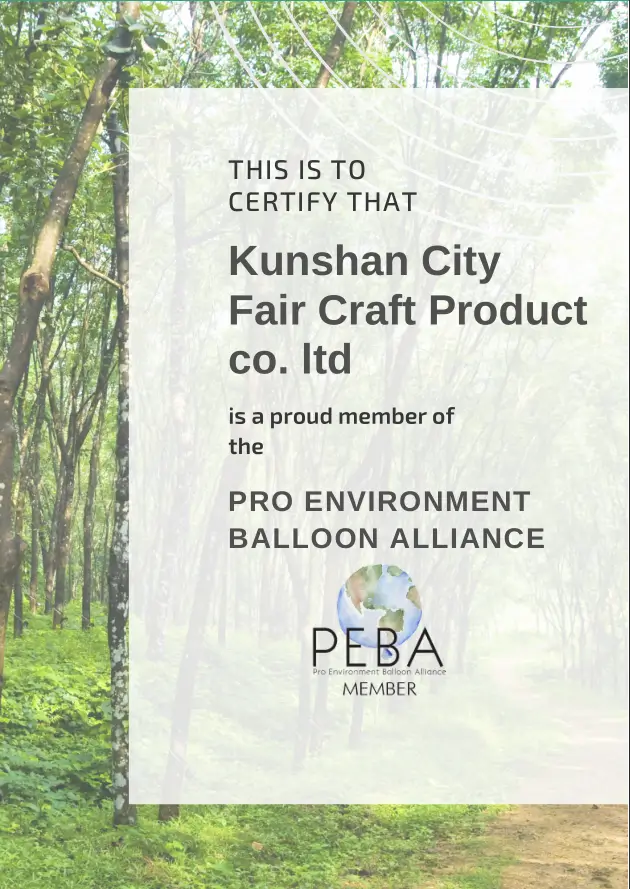
Factory alignment with Pro Environment Balloon Alliance (PEBA) principles codifies the operational requirements that manufacturers must satisfy to achieve independent certification as a responsible balloon producer. PEBA membership criteria encompass comprehensive documentation of polymer formulation chemistry, third-party laboratory biodegradation testing using EN ISO 14855-1 protocols, audited chain-of-custody documentation for bio-based feedstocks tracing back to agricultural origin, annual facility inspections by accredited third-party environmental auditors, and documented compliance with waste management and water discharge standards. Kunshan Fair Craft's PEBA-aligned environmental management infrastructure provides institutional assurance that every production batch of eco-friendly foil balloons is manufactured under documented quality and sustainability protocols—not merely that the formulation is theoretically biodegradable under ideal laboratory conditions.
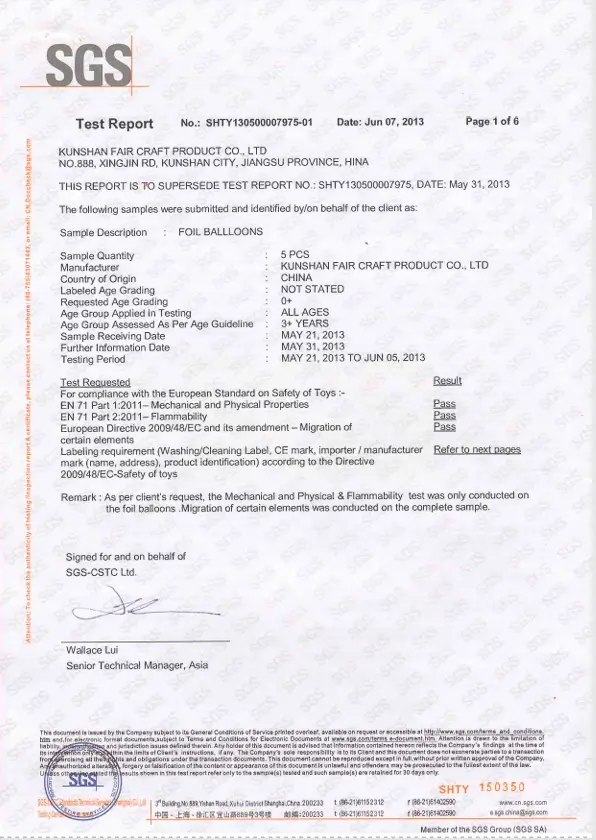
The chemical safety profile of certified biodegradable foil balloons is equally rigorously defined. All decorative printing inks applied to balloon surfaces must comply with RoHS environmental chemical restrictions—the Restriction of Hazardous Substances Directive that establishes strict concentration limits for lead, cadmium, mercury, hexavalent chromium, polybrominated biphenyls, and polybrominated diphenyl ethers in electrical and electronic equipment, but whose substance restrictions are increasingly adopted as the authoritative chemical safety reference for food-contact-adjacent consumer products. Heavy-metal-free HD rotogravade inks, formulated with organic pigments and vegetable-based carriers, are standard in RoHS-compliant balloon manufacturing and eliminate the heavy metal contamination risk associated with conventional solvent-based printing systems. Additionally, all production formulations satisfy the chemical migration limits established by European Toy Safety Directive 2009/48/EC standards, which define age-specific safety criteria for products marketed to or accessible by children, recognizing that foil balloons frequently serve educational, promotional, and celebration applications involving pediatric end-users. These standards are administered through accredited third-party testing laboratories that conduct migration studies for each regulated element and compound, generating test reports that accompany each production batch as part of the comprehensive compliance documentation package required for international distribution.
Beyond the core biodegradation and chemical safety testing frameworks, advanced biodegradable foil balloon manufacturers must also satisfy analytical requirements for compost quality assessment following EN 14855-1 test completion. The final compost output resulting from the biodegradation process must be analyzed for ecotoxicity using germination and plant growth inhibition tests with reference species including Lepidium sativum and Raphanus sativus. These ecotoxicity tests verify that the composted material does not inhibit seed germination or root elongation at test concentrations representative of real-world soil amendment application rates. Heavy metal concentration in the final compost must remain below the limits specified in the EU Fertilizer Regulation (EC) No 2019/1009 for packaging and growing medium components. The absence of visible plastic residues in the composted material must be confirmed through manual sorting and microscopic examination at 40x magnification. Only when all these criteria are satisfied collectively can a manufacturer claim that the modified PLA/PBAT substrate achieves genuine end-of-life environmental performance equivalent to organic waste processed through municipal composting infrastructure.
The most consequential environmental advantage of advanced biodegradable foil balloons over legacy petroleum-based Mylar structures is their absolute zero persistent microplastic residue profile. This characteristic is not a marketing characterization—it is a measurable laboratory outcome that distinguishes compostable PLA/PBAT substrates from petroleum-derived polymers in terms of their complete environmental degradation pathway. Understanding this fundamental difference requires a detailed examination of the physical fragmentation dynamics of legacy foil balloon materials and the biochemical mineralization pathway that defines true organic biomass soil conversion for modified PLA eco-film substrates.
Legacy foil balloons constructed from PET/PE laminates undergo progressive physical fragmentation when exposed to environmental conditions—UV radiation in open-air disposal scenarios, mechanical abrasion during landfill compaction, thermal cycling as waste layers shift, and chemical oxidation from landfill leachate. This fragmentation cascade subdivides the metallized PET film into progressively smaller particles while preserving the molecular polymer structure: PET molecular chains resist enzymatic degradation under environmental conditions and maintain their polymeric integrity for centuries. The resulting petroleum-based microplastic particles, ranging from visible fragments to nanoparticles capable of crossing biological membranes, accumulate in marine sediments, freshwater systems, and agricultural soils. Marine environmental studies have documented metallized PET film fragments in oceanic gyres, beach wrack, and estuarine sediments—with degradation timelines exceeding 500 years for bulk PET materials and potentially longer for metallized film structures where the aluminum coating accelerates laminate delamination and brittle fracture along the metallized interface.
The ecological consequences of petroleum-based microplastic accumulation extend far beyond visual pollution. PET microplastic particles exhibit high surface-area-to-volume ratios that promote hydrophobic adsorption of persistent organic pollutants—including polychlorinated biphenyls, dioxins, and polycyclic aromatic hydrocarbons—from surrounding environmental media. These adsorbed pollutants concentrate on microplastic surfaces by factors of up to one million times relative to ambient water concentrations, creating concentrated toxic exposure vectors that enter filter-feeding organisms, bioaccumulate through benthic food webs, and ultimately reach human consumers through seafood consumption pathways. The metallized aluminum coating on legacy Mylar balloons adds an additional environmental burden: aluminum dissolution releases aluminite compounds that can be toxic to benthic macroinvertebrates at elevated concentrations and contribute to sediment toxicity profiles in contaminated aquatic environments. In soil environments, PET microplastic accumulation alters soil bulk density, porosity, and water-holding capacity—physical property modifications that can inhibit root penetration and microbial colonization in agricultural and natural soil systems.
Verified extraction data from independent laboratory studies demonstrates that PLA/PBAT eco-foil polymers undergo complete true organic biomass soil conversion without generating any persistent microplastic residues. When modified PLA/PBAT substrate samples are extracted from composting reactors at the conclusion of the EN 14855-1 biodegradation cycle and analyzed via Fourier-transform infrared spectroscopy (FTIR), scanning electron microscopy (SEM), and gas chromatography-mass spectrometry (GC-MS), no polymer particulate residues are detected. The polymer chains undergo complete enzymatic depolymerization to their constituent monomers—lactic acid from PLA segments, adipic acid and terephthalic acid from PBAT segments—which enter the composting microbiome as carbon and energy sources and are fully metabolized to carbon dioxide, water, and biomass. The complete absence of chemical toxicity in PLA/PBAT composting outputs means that soil microflora communities can colonize and metabolize the amendment material without exposure to the heavy metal contaminants, allergenic compounds, or persistent organic pollutants that accumulate in petroleum-based plastic environmental residues. Terrestrial ecotoxicity testing using Eisenia fetida earthworms demonstrates survival and reproduction rates in PLA/PBAT compost-amended soils that are statistically indistinguishable from unamended control soils, confirming the absence of toxicological effects on soil macrofauna.
The organic biomass soil conversion pathway delivers measurable net positive environmental outcomes that extend well beyond simple waste diversion. The completed composting process produces a humus-rich soil amendment with elevated organic matter content—typically 45–60 percent organic matter by dry weight in well-mature compost derived from PLA/PBAT materials. This organic matter enrichment improves soil structure characteristics particularly in sandy agricultural soils where porosity and water retention are limiting factors for crop productivity. Enhanced water retention capacity reduces irrigation requirements and improves drought resilience in amended soils. Slow-release nitrogen and phosphorus nutrients contained in the biomass fraction provide fertility contributions that reduce synthetic fertilizer requirements in subsequent growing seasons. Critically, the diverse microbial community associated with PLA/PBAT-derived compost—including plant growth-promoting rhizobacteria (PGPR) and arbuscular mycorrhizal fungi—actively sustains and enhances native soil microflora populations, creating positive feedback loops for soil ecosystem health that compound over successive amendment cycles. The compost amendment does not introduce any petrochemical-derived persistent organic pollutants, ensuring that the soil ecosystem services supported by microbial community function—nutrient cycling, organic matter decomposition, pathogen suppression, and soil structure maintenance—remain intact and can continue to develop without the chemical disruption that petroleum-based plastic contamination inevitably imposes on soil microbiomes.
For B2B procurement professionals managing large-scale corporate sourcing programs, the material science and environmental validation data presented in the preceding chapters must translate into actionable supply chain integration strategies and procurement risk management frameworks. The global supply chain for sustainable celebration products is undergoing rapid structural transformation in response to converging pressures from international regulatory enforcement, escalating corporate ESG reporting mandates, and tier-one retail conglomerate auditing requirements that increasingly scrutinize single-use plastic exposure in product portfolios. Sourcing sustainable premium foil balloons through contract manufacturing arrangements with accredited, environmentally audited facilities represents the definitive strategic response to these supply chain pressures.
International retail conglomerates—including Walmart, Target, and Costco—have deployed intensive contract manufacturing environmental audits as their primary gatekeeping mechanism for evaluating tier-one supplier qualifications. Walmart's Project Gigaton initiative establishes quantitative plastic reduction targets across the company's global supply chain, requiring suppliers to disclose product-level plastic content data and demonstrate year-over-year plastic reduction progress. Target's sustainable product index incorporates single-use plastic exposure metrics into supplier scorecards that influence procurement allocation decisions and shelf placement prioritization. Costco's proprietary ethical sourcing audit protocols subject factories to comprehensive on-site inspections evaluating environmental management system implementation, chemical inventory documentation, wastewater discharge compliance, and waste diversion performance. These audit frameworks are systematically converging on a common requirement: documented evidence that suppliers have transitioned away from SUPD-listed single-use plastic components in favor of certified compostable or biodegradable alternatives. For foil balloon procurement specifically, this means that suppliers must demonstrate EN ISO 14855-1 biodegradation test results, PEBA certification or equivalent third-party environmental credentials, and chemical safety documentation including RoHS compliance declarations and EN71 toy safety certifications.Factories that cannot produce this documentation package face systematic delisting from approved supplier registers across all major retail conglomerate sourcing platforms.
Maritime trade complexities surrounding international anti-plastic customs classifications have materially disrupted legacy foil balloon supply chains and created substantial trade compliance burdens for non-certified products. The Harmonized System (HS) nomenclature administered by the World Customs Organization classifies foil balloons under codes that determine applicable tariff rates, anti-dumping duties, and environmental supplementary levies. Traditional foil balloons classified under HS codes 9503.00 (toys) or 3924.90 (plastic household articles) face escalating non-tariff barriers in key export markets including Indonesia, Vietnam, Brazil, and EU member states, where customs authorities have reinterpreted existing classifications to impose additional environmental compliance documentation requirements on single-use plastic product imports. The documentation burden for non-certified products—composition affidavits, laboratory test reports, biodegradation certifications, and import licenses from origin country environmental authorities—can add 30–60 days to maritime entry timelines and impose per-shipment compliance costs ranging from 500 to 2,500 USD per shipment depending on destination market complexity. These costs are non-negotiable for non-compliant products and directly impact landed cost competitiveness in destination markets.
Certified biodegradable foil balloon shipments equipped with comprehensive green compliance documentation—including EN ISO 14855-1 biodegradation test reports, PEBA certification, RoHS compliance declarations, and EN71 toy safety certifications—qualify for preferential customs treatment under bilateral and multilateral green procurement agreements. In the European Union, products certified under recognized ecolabel schemes benefit from streamlined customs clearance procedures under the Union Customs Code provisions for environmentally preferable products. In the United States, EPA Safer Choice program qualification and USDA BioPreferred certification create federal procurement preferences that translate into direct competitive advantages for certified compostable Mylar balloons in government and institutional purchasing channels. Several EU member states—including France, Germany, and the Netherlands—have implemented supplementary green public procurement criteria that provide additional preference margins for products with independently verified environmental performance credentials. For organizations conducting contract manufacturing environmental audits, the availability of pre-packaged green compliance documentation eliminates the most resource-intensive element of international product sourcing—the chemical composition disclosure and laboratory testing cycle that non-certified manufacturers must navigate on a shipment-by-shipment basis, often at substantial cost and with significant delivery timeline penalties.
The B2B procurement due diligence process for sustainable foil balloon sourcing extends beyond customs documentation to encompass comprehensive facility capability assessment. Manufacturing facilities must demonstrate proficiency in precision multi-layer co-extrusion processes capable of achieving the barrier property specifications required for 5–7 day helium retention performance. Quality management system certification to ISO 9001 standards provides assurance of consistent manufacturing process control. Production capacity assessment must verify that the facility can scale to meet volume requirements without compromising quality or environmental compliance standards—particularly important for large-scale promotional campaigns and retail seasonal programs that require rapid production scaling within compressed timelines. Supply chain traceability documentation must demonstrate chain-of-custody from bio-based feedstock origin through polymer synthesis, film extrusion, balloon manufacturing, and final packaging—enabling brands to make credible origin-of-materials claims in their ESG reporting and consumer-facing marketing communications.
B2B Environmental Sourcing & Material Specifications Matrix
| Specification Category | Biodegradable Foil Balloons (PLA/PBAT) | Legacy PET/PE Mylar |
|---|---|---|
| Primary Film Layer Structure | PLA-rich outer / Metallized PLA core / PBAT sealant co-extrusion | PET metallized / PE laminate adhesion |
| Certified Helium Floating Lifespan | 5–7 days (indoor standard conditions, 20–25°C) | 5–8 days (indoor standard conditions, 20–25°C) |
| Industrial Composting Window (EN 14855-1) | 90–150 days to 90%+ ThCO₂ conversion | Not compostable; no recycling pathway |
| Microplastic Residue at End-of-Life | Zero persistent microplastics (FTIR/SEM verified) | Persistent PET microplastics (500+ year persistence) |
| Printing Ink Specification | Heavy-metal-free HD rotogravure; RoHS compliant | Conventional solvent-based inks; variable heavy metal content |
| Toy Safety Certification | EN71 / EU Toy Safety Directive 2009/48/EC; third-party verified | Variable; frequently non-certified for pediatric use |
| Bio-Based Carbon Content (ASTM D6866) | 40–60% renewable carbon; verified by isotope analysis | 0% bio-based; 100% petroleum-derived carbon |
| PEBA Alignment / Certification | Full PEBA certification pathway; annual third-party audit | Not eligible for PEBA certification |
| EU SUPD Compliance Status | Compliant; certified compostable under directive scope | Non-compliant; SUPD-listed single-use plastic article |
| Customs Clearance Advantage | Preferential EU Green Public Procurement; US BioPreferred eligible | Subject to escalating anti-plastic non-tariff barriers; 30–60 day clearance delays common |
The convergence of advanced material science, tightening international environmental regulation, and escalating corporate ESG accountability has created an irreversible trajectory in the global celebration products industry. The material science is settled: modified PLA/PBAT substrates engineered through precision co-extrusion deliver biodegradable foil balloons that match or exceed every commercially relevant performance characteristic of legacy PET/PE Mylar structures. The environmental validation is unambiguous: EN ISO 14855-1 testing demonstrates complete aerobic biodegradation within 180 days under controlled industrial composting conditions, with zero persistent microplastic residues and net positive organic biomass soil conversion outcomes. The regulatory alignment is comprehensive: PEBA certification, RoHS compliance, EN71 toy safety adherence, and documented alignment with EU Single-Use Plastics Directive requirements position certified compostable Mylar balloons as the only defensible procurement choice for organizations operating in regulated international markets.
The B2B procurement calculus is equally decisive: contract manufacturing environmental audits conducted by tier-one retail conglomerates systematically exclude suppliers that cannot produce credible documentation for the environmental performance of their product components. Maritime trade compliance costs for non-certified petroleum-based foil balloon products continue to escalate as anti-plastic customs classifications proliferate across export markets. Green procurement preferences for certified biodegradable alternatives create measurable landed cost advantages that compound over successive procurement cycles. For organizations committed to demonstrable progress on ESG commitments—particularly single-use plastic reduction targets under frameworks like Walmart's Project Gigaton—the transition to certified eco-friendly foil balloons is not optional but mandatory to maintain market access and brand credibility with environmentally conscious consumers.
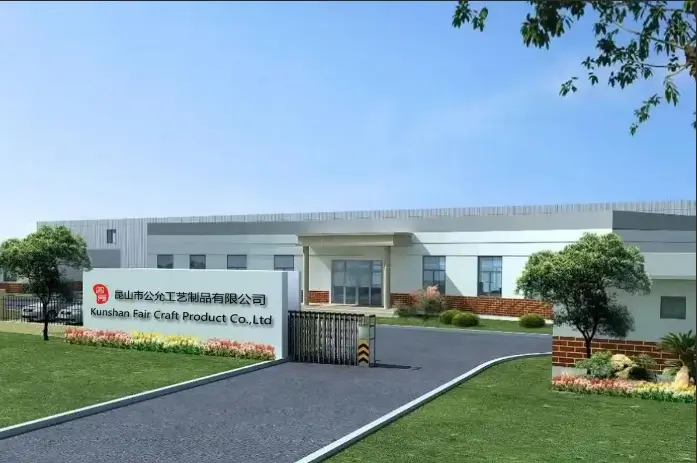
Kunshan Fair Craft Products Co., Ltd. represents the definitive strategic sourcing partner for high-volume corporate procurement programs demanding technical performance, environmental compliance, and supply chain transparency. Established in 2007 with 5 million RMB registered capital, our facility has invested continuously in advanced automated valving infrastructure, precision polymer extrusion technology, and comprehensive third-party validation infrastructure that eliminates procurement risk for your organization. Our PEBA-aligned environmental management systems, complete green compliance documentation package, and proven manufacturing scalability—combined with a track record spanning nearly two decades of operation—position your brand at the vanguard of the sustainable celebration industry's transformation. The future of the global celebration products supply chain is biodegradable, compostable, technically superior, and regulatory compliant. That future is available now. Our technical sales team is prepared to provide comprehensive eco-sample kits, detailed material specification sheets, and competitive price lists calibrated to your specific volume requirements and distribution geography.
© 2026 Kunshan City Fair Craft Product Co., Ltd.