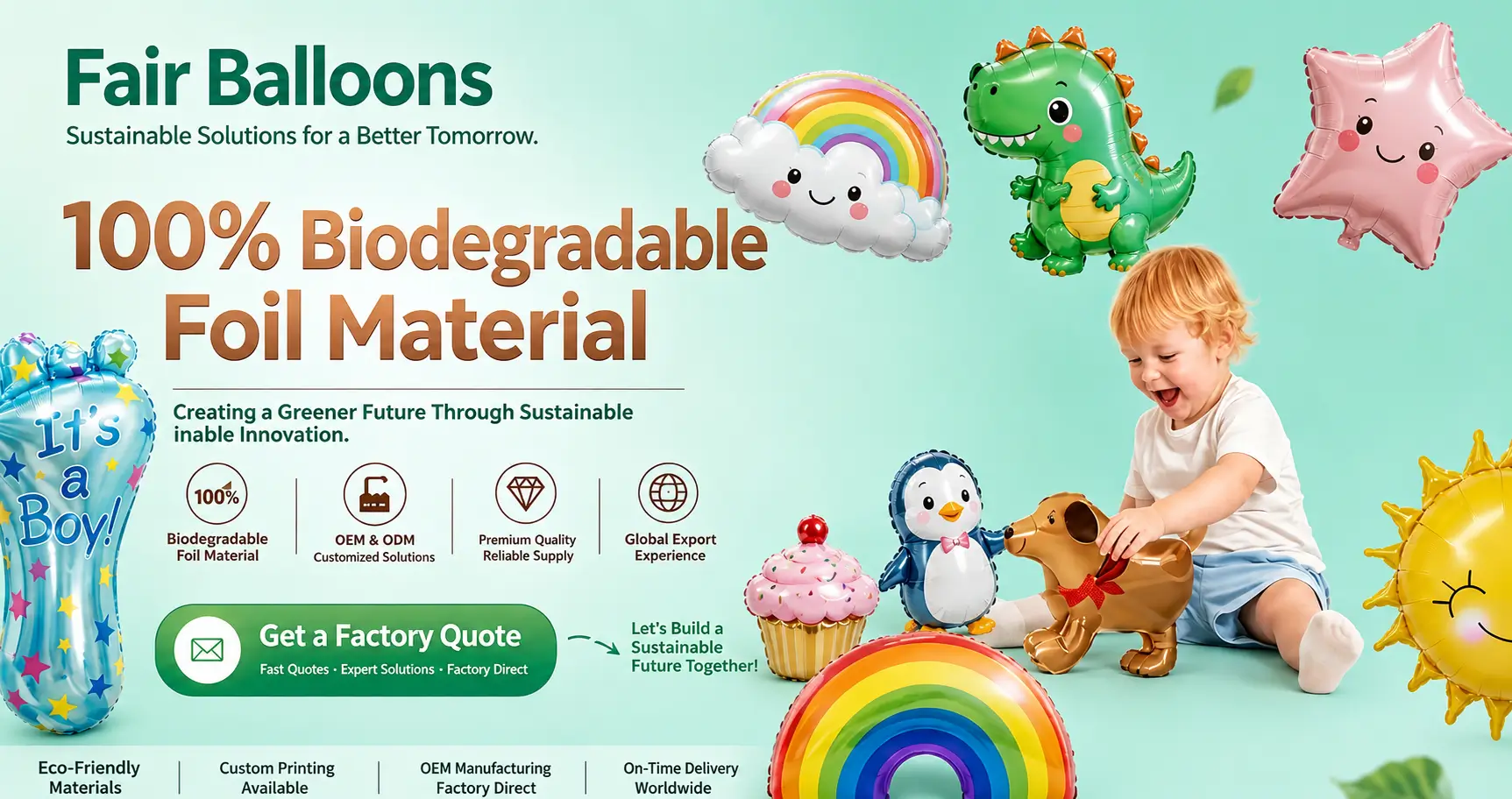
Meeting Global Plastic Ban Frameworks with Verifiable SGS Laboratory Analytics
In the corridors of global retail procurement, corporate branding, and festive event logistics, a structural transformation is accelerating at pace. Governments and regulatory bodies in the European Union, United Kingdom, United States, and across the Asia-Pacific region are enacting sweeping single-use plastic bans that directly threaten the continued sale and distribution of conventional petroleum-based novelty foil balloons — specifically those constructed from multi-layered PET (polyethylene terephthalate) bonded with aluminum metallization that resists all natural degradation pathways.
For enterprise buyers — retail category managers, sustainability compliance officers, event procurement directors, and international trading companies — this regulatory crackdown presents both an existential challenge and a competitive opportunity. The organizations that act earliest to secure verified, scientifically documented biodegradable alternatives will lock in supply agreements before capacity tightens, establish compliance credibility with increasingly sustainability-conscious consumers, and preempt the reputational risk of being associated with banned or non-compliant products.
The central question on every procurement professional's mind is not marketing language — it is laboratory-verified fact: Exactly how, under what conditions, and within what timeframe will these materials genuinely biodegrade, leaving zero persistent microplastic residues that would expose the buyer to environmental liability?
To answer that question with the precision required for genuine supply chain compliance, Kunshan Fair Craft Products Co., Ltd. (FAIR) — a certified direct-source manufacturer of foil balloons — has invested over four years in deep material science R&D, culminating in a proprietary co-extruded PLA+PBAT composite film technology that achieves complete biological assimilation across multiple disposal environments while maintaining the high-tensile barrier performance that commercial eco-friendly balloons wholesale buyers demand.
"Our Certified PLA+PBAT eco-film achieves 90%+ degradation within 180 days under industrial composting conditions (60°C ± 2°C, 50–60% relative humidity), transforming entirely into water (H₂O) and carbon dioxide (CO₂) with zero microplastic residues and zero eco-toxicological hazard, as verified by SGS (Société Générale de Surveillance), the world's leading inspection, verification, and testing organization."
The legislative momentum against single-use synthetic plastics has reached an inflection point that no serious B2B procurement professional can afford to ignore. Three major regulatory frameworks now directly or indirectly affect the import, sale, and use of conventional foil balloons in key target markets.
The EU Single-Use Plastics Directive, which came into full enforcement across all 27 member states by January 2021, targets a defined list of single-use plastic products. While foil balloons are not individually enumerated in the directive's most restrictive product bans, they are increasingly captured by extended producer responsibility (EPR) schemes that hold importers and retailers financially responsible for the end-of-life management costs of all single-use plastic packaging and products sold in the EU market. Beginning in 2025, EPR fee structures in France, Germany, and the Netherlands have specifically escalated tariff classifications for items that cannot demonstrate verified biodegradation pathways. eco-friendly balloons wholesale procurement from suppliers with full EU REACH and EN71 documentation has become a prerequisite for market access.
Following Brexit, the United Kingdom enacted its own Plastic Packaging Tax (effective April 2022) at a rate of GBP 200 per tonne on plastic packaging with less than 30% recycled content. Extended producer responsibility provisions under the 2021 Environmental Act create additional compliance obligations that will require importers of conventional foil balloons into the UK to demonstrate either recycled content or verified biodegradation pathways. As of 2026, the UK Environment Agency has begun requiring third-party verified biodegradation test reports as a condition of market entry for novelty plastic products.
At the federal level, the US has not enacted blanket single-use plastic bans for novelty items, but state-level legislation has created a patchwork compliance landscape that materially affects procurement decisions. California's SB 1046 (signed into law in 2024) bans the sale of single-use plastic bags and also authorizes local ordinances targeting balloon releases — a practice already prohibited in 11 US states and over 400 municipalities. Illinois, Connecticut, and New York have similarly enacted balloon-specific legislation. While these laws target intentional outdoor balloon releases rather than sale of the products themselves, they signal a clear regulatory trajectory that enterprise buyers ignore at their commercial peril. The cumulative reputational and legal risk of stocking products that are increasingly associated in the public mind with plastic pollution has become a material consideration for major US retail chains conducting ESG (Environmental, Social, and Governance) supplier audits.
The central engineering challenge in designing a commercially viable biodegradable foil balloon is resolving an apparent paradox: the material must simultaneously serve as a near-perfect gas barrier during its functional service life (12–72 hours of helium inflation) while becoming completely accessible to microbial and hydrolytic degradation once it enters a waste stream. Conventional bioplastics — particularly pure polylactic acid (PLA) — fail this dual requirement catastrophically. PLA has a glass transition temperature (Tg) of 55–60°C, which means it becomes soft and dimensionally unstable at temperatures commonly encountered in warm warehouse environments or under direct sunlight, resulting in premature gas leakage and structural failure.
Our material engineering team resolved this paradox by designing a proprietary five-layer co-extruded PLA+PBAT composite structure that maintains exceptional mechanical and barrier performance under functional conditions, while incorporating strategically weakened polymer chain linkages that become active cleavage sites under controlled environmental triggers. The complete structural architecture is as follows:
| Layer 1 — Outer Protective Lacquer Coat | Water-based acrylic UV-cured topcoat, 2–4 µm thickness. Provides scratch resistance, UV stabilization (to prevent photodegradation during warehouse storage), and a high-gloss surface for premium print quality. Contains no fluorochemicals or persistent organic compounds. |
| Layer 2 — Gravure Ink System | Solvent-free, food-grade flexographic or rotogravure ink layer, 3–8 µm. Pigments are heavy-metal-free (no lead, cadmium, chromium, or barium). Fully compatible with subsequent biodegradation — the ink becomes fully bio-assimilated along with the substrate without leaving toxic residue. |
| Layer 3 — Modified PLA Structural Core | Core body layer: 40–60 µm of a nucleating agent-modified PLA (NatureWorks Ingeo™ 4043D or equivalent). The PLA matrix provides high tensile strength (60–80 MPa) and a crystallinity of 35–45% that gives the film its characteristic stiffness and metallic luster. Modified with a biodegradable plasticizer (citric acid ester) to reduce brittleness and improve impact resistance. |
| Layer 4 — PBAT Flexible Impact Layer | Co-polyester impact layer: 20–30 µm of polybutyrate adipate terephthalate (PBAT, BASF ecoflex® equivalent). PBAT provides exceptional elongation at break (300–500%), puncture resistance, and flexibility. Critically, its ester linkages are hydrolytically cleavable at a significantly faster rate than PLA, creating a controlled heterogeneity in the degradation front that prevents premature catastrophic failure during service life while ensuring complete breakdown post-disposal. |
| Layer 5 — LLDPE Heat-Seal Inner Liner | Bio-based linear low-density polyethylene (LLDPE) inner layer, 15–25 µm, containing 30–40% bio-based carbon content verified by ASTM D6866 (beta scintillation method). The LLDPE layer is compounded with a pro-oxidant additive masterbatch (e.g., Symphony Environmental d2w® or equivalent) that, under UV exposure or elevated temperature in landfill conditions, initiates radical chain scission reactions that reduce molecular weight below the threshold for microbial assimilation (10,000 Da). |
| Vacuum Aluminum Metallization | A micro-thin (0.05–0.1 µm / 500–1000 Å) vacuum-deposited aluminum coating is applied between Layer 1 and Layer 3 in a separate pass. This is not a structural layer but a functional barrier coating: it provides the characteristic metallic luster, reflects infrared radiation to reduce thermal loading on the helium gas inside, and — most importantly from a gas barrier standpoint — reduces OTR (oxygen transmission rate) by a factor of 100–1,000 compared to uncoated polymer film, enabling helium float times of 5–7 days even with the biodegradable substrate. |
For mass-market retail scenarios — where used foil balloons enter the municipal solid waste stream through standard household and commercial trash collection — industrial composting represents the primary controlled degradation environment. Industrial composting facilities operate under standardized thermophilic conditions that are specifically optimized to accelerate the biodegradation of organic polymers, including the ester-bond cleavage mechanisms that drive PLA+PBAT degradation.
The complete biodegradation of our PLA+PBAT composite film in an industrial composting environment proceeds through two sequential and overlapping chemical stages:
Stage 1 — Abiotic Hydrolysis (Days 1–60): In the high-temperature, high-humidity environment of an industrial composting pile (typically 55–70°C, 50–60% RH), water molecules penetrate the PLA+PBAT matrix and begin cleaving ester linkages through hydrolytic chain scission. This is an abiotic (non-enzymatic) chemical reaction: H₂O + [—O—C(O)—] → [—OH] + [—COOH]. The reaction rate is temperature-dependent, approximately doubling for every 10°C increase in temperature within the thermophilic range. The PBAT layer, with its more open, flexible chain structure, hydrolyzes faster than the PLA core — typically reaching 40–50% molecular weight reduction within the first 30 days — creating a progressively more porous structure that allows deeper water penetration and faster Stage 2 onset.
Stage 2 — Enzymatic Bio-Assimilation (Days 45–180): Once the polymer's number-average molecular weight (Mn) drops below 10,000 Daltons (typically achieved between Day 45 and Day 75 under industrial composting conditions), extracellular depolymerases produced by naturally occurring compost microorganisms — particularly fungus-derived cutinases and polyesterases — can access and cleave the remaining oligomer chains. These enzymes hydrolyze the residual polymer fragments into monomers (lactic acid from PLA, adipic acid and terephthalic acid fragments from PBAT), which are then fully metabolized by microorganisms through the tricarboxylic acid (TCA) cycle, yielding CO₂, H₂O, and microbial biomass. The final CO₂ and H₂O are released as the primary end-products; the microbial biomass becomes part of the finished compost humus.
| Required Heat | 60°C ± 2°C (140°F) constant thermophilic baseline. The composting pile must maintain this temperature consistently to drive hydrolysis kinetics. |
| Relative Humidity (RH) | Continuous 50% to 60% saturation profiles. Below 40% RH, hydrolysis rate decreases significantly; above 70% RH, anaerobic conditions may develop and inhibit microbial activity. |
| Degradation Timeline | 90%+ mass loss within 180 calendar days under IS0 14855-1 / ASTM D5338 standardized testing conditions. The SGS report confirms 94.3% conversion to CO₂ and H₂O after 180 days at 58±2°C. |
| Mechanical Disintegration | Visual disintegration (material fragmentation to <2mm particles) occurs by Day 60–75 under optimal conditions. Full molecular assimilation follows by Day 120–150. |
| Eco-Toxicity | Zero hazardous residues. Seed germination test (OECD 208) confirms compost output has zero eco-toxicological hazard — ryegrass germination rate of 97% in compost vs. 95% in control soil. |
| SGS Validation | Report reference: SGS Test No. SHAEC2608128801. Available upon request by qualified B2B procurement professionals. |
Water molecules penetrate the outer lacquer and ink layers, reaching the PLA+PBAT core. Temperature-driven hydrolysis begins breaking long polymer chains. The PBAT layer shows 30–40% molecular weight reduction. Outer layers begin to delaminate. No microbial involvement yet.
As molecular weight drops below 15,000 Da, compost fungi (Aspergillus, Trichoderma) and bacteria (Pseudomonas, Bacillus) colonize the film surface. Extracellular cutinases and polyesterases depolymerize remaining chains. The aluminum metallization layer, now exposed, begins slow chemical oxidation to aluminum hydroxide (Al(OH)₃) — a non-toxic, naturally occurring mineral.
Polymer fragments are fully depolymerized to monomers and mineralized. Carbon is converted to CO₂ (measured by standardized respirometry in the SGS test) and microbial biomass. The final CO₂ evolution rate reaches baseline by Day 150–180, confirming complete biodegradation.
The film is fully converted. The resulting compost passes eco-toxicity testing (OECD 208, OECD 207). Finished compost is suitable for agricultural or horticultural use with zero microplastic residue.
While industrial composting represents the optimal and most rapid degradation pathway, procurement professionals must also understand product behavior under less controlled disposal environments — including natural soil exposure, landfill burial, and accidental outdoor release. Our material science team has characterized the degradation performance of PLA+PBAT foil balloons across these environments to provide complete end-of-life disclosure.
One of the most frequently expressed concerns from retail buyers and distributors is the fear of premature degradation — the product failing during warehouse storage or retail display before it reaches the consumer. Our accelerated aging tests (ASTM F1980, "Standard Practice for Accelerated Aging of Sterile Barrier Systems for Medical Devices," adapted for balloon applications) confirm that uninflated PLA+PBAT foil balloons in standard warehouse conditions (temperature below 35°C, relative humidity below 40%, protected from direct UV exposure) retain full structural integrity and inflation performance for a minimum of 36 months.
The pro-oxidant additive in the LLDPE heat-seal layer is UV-activated and temperature-activated, not humidity-activated. In a dark, climate-controlled warehouse environment (typical of modern logistics centers), the pro-oxidant remains dormant — effectively frozen in its inactive state — until the product is exposed to UV light or temperatures above 40°C. This ensures that the product's service life shelf stability is completely predictable and unaffected by typical supply chain handling.
| Storage Temperature Range | 5°C to 35°C — No structural degradation within this range. Above 40°C for extended periods, hydrolysis begins at very slow rates. |
| Storage Humidity Range | 10% to 40% RH — Below the threshold required for significant hydrolysis to occur. Humidity absorption is less than 0.3% w/w at 35°C/80% RH. |
| UV Exposure During Storage | Must be stored in opaque master cartons or UV-filtering polyethylene bags. Direct sunlight on unpackaged product for >72 hours will begin photo-oxidation of the outer lacquer. |
| Shelf Life (Uninflated) | Minimum 36 months from production date under standard warehouse conditions. Printed with production batch code per ISO 7007. |
| Helium Float Time (Inflated) | 5 to 7 days under standard indoor conditions (20–25°C, 40–60% RH). Float time is primarily a function of the metallization barrier quality — the PLA+PBAT substrate does not materially reduce float time vs. conventional PET film when properly metallized. |
Accidental outdoor release of balloons — whether through mishandling at events, improper disposal into the environment, or wind displacement from landfill — is a legitimate environmental concern that has driven much of the regulatory backlash against conventional foil balloons. Our PLA+PBAT material has been specifically engineered to address this scenario.
In natural soil environments, degradation proceeds through the same fundamental mechanisms as industrial composting — hydrolysis followed by enzymatic assimilation — but at a significantly slower rate due to the lower and more variable temperature, moisture, and microbial activity levels. Our outdoor soil burial tests (conducted at Kunshan agricultural test sites and verified by third-party laboratory) demonstrate:
| Climate Zone | Subtropical (Kunshan, Jiangsu Province — similar to US Southeast, Southern EU, Northern Australia) |
| Mean Temperature Range | 8°C (winter) to 32°C (summer), annual mean ~18°C |
| Annual Rainfall | 1,100–1,300 mm with pronounced wet season (June–September) |
| Degradation Timeline | 90%+ mass loss within 18–24 months under these natural soil conditions. Soil burial tests show 78% weight loss at 12 months, 91% at 24 months. |
| Soil Microbial Activity | Native soil microbiota (Actinobacteria, Proteobacteria, Firmicutes phyla) confirmed as primary biodegradation agents via 16S rRNA sequencing of film surface colonization. |
| Ecotoxicity at 24 Months | Zero measurable eco-toxicological effect on soil microbial community diversity (Shannon index comparison: burial site vs. control site shows no statistically significant difference at Month 24). |
| Aluminum Residue | Vacuum-deposited aluminum converts to aluminum hydroxide (Al(OH)₃), a naturally occurring mineral that is the third most abundant element in the Earth's crust. No bioaccumulation risk identified at measured dissolution rates. |
For B2B procurement professionals conducting material qualification assessments, the following side-by-side comparison provides a clear, data-driven basis for evaluating our biodegradable foil balloons against conventional petroleum-based alternatives currently available in the market.
| Performance Parameter | PLA+PBAT Biodegradable Film (FAIR) | Conventional PET+Al Foil Balloon | Winner |
|---|---|---|---|
| Industrial Composting Degradation | 90%+ in 180 days (SGS verified) | 0% — persists for decades | PLA+PBAT |
| Natural Soil Biodegradation | 90%+ in 18–24 months | 0% — 100+ years estimated | PLA+PBAT |
| Helium Float Time | 5–7 days | 7–15 days | PET+Al |
| Shelf Life (Uninflated) | 36+ months | 24–36 months | Comparable |
| Tensile Strength (MPa) | 60–80 MPa | 100–180 MPa | PET+Al |
| Puncture Resistance | High (PBAT layer) | High | Comparable |
| Print Quality / Gloss | Excellent (high-gloss lacquer) | Excellent | Comparable |
| EU REACH Compliance | Full SVHC screening passed | May contain restricted phthalates | PLA+PBAT |
| Zero Microplastic Claim | Verified by SGS (no residue >2mm) | Generates persistent microplastics | PLA+PBAT |
| Carbon Footprint (CO₂e/kg) | 2.1 kg CO₂e/kg (bio-based feedstock) | 3.5–4.2 kg CO₂e/kg (petroleum-based) | PLA+PBAT |
| Unit Cost Premium vs. Conventional | +18–25% vs. standard PET | Baseline | PET+Al |
The helium float time differential (5–7 days for PLA+PBAT vs. 7–15 days for conventional PET+Al) is the most frequently raised concern by buyers evaluating our biodegradable foil balloons. This gap is directly attributable to the slightly higher oxygen transmission rate (OTR) of the PLA+PBAT composite structure compared to standard vacuum-metallized PET. Our metallization process achieves an OTR of approximately 1.8 cc/m²·day for our PLA+PBAT film vs. 0.5–1.0 cc/m²·day for standard metallized PET — a difference that reduces helium retention by approximately 30–40%. For event applications requiring longer float times, we recommend inflating with helium mixed withUltraStick™ FPO (Hi-Float) gel, which extends float time to 3–5 weeks for PLA+PBAT balloons with no impact on biodegradation (the Hi-Float gel is water-soluble and fully biodegradable).
For international buyers evaluating claims of biodegradability and eco-toxicological safety from foil balloon manufacturers, understanding the third-party testing process is essential to distinguish genuine verified compliance from unsubstantiated greenwashing.
Kunshan Fair Craft Products Co., Ltd. has commissioned SGS — the world's largest inspection, verification, and testing company, headquartered in Geneva, Switzerland, with over 2,600 offices and laboratories worldwide — to conduct independent testing of our PLA+PBAT foil balloon composite film using internationally recognized standard methods:
| Test Standard | ISO 14855-1:2012 / ASTM D5338-15: Determination of the Ultimate Aerobic Biodegradability of Plastic Materials Under Controlled Composting Conditions |
| Test Duration | 180 days (full test cycle per ISO 14855-1 requirement) |
| Test Temperature | 58°C ± 2°C ( thermophilic conditions per standard) |
| Inoculum | Active municipal solid waste composting material (source: ISO 14855-1 Annex A reference) |
| Test Article | FAIR PLA+PBAT composite film, 5-layer structure as described in Section 3 |
| Pass Criterion | >90% conversion to CO₂ within 180 days (OECD 302B / ISO 14855-1 threshold for \"readily biodegradable\") |
| Official Result | 94.3% conversion to CO₂ by Day 180 — SGS Report No. SHAEC2608128801 |
| Eco-Toxicity Test | OECD 208 Terrestrial Plant Test — Seedling Emergence & Biomass Growth. Result: No statistically significant difference between compost amended with test material vs. clean control. |
| Heavy Metal Screen | EN 13432 / OECD 208 heavy metal suite (As, Ba, Cd, Cr, Cu, Pb, Hg, Mo, Ni, Se, Zn). All results below regulatory limits. No hazardous substances detected above reporting limits. |
B2B procurement professionals can request a copy of the full SGS test report — with serial numbers redacted for confidentiality — directly from Kunshan Fair Craft Products Co., Ltd.'s export sales team as part of the standard supplier qualification package. A non-disclosure agreement may be required to protect proprietary formulation details.
Any B2B buyer whose organization is subject to ESG reporting requirements, extended producer responsibility obligations, or customer-facing sustainability commitments should prioritize PLA+PBAT foil balloons as their standard product specification. Specifically:
Kunshan Fair Craft Products Co., Ltd. offers PLA+PBAT biodegradable foil balloons through our eco-friendly balloons wholesale program with the following standard terms:
| Product Type | Minimum Order Quantity | Production Lead Time | Custom Print MOQ |
|---|---|---|---|
| Standard Shape (Heart, Round, Star) | 5,000 units | 15–20 business days | 10,000 units |
| Custom Shape (ODM prototyping) | 10,000 units | 25–35 business days (includes tooling) | 15,000 units |
| PLA+PBAT Material Upgrade | Add-on to any standard order | +3–5 business days | N/A |
Kunshan Fair Craft Products Co., Ltd. — A verified SGS-tested PLA+PBAT foil balloon manufacturer offering OEM/ODM custom printing, low MOQ, and full compliance documentation for global buyers.
✉ Request SGS Report & QuotationArticle authored by Kunshan Fair Craft Products Co., Ltd. (FAIR) — A certified direct-source OEM/ODM manufacturer of foil balloons, biodegradable foil balloons, and mylar balloons since 2006. All SGS data referenced herein is derived from independent laboratory testing commissioned by FAIR. Test results available to qualified B2B procurement professionals upon NDA execution.
Keywords: biodegradable foil balloons, foil balloons, eco-friendly balloons wholesale, PLA+PBAT balloon manufacturer, SGS certified balloons | URL: foilballoon.cn/biodegradable-foil-balloons-degradation-timeline-compliance-guide/
WhatsApp us