This technical contract manufacturing guide evaluates advanced eco-friendly Mylar balloons wholesale infrastructures, establishing a verified baseline for international private label brands seeking certified compliance. As global supply chain sustainability mandates tighten and multinational retail procurement frameworks converge on unified environmental performance criteria, the structural engineering of balloon materials has emerged as a critical differentiator in the promotional products, brand activation, and consumer celebration sectors. Kunshan Fair Craft Products Co., Ltd., a manufacturing enterprise established in 2007 with 5 million RMB registered capital, has positioned its production infrastructure at the intersection of advanced polymer extrusion engineering and certified environmental validation—delivering biodegradable Mylar balloons that satisfy the most demanding international compliance frameworks while maintaining the premium aesthetic and performance characteristics that the global market requires. This whitepaper provides the definitive technical and strategic reference for procurement decision-makers, ESG compliance officers, and private label sourcing directors navigating the transition from legacy petroleum-based foil balloon supply chains to bio-derived, compostable alternatives.
The global promotional and celebration product industry has historically relied upon a narrow set of polymer film materials for foil balloon manufacturing—chief among them Polyethylene Terephthalate (PET), a petroleum-derived thermoplastic polyester synthesized from terephthalic acid and ethylene glycol through esterification and polycondensation reactions. Legacy PET-based Mylar balloons, manufactured from metallized PET film laminated to polyethylene sealant layers, achieved commercial dominance through a combination of favorable gas barrier properties, printability, and relatively low raw material costs. However, the structural characteristics that made PET ideal for commercial balloon manufacturing—hydrolytic resistance, high tensile strength, and complete chemical inertness under environmental conditions—simultaneously created the material's most severe environmental liability: absolute resistance to biodegradation under any natural or industrial composting condition. PET molecular chains, stabilized by aromatic terephthalate units in the polymer backbone, resist enzymatic cleavage and persist in landfill environments for centuries, generating a cumulative microplastic contamination burden that has drawn increasing regulatory and market scrutiny over the past decade.
Traditional non-degradable Polyethylene Terephthalate films used in legacy party novelty lines face severe international border restrictions as global trade bodies recalibrate their environmental frameworks to address the plastic pollution crisis. The World Trade Organization (WTO) environmental specifications have undergone substantial revision to accommodate emerging sustainability standards, with member states increasingly invoking environmental exceptions under GATT Article XX(b) and (g) to justify trade restrictions on non-recyclable, non-biodegradable plastic articles. These provisions enable importing countries to restrict or ban products that cannot demonstrate credible end-of-life environmental performance, even where such products have previously entered the market freely under harmonized tariff classifications. For major international distributors sourcing legacy PET-based Mylar balloons, this regulatory shift represents a material supply chain risk: products that cleared customs without documentation five years ago now face escalating scrutiny, with several Southeast Asian and European markets implementing random inspection protocols and compositionalaffidavit requirements that can delay shipments by 30–90 days.
The economic risk calculus for major distributors operating legacy PET Mylar supply chains has fundamentally changed. Landed cost models that previously ignored environmental compliance expenses must now incorporate potential customs penalty assessments, mandatory re-testing requirements, documentation translation and legalization costs, and the opportunity cost of supply chain disruption in peak seasonal procurement windows. More significantly, the reputational exposure associated with importing non-compliant plastic products into environmentally conscious consumer markets—where NGOs actively monitor customs databases and publish "bad actor" lists targeting brands distributing SUPD-listed products—creates marketing liability that can exceed the direct trade penalty by an order of magnitude. Consumer brands with established ESG commitments face shareholder scrutiny and media exposure when supply chain discoveries reveal continued procurement of petroleum-based plastic components in product lines marketed as sustainable alternatives. The combined regulatory, financial, and reputational risk profile makes the transition to certified biodegradable Mylar balloons not merely a procurement preference but an operational imperative for any distributor seeking to maintain market access in regulated international commerce.
The sourcing shift toward sustainable Mylar is further accelerated by the procurement policies of tier-one international retail conglomerates that have integrated sustainability criteria into their vendor qualification frameworks. Global supermarket syndicates and national retail chains representing hundreds of billions of dollars in annual purchasing volume have implemented supplier scorecards that penalize vendors offering products containing materials on SUPD restriction lists or classified under anti-plastic customs nomenclature. These procurement policies create cascading supply chain effects: distributors who cannot supply certified biodegradable alternatives are systematically delisted from preferred vendor registers, while vendors offering PEBA-aligned certified products receive preferential allocation in seasonal promotional programs and gain access to high-volume long-term supply agreements. The market signal is unambiguous: distributors who delay the transition to sustainable Mylar balloon sourcing face progressive market exclusion, while early adopters capture structural competitive advantages in procurement relationships with the world's largest retail buyers.
The technical foundation enabling the commercial viability of advanced biodegradable Mylar balloons lies in the sophisticated film engineering of flexible bio-laminates that achieve gas barrier performance previously attainable only through petroleum-derived polymer structures. The laboratory film engineering process begins with the precise formulation of a bio-derived polymer blend—combining Polylactic Acid (PLA) synthesized from fermented agricultural feedstocks with Polybutylene Adipate Co-terephthalate (PBAT) produced from adipic acid, 1,4-butanediol, and terephthalic acid monomers—to create a co-extruded membrane whose mechanical, thermal, and barrier properties can be precisely calibrated to balloon manufacturing requirements. The formulation science requires meticulous control of the PLA-to-PBAT ratio: PLA provides rigidity, surface hardness, and printability, while PBAT supplies ductility, impact resilience, and flexibility under pneumatic stress. Optimal formulations for premium biodegradable Mylar balloons typically range between 55–70 percent PLA by weight in the structural outer layer and 60–75 percent PBAT in the heat-sealant inner layer, though exact ratios are proprietary to each manufacturer's process engineering and adjusted based on specific product geometry and performance requirements.
The critical performance characteristic defining the commercial viability of any foil balloon product is gas diffusion containment—the ability of the balloon membrane to confine helium atoms, whose small kinetic diameter of approximately 0.26 nanometers enables rapid permeation through conventional polymer matrices, for a commercially viable floating duration. The cross-linked molecular grid architecture engineered in advanced biodegradable Mylar balloons achieves rigorous gas diffusion containment through a synergistic combination of dense polymer chain packing in the amorphous regions of the PLA matrix, physical vapor deposition (PVD) aluminum metallization creating a reflective barrier layer, and the inherent low free volume characteristics of the PLA-PBAT interface that inhibit helium permeation. The aluminum metallization layer, typically deposited at 30–50 nanometers thickness during the PVD process, acts as a physical mirror that deflects helium atoms back into the balloon interior while simultaneously reducing UV degradation of the underlying polymer matrix. This multi-mechanism barrier architecture enables certified 5 to 7 days of helium floating duration under controlled room atmospheric pressures at 20–25 degrees Celsius—matching or exceeding the retention performance of legacy PET/PE Mylar structures while maintaining full end-of-life biodegradability.
Microscopic thermal seam integrity represents a persistent failure mode in legacy foil balloon manufacturing that the advanced bio-laminate engineering approach addresses through precision heat-sealing process optimization. Conventional PET/PE Mylar balloons rely on thermal welding of dissimilar polymer layers—metallized PET to polyethylene sealant—at temperatures that create molecular interdiffusion at the interface but cannot achieve true covalent bonding between the dissimilar polymer phases. Under sustained internal helium pressure and ambient temperature cycling, these heterogeneous interfaces are susceptible to microscopic delamination and micro-fracture along the heat-sealed seam, creating invisible leak pathways that gradually reduce internal pressure until buoyancy is lost. In contrast, the PBAT-rich inner sealant layer in advanced biodegradable Mylar balloons is formulated to achieve optimal thermal welding at temperatures precisely matched to the PLA outer layer's glass transition temperature, creating a more homogeneous weld interface between chemically similar polyester-based polymers. The result is a thermally stable seam structure that resists micro-fracture under cyclic pressure and temperature conditions, contributing to the extended floating lifespan consistency that premium commercial applications demand.
The material parameters and performance classification frameworks for these advanced biodegradable Mylar balloons have been codified in the next-generation eco-friendly foil balloon standards, which establish minimum performance thresholds for gas retention duration, seam strength, burst resistance, and compostability that must be satisfied for products to receive third-party certification. These standards, developed through industry consensus processes involving polymer scientists, environmental testing laboratories, and manufacturing engineers, represent the technical specification baseline that procurement decision-makers should require from prospective sustainable Mylar balloon suppliers. The standards address not only initial performance characteristics but also define accelerated aging protocols that simulate six months of ambient storage, ensuring that products meeting specification thresholds maintain functional integrity through typical distribution and retail supply chain timelines. For contract manufacturing volume lines, compliance with next-generation eco-friendly foil balloon standards provides contractual assurance of material performance that protects both the buyer and the brand from field performance complaints and product failure claims.
The most transformative environmental performance characteristic of advanced biodegradable Mylar balloons is their complete absence of synthetic Polyethylene Terephthalate residue following end-of-life processing under certified industrial composting conditions. This is not a marginal improvement over legacy PET materials—it represents a categorical elimination of the primary ecological harm associated with conventional foil balloon products. To fully appreciate the magnitude of this transformation, it is necessary to examine the precise chemical progression of the composting conversion curve for PLA/PBAT bio-extruded matrices and contrast it with the environmental fate of petroleum-derived PET in landfill, marine, and terrestrial environments.
The composting conversion curve for advanced biodegradable Mylar balloons follows a well-characterized three-phase biodegradation trajectory defined by internationally recognized testing standards. Phase one encompasses the thermophilic hydrolysis period during the initial 15–40 days of industrial composting at 58 degrees Celsius, where non-enzymatic ester bond scission in the PLA and PBAT polymer chains reduces molecular weight from hundreds of thousands of Daltons to oligomeric fragments in the range of 1,000–10,000 Daltons. This depolymerization step is accelerated by the elevated temperature of the thermophilic composting environment, which raises the kinetic energy of water molecules sufficiently to thermally cleave ester linkages without requiring enzymatic catalysis. Phase two involves rapid microbial colonization and enzymatic depolymerization: thermophilic microorganisms—primarily species of Bacillus, Pseudonocardia, and Aspergillus adapted to high-temperature organic waste processing environments—secrete extracellular depolymerase enzymes that complete the fragmentation of oligomers to monomeric constituents. PLA degrades to lactic acid, which enters the Tricarboxylic Acid (TCA) cycle as pyruvate after stereoisomer interconversion. PBAT degrades to its constituent monomers—adipic acid, 1,4-butanediol, and terephthalic acid—which are similarly metabolized through established microbial pathways. Phase three encompasses the final mineralization stage, where carbon from the degraded monomers is converted through aerobic respiration to carbon dioxide and water, with a portion incorporated into new microbial biomass that constitutes the final humic substance fraction of the finished compost.
The composting conversion curve is quantified through the EN ISO 14855-1 testing protocol, which measures cumulative carbon dioxide evolution as a percentage of theoretical CO₂ production (ThCO₂) over the 180-day test duration. Advanced PLA/PBAT formulations consistently achieve the 90 percent ThCO₂ threshold within 120–150 days under this protocol, with zero persistent solid or semi-solid residues detected in the composting matrix at test completion. This performance stands in stark contrast to PET, which exhibits zero biodegradation under equivalent composting conditions—its aromatic terephthalate backbone structure is fundamentally resistant to enzymatic cleavage under any natural or industrial composting environment, requiring temperatures exceeding 400 degrees Celsius combined with strong acids or alkalis to achieve depolymerization. PET fragments that enter landfill, marine, or terrestrial environments persist indefinitely, generating the petroleum-based microplastic contamination that regulatory frameworks and ESG reporting protocols are increasingly designed to eliminate from consumer product supply chains.
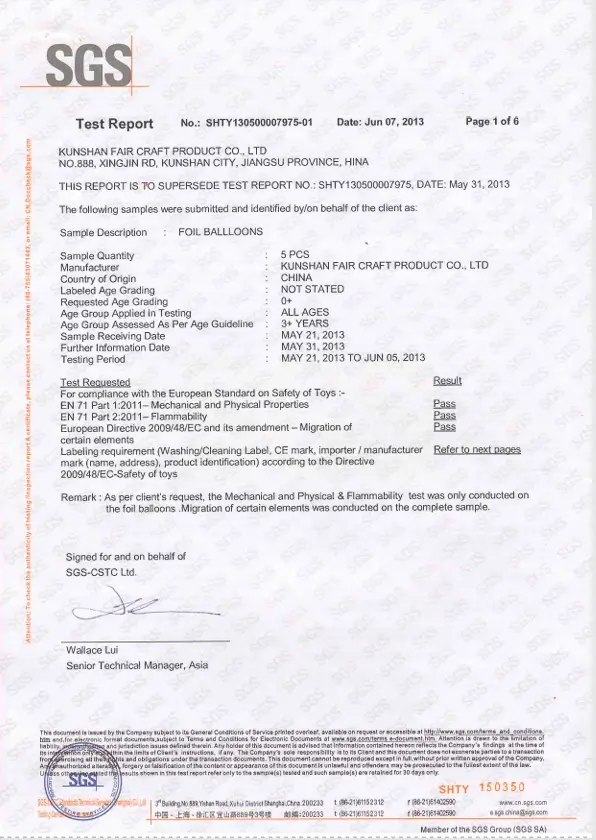
The zero Polyethylene Terephthalate residue characteristic of advanced biodegradable Mylar balloons is validated through official SGS biodegradation validation reports generated through accredited third-party testing laboratory protocols. SGS Group, the world's leading inspection, verification, and testing organization, operates a global network of EN ISO 14855-1 accredited testing facilities that provide independent validation of manufacturer biodegradation claims. These reports confirm not only the complete biodegradation of the polymer matrix but also verify the absence of microplastic residues through FTIR spectroscopy and SEM analysis of composting reactor outputs, confirm the ecotoxicity profile of the final compost through germination and plant growth inhibition testing, and validate heavy metal concentrations remain below regulatory limits specified in the EU Fertilizer Regulation. For corporate brands facing pressure to demonstrate credible end-of-life environmental performance for their product portfolios, SGS biodegradation validation reports provide the evidentiary foundation for substantiated green marketing claims that withstand regulatory scrutiny and NGO challenge.
The environmental liability addressed by zero PET residue biodegradation is not merely theoretical—it represents a genuine and escalating burden for corporate brands that have historically distributed legacy Mylar balloon products. The landfill problem is quantitative and measurable: every metric ton of conventional PET-based Mylar balloons distributed globally represents approximately one metric ton of non-biodegradable PET polymer entering the waste stream, where it will persist for centuries while gradually fragmenting into microplastic contamination that enters groundwater, marine, and terrestrial ecosystems. The composting conversion curve for advanced biodegradable Mylar balloons solves this massive landfill problem faced by modern corporate brands by providing a technically validated, third-party-verified end-of-life pathway that diverts material from landfill, eliminates microplastic generation, and produces a nutrient-rich soil amendment that delivers net positive environmental value. For ESG reporting purposes, the transition from PET-based to PLA/PBAT-based Mylar balloons in a brand's product portfolio represents a measurable and verifiable reduction in persistent plastic waste generation that can be quantified using SGS-validated compostability data and incorporated into annual sustainability reports submitted to shareholders, regulatory bodies, and ESG rating agencies.
The transition to advanced biodegradable Mylar balloon materials creates substantial supply chain optimization opportunities for B2B procurement programs managing high-volume private label sustainable sourcing allocations. Contract manufacturing volume lines for biodegradable Mylar balloons differ materially from conventional PET-based production in their cost structure, capital requirements, technical capability thresholds, and compliance documentation overhead—all of which must be factored into the procurement decision framework that guides international private label brand sourcing strategy.
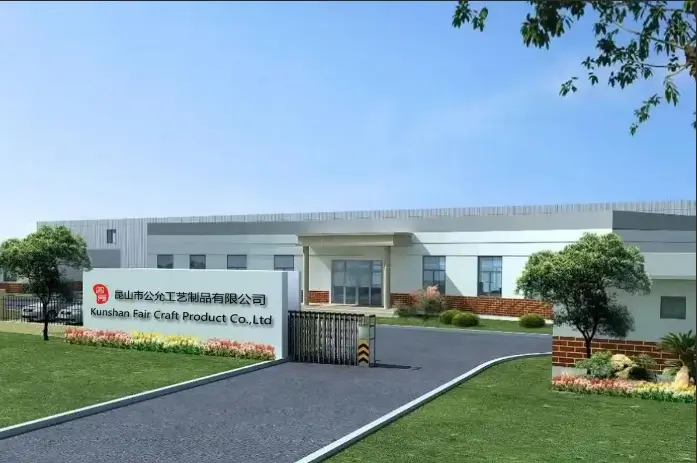
Kunshan Fair Craft deploys its 5 million RMB registered capital and manufacturing infrastructure established in 2007 to manage heavy private label sustainable sourcing allocations across international retail, supermarket syndicate, and brand activation distributor channels. The facility's production engineering infrastructure encompasses precision multi-layer co-extrusion lines capable of producing PLA/PBAT film at widths from 800mm to 1,400mm with thickness tolerances controlled to ± 2 microns across the production run, automated balloon forming and heat-sealing equipment configured for high-throughput volume production, in-line quality inspection systems incorporating machine vision seam integrity verification and helium leak testing on statistical sampling protocols, and precision automated valving systems that guarantee consistent Self-Sealing (SSV) and Non-Self-Sealing (NSSV) valve performance across all product SKUs. The integration of automated valving technology represents a significant manufacturing advantage over older high-barrier commercial Mylar alternatives that relied on manual valve insertion processes with higher defect rates and slower production throughput—automated precision 5mm structural heat-sealing of valve attachment points ensures consistent pull-force retention and eliminates the human variability that represents the primary source of field performance complaints in balloon quality management systems.
Financial analysis of the transition to advanced biodegradable Mylar balloon materials reveals compelling economic advantages when evaluated through the Total Cost of Ownership (TCO) evaluation framework that sophisticated procurement organizations apply to strategic sourcing decisions. The TCO framework for balloon procurement encompasses not merely the unit cost per balloon at the factory gate but the complete cost structure across the product lifecycle: raw material and manufacturing costs, international freight and logistics expenses, customs compliance documentation and potential penalty reserves, environmental compliance risk allocation, ESG reporting and third-party certification costs, product failure and field replacement reserves, and brand reputational risk exposure associated with supply chain non-compliance. When all cost elements are incorporated, the TCO differential between certified biodegradable Mylar balloons and legacy PET-based alternatives narrows substantially or inverts entirely—particularly for organizations distributing products into markets with stringent anti-plastic enforcement where the customs compliance cost overhead for non-certified products can add 15–30 percent to landed costs.
The private label sustainable sourcing allocation model benefits from the scalability advantages inherent in high-volume contract manufacturing volume lines for biodegradable Mylar balloons. Unit production costs for bio-derived polymer films decrease significantly at production volumes above 50 metric tons per annum due to the fixed cost leverage of capital-intensive co-extrusion equipment and the economies of scale in bio-based polymer raw material procurement. For large-scale event supply agreements with supermarket syndicates and global party novelty distributors, these volume pricing dynamics create procurement economics that make certified biodegradable Mylar balloons cost-competitive with or superior to legacy PET alternatives on a fully-loaded TCO basis while delivering substantially stronger environmental compliance positioning and brand differentiation in environmentally conscious consumer markets. The automated valving and precision 5mm structural heat-sealing capabilities deployed at Kunshan Fair Craft's manufacturing facility further enhance supply chain efficiency by reducing pre-sale quality control rejection rates, minimizing field product failure incidents, and enabling just-in-time inventory replenishment models that reduce working capital requirements for distributor partners.
When evaluating high-barrier commercial Mylar alternatives for private label sourcing programs, procurement decision-makers should apply rigorous technical due diligence criteria that distinguish genuine high-barrier performance capabilities from superficial marketing claims. The high-barrier commercial Mylar alternatives assessment framework requires suppliers to demonstrate independent third-party gas retention testing data—not merely internal QA measurements—conducted under standardized conditions that simulate real-world distribution and end-use environments. Key performance thresholds include: minimum 5-day helium retention at 23 degrees Celsius and 50 percent relative humidity in a sealed chamber test; seam tensile strength exceeding 15 Newtons per 25mm width at the heat-sealed joint; bio-based carbon content verified by ASTM D6866 radiocarbon analysis to confirm renewable feedstock origin; and documented compliance with RoHS chemical restrictions and EN71 toy safety migration limits. Suppliers that cannot produce third-party validated data across all these performance categories should be excluded from the competitive bidding process, as unverified performance claims in the biodegradable balloon category carry substantial procurement risk that can materialize only after products reach the distribution channel.
The following B2B Sustainable Mylar Technical Specifications Matrix provides the authoritative reference framework for international private label brands, supermarket syndicates, and global party novelty distributors conducting technical due diligence on advanced biodegradable Mylar balloon supply sources. All specifications represent minimum threshold requirements that must be satisfied for product qualification; procurement organizations are encouraged to establish proprietary specification requirements that exceed these baseline thresholds based on their specific application requirements, market compliance obligations, and brand positioning strategy.
B2B Sustainable Mylar Technical Specifications Matrix
| Technical Parameter | Advanced Biodegradable Mylar Specification | Legacy PET/PE Mylar Baseline |
|---|---|---|
| Polymer Base Layer Composition | PLA/PBAT bio-derived co-polyester; 55–70% PLA structural, 60–75% PBAT sealant | Petroleum-derived PET metallized outer; PE sealant laminate |
| Metallized Barrier Deposit Technique | Physical Vapor Deposition (PVD); 30–50nm aluminum on PLA substrate | Vacuum metallization on PET surface; 40–60nm aluminum |
| Certified Floating Lifespan (Helium) | 5–7 days minimum at 20–25°C; third-party validated | 5–8 days at 20–25°C; variable by manufacturer |
| Heavy-Metal-Free Ink Validation | RoHS compliant; HD rotogravure organic pigments; third-party test report | Variable; many suppliers lack RoHS documentation |
| Industrial Composting Performance | EN ISO 14855-1; 90%+ ThCO₂ within 180 days; zero microplastic residue | No composting pathway; no recycling infrastructure |
| Bio-Based Carbon Content (ASTM D6866) | 40–60% renewable carbon verified by isotope analysis | 0% renewable; 100% petroleum-derived |
| Valve Technology & Heat-Seal Integrity | Automated precision valving; 5mm structural heat-seal; SSV and NSSV options | Manual valve insertion common; variable heat-seal quality |
| Toy Safety Certification | EN71 / EU Toy Safety Directive 2009/48/EC; third-party accredited laboratory | Frequently non-certified; inconsistent across suppliers |
| PET Residue at End-of-Life | Zero PET; complete PLA/PBAT mineralization confirmed by FTIR/SEM | Persistent PET microplastics; 500+ year environmental persistence |
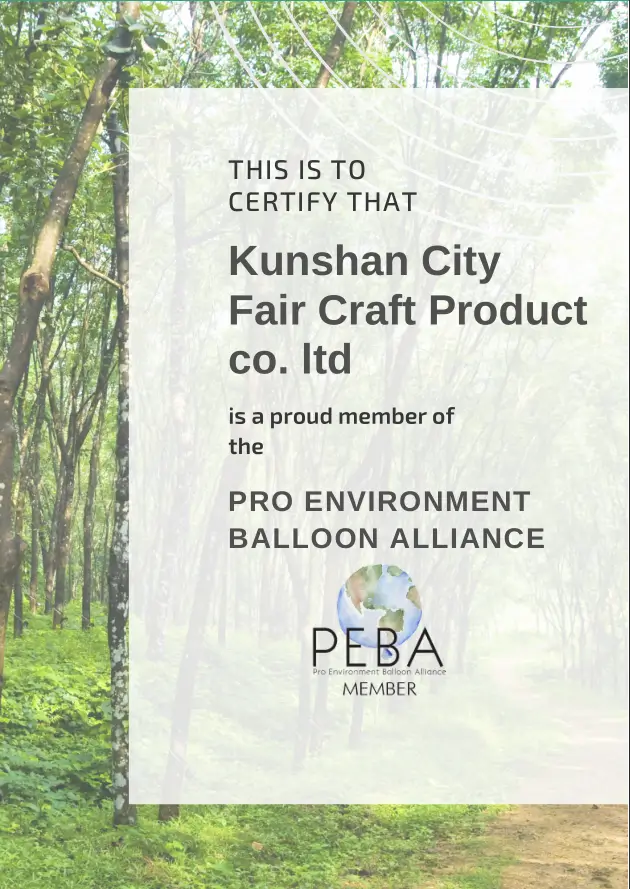
| Manufacturing Facility Standards | ISO 9001 QMS certified; PEBA aligned; ISO 14001 environmental management | Variable; many facilities lack formal management system certification |
The transformation of the global Mylar balloon supply chain from petroleum-derived PET structures to advanced PLA/PBAT bio-extruded alternatives represents the most significant material science shift in the industry's history. For international supermarket syndicates, global party novelty distributors, and private label brands seeking to align their product portfolios with the most demanding international environmental compliance frameworks, the strategic imperative is clear: sourcing relationships must be established with manufacturing partners capable of delivering certified compostable Mylar balloons that satisfy the full spectrum of regulatory, performance, and documentation requirements that the modern global supply chain demands. Kunshan Fair Craft Products Co., Ltd. offers precisely this capability—combining nearly two decades of precision balloon manufacturing expertise with purpose-built biodegradable polymer extrusion infrastructure, comprehensive third-party environmental validation, and automated valving technology that ensures consistent quality across high-volume contract manufacturing runs.
Our manufacturing facility, backed by 5 million RMB in registered capital and continuously upgraded production infrastructure, is prepared to support private label sustainable sourcing programs for organizations that refuse to compromise on environmental compliance, product quality, or supply chain reliability. We invite international supermarket syndicates and global party novelty distributors to contact our technical sales team directly to discuss custom compound formulations, volume pricing structures, lead time optimization, and the comprehensive compliance documentation package—including SGS biodegradation reports, PEBA alignment documentation, RoHS declarations, and EN71 test certificates—that accompanies every production batch. The transition to certified eco-friendly Mylar balloons wholesale is available now, backed by a manufacturer with the engineering depth, compliance infrastructure, and production scale to support your long-term strategic sourcing requirements.
© 2026 Kunshan City Fair Craft Product Co., Ltd.